Featured
Batteries
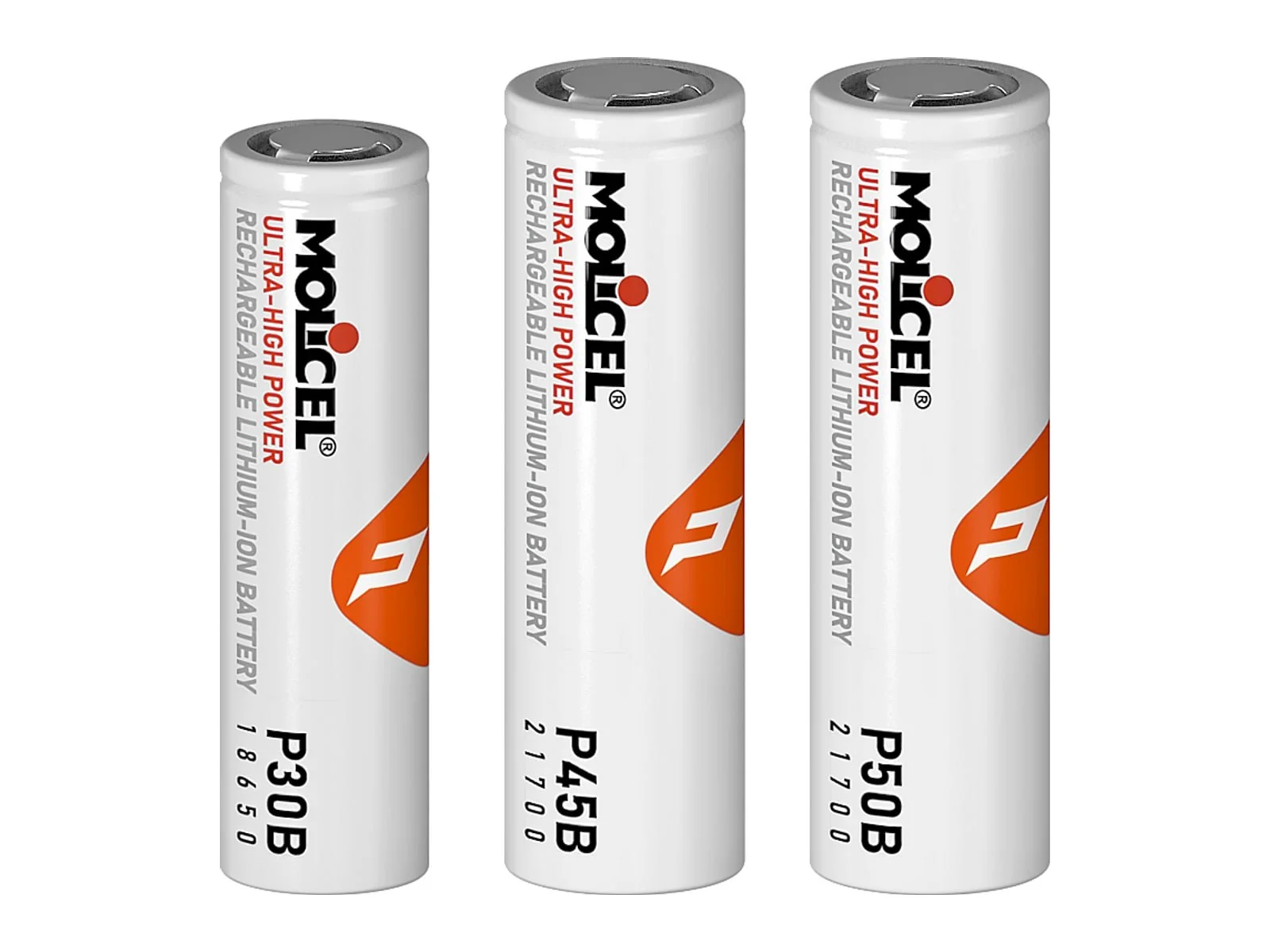
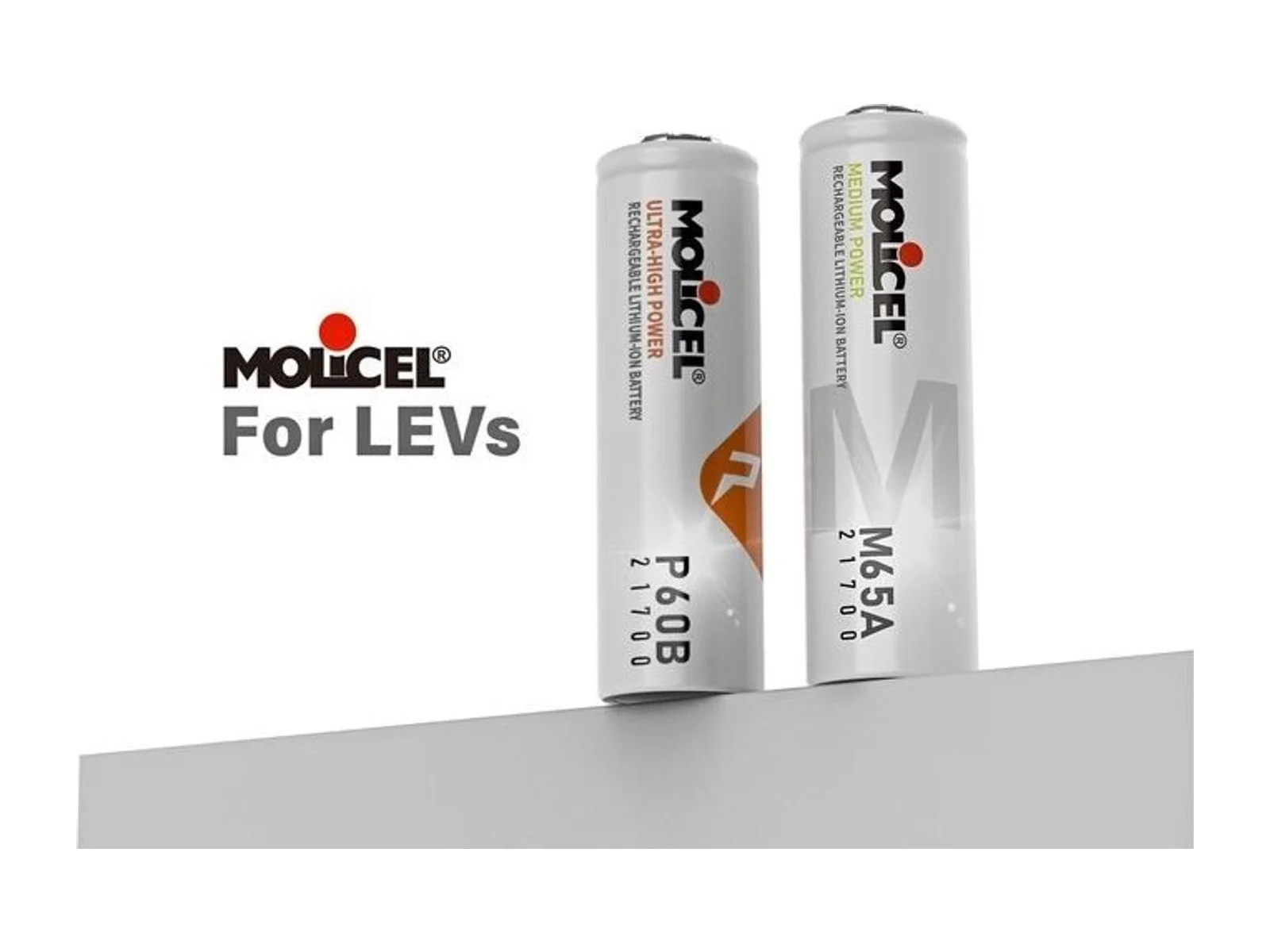
INR-21700-P50B cylindrical rechargeable battery cell
- Energy
- 18 Wh
- Nominal voltage
- 3.6 V
- Specific energy
- 260 Wh/kg
Silicon-anode cells raise gravimetric energy density over graphite cells. Compare specific energy, cycle life and form factor.
| Product | Manufacturer | Specific energy | Continuous discharge rate |
|---|---|---|---|
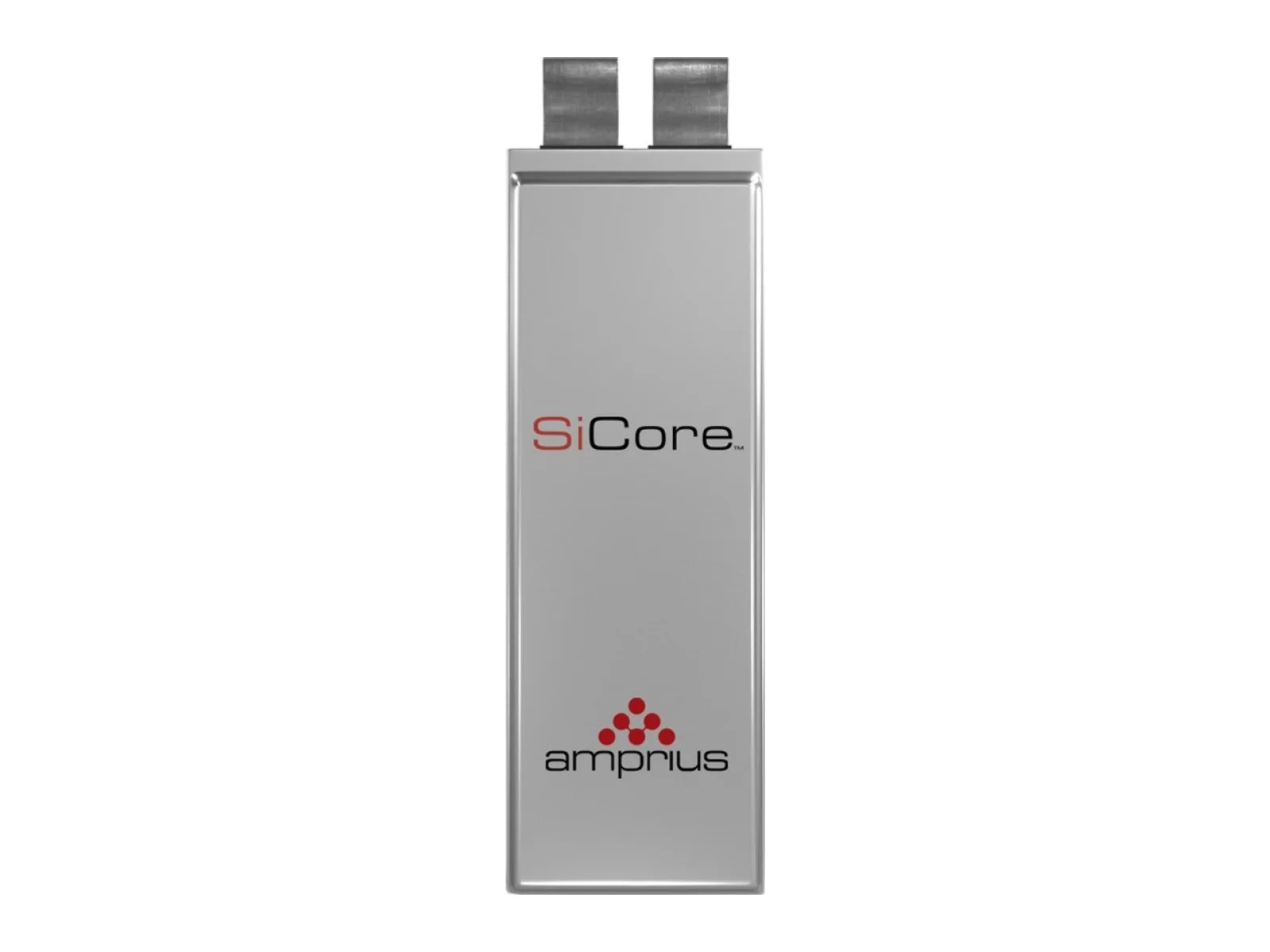
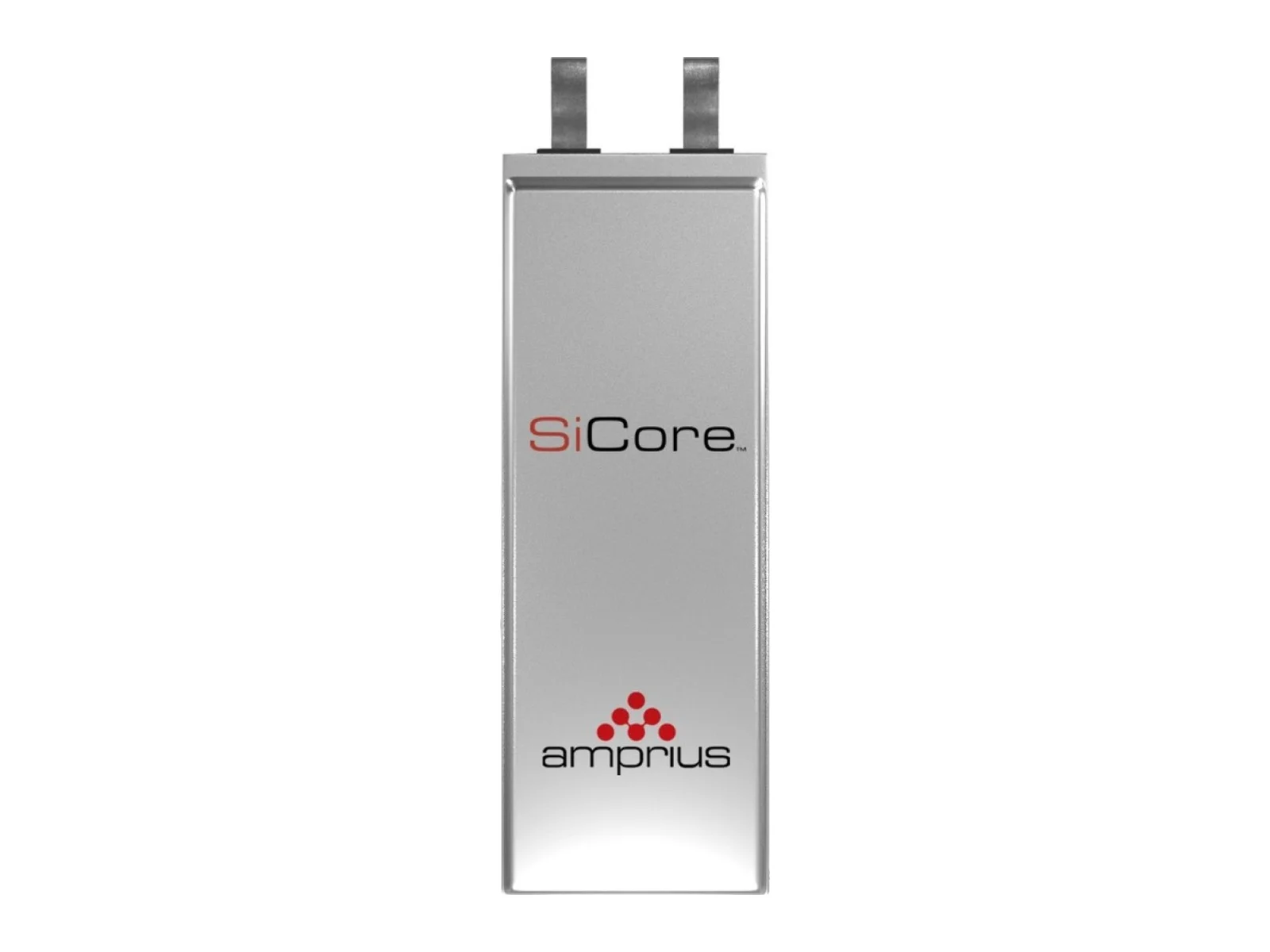
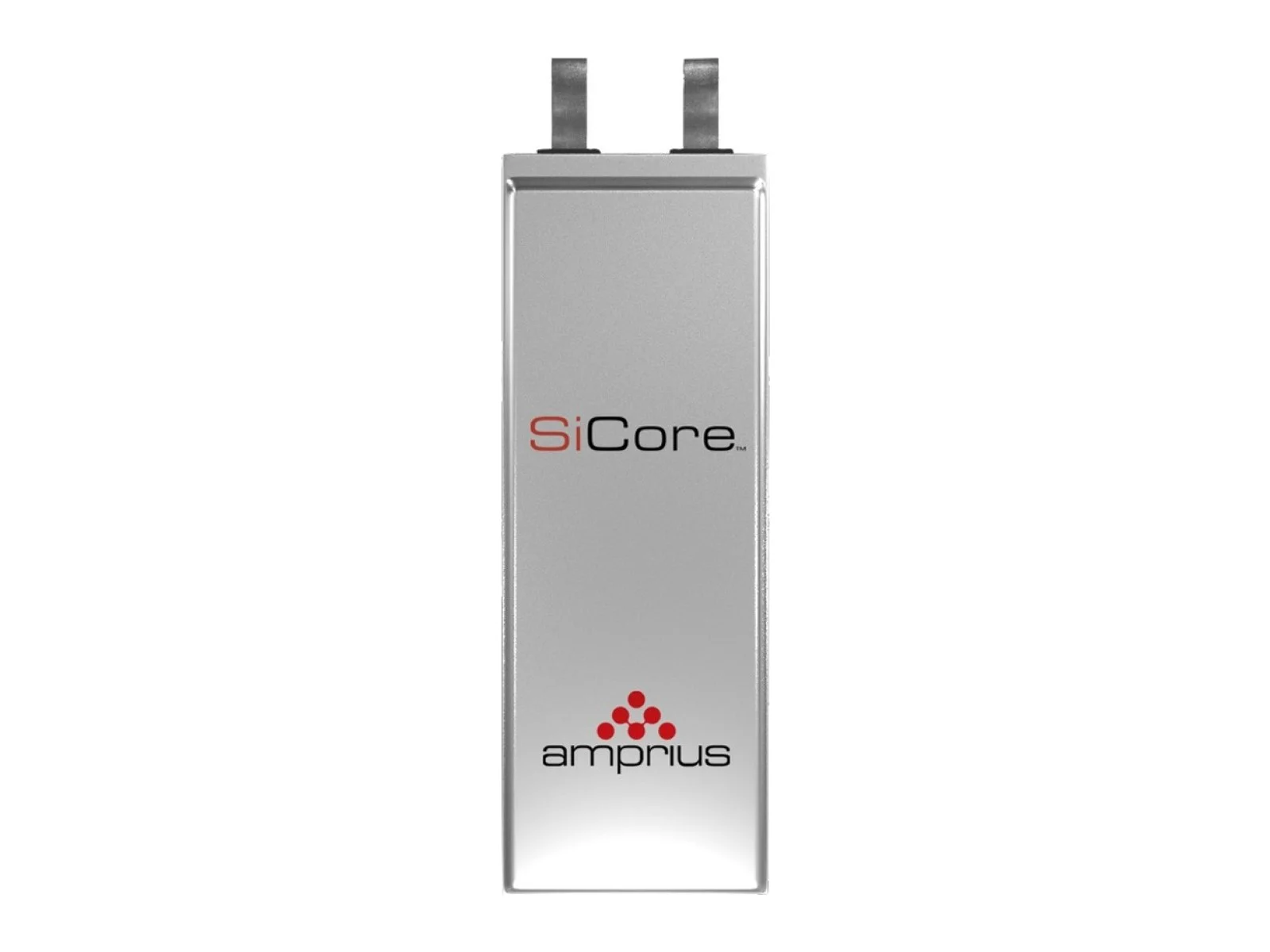
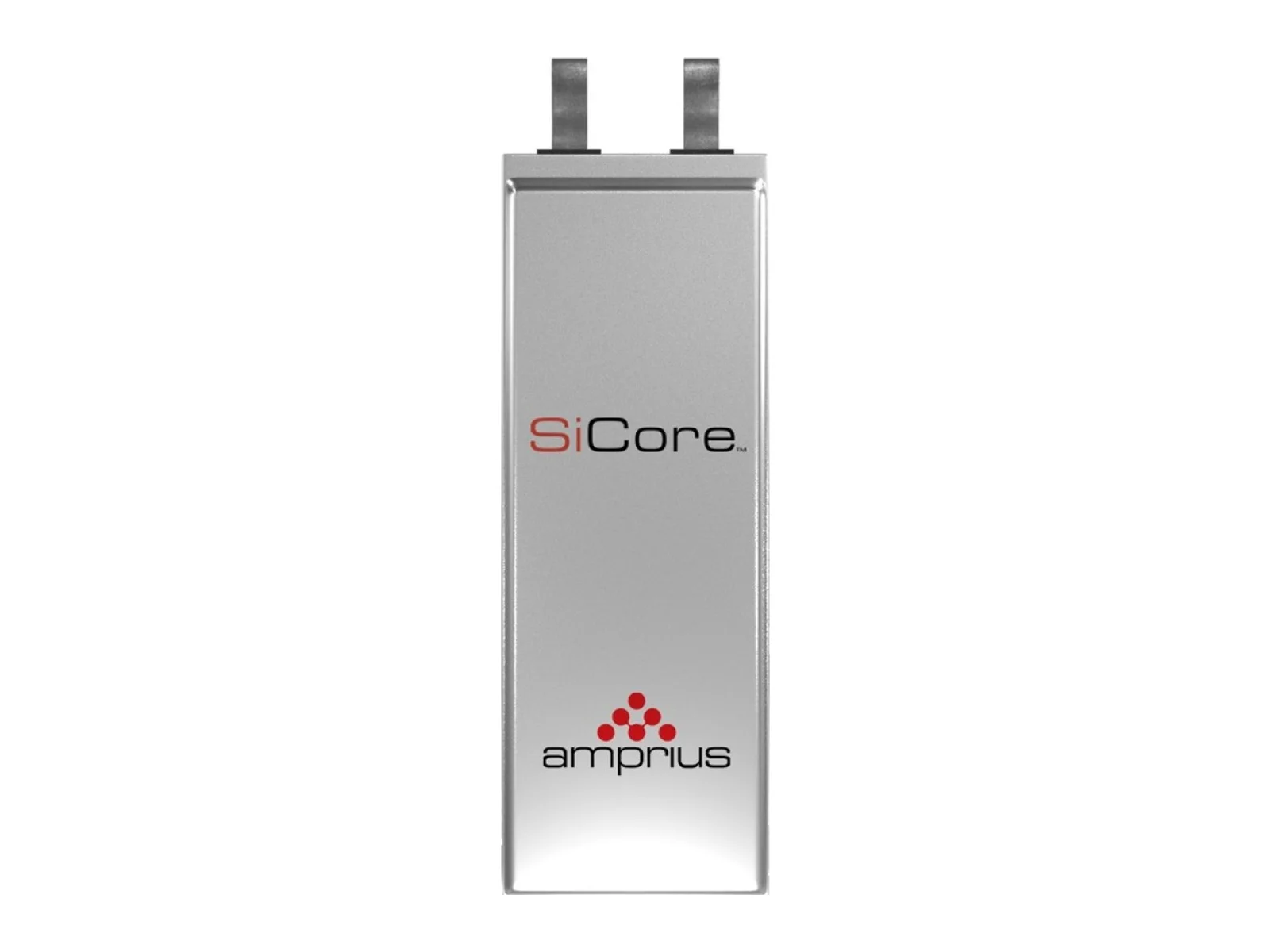
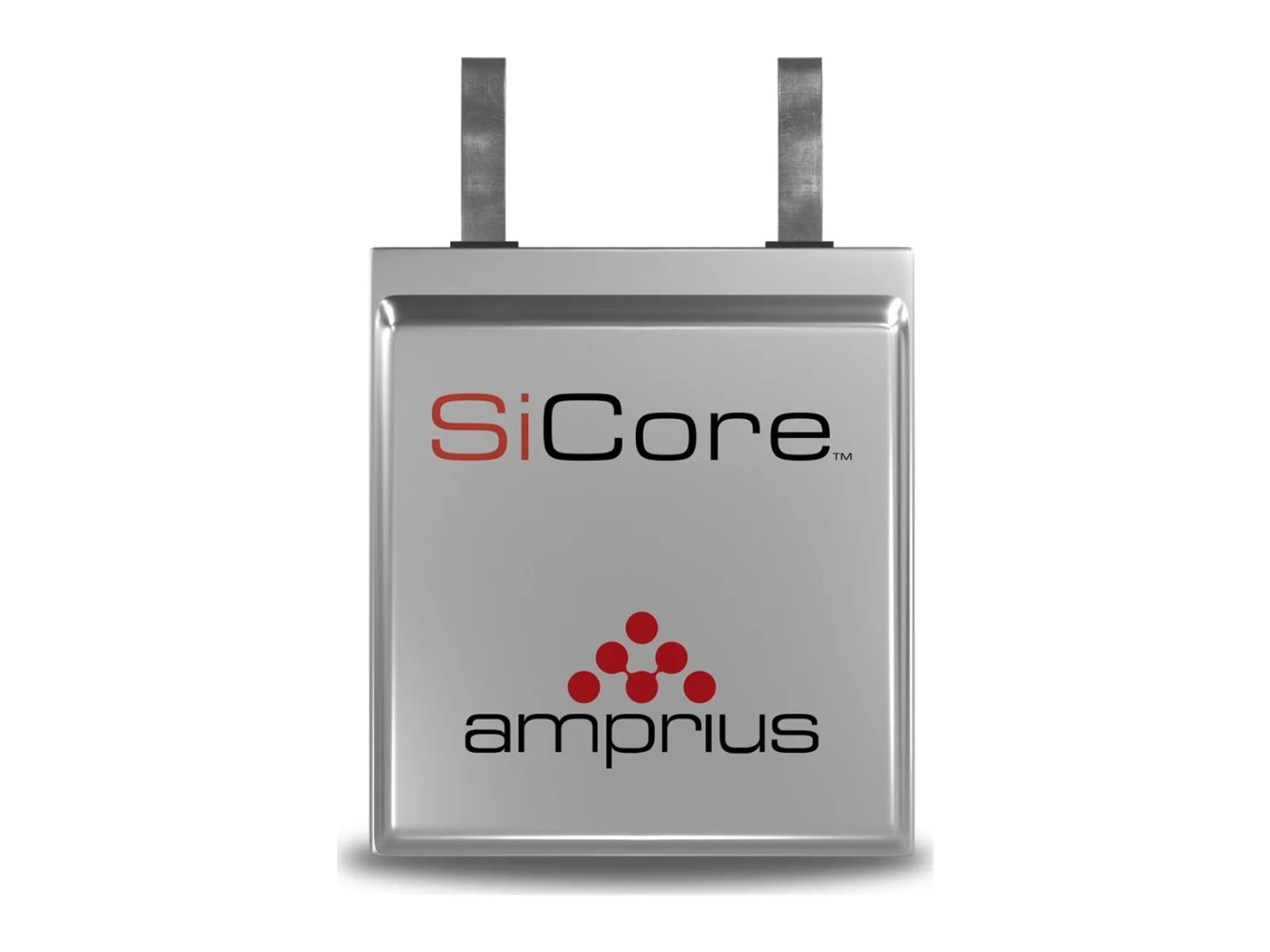
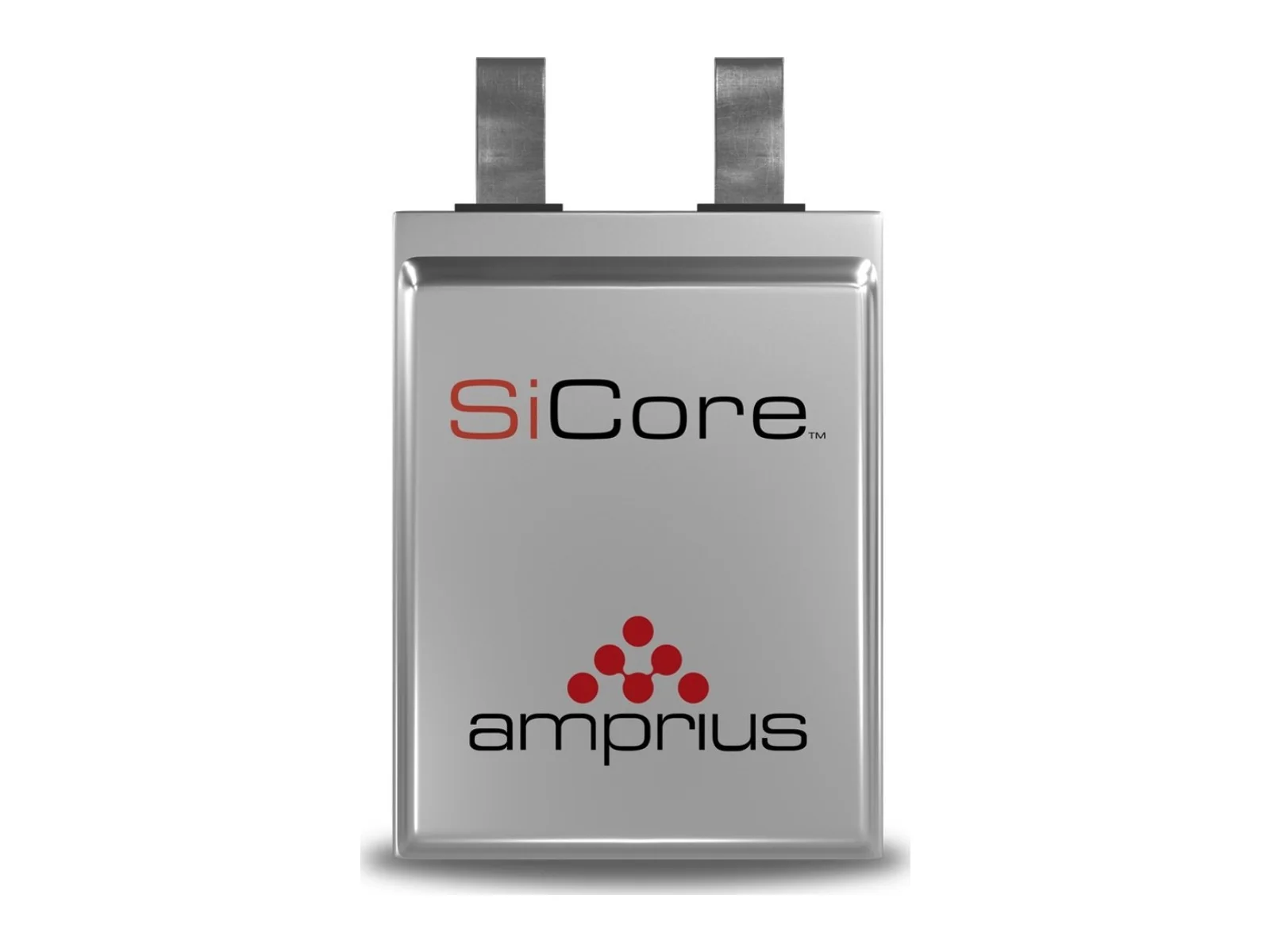
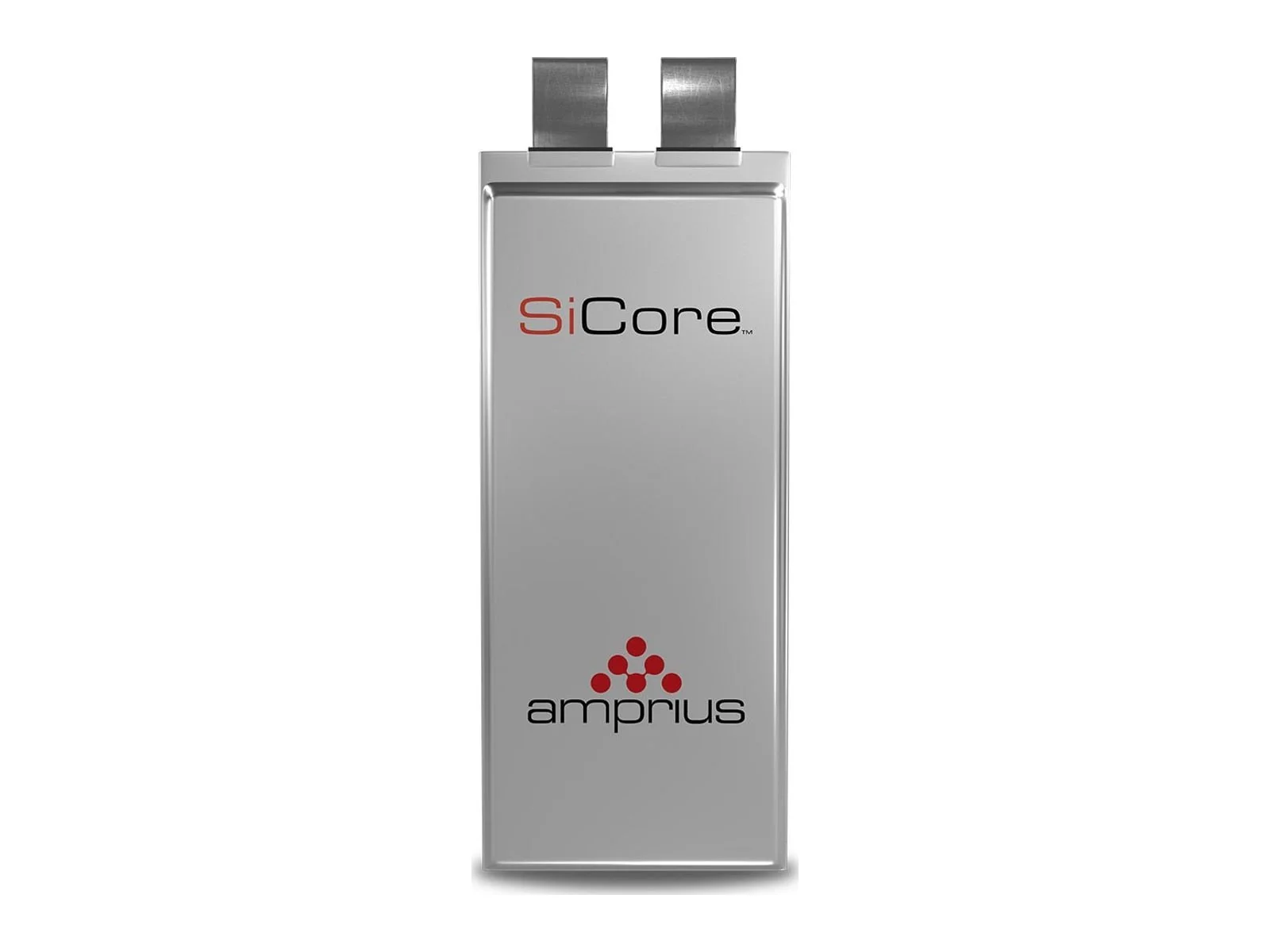
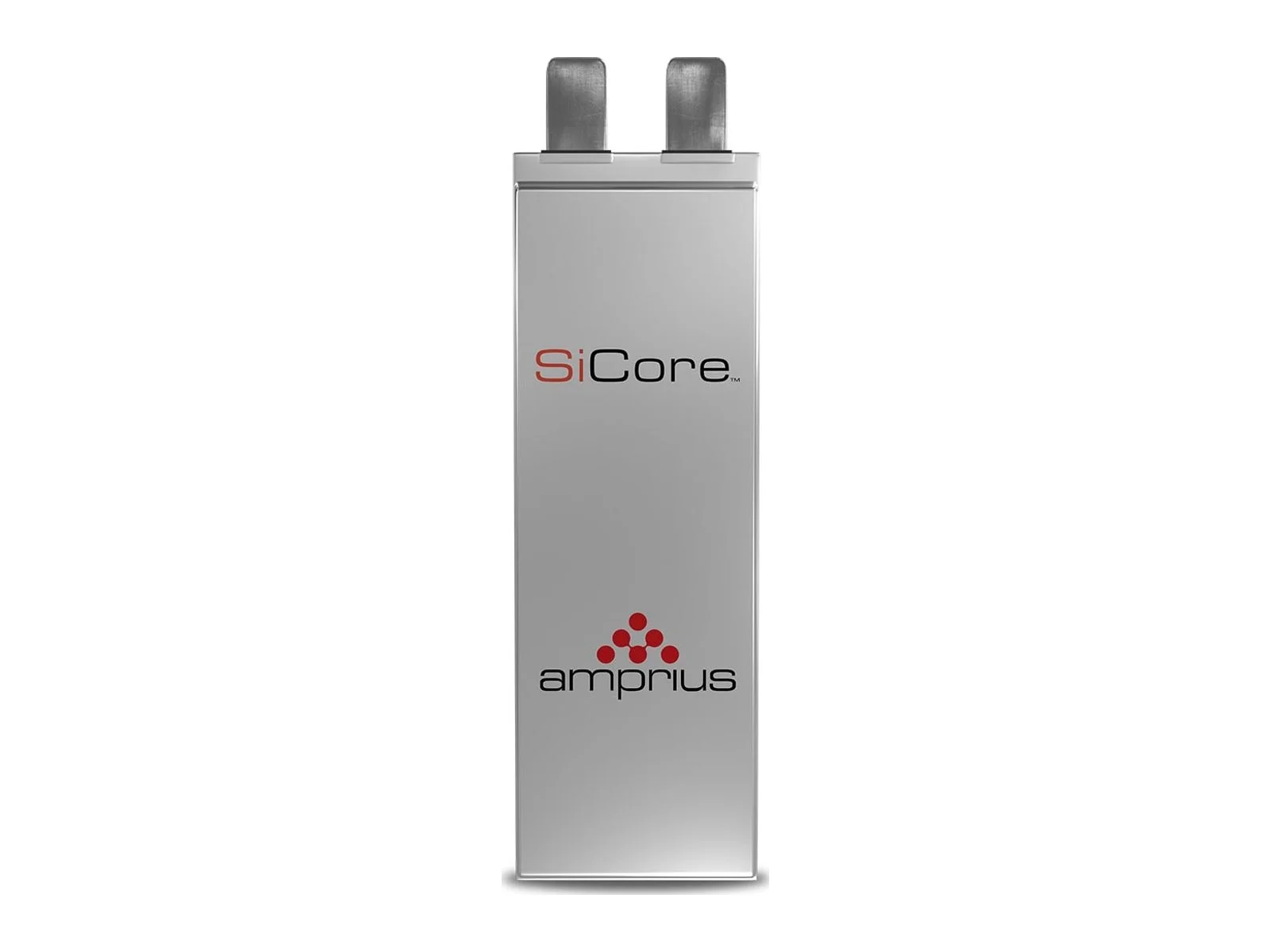
| SA09 SiCore lithium-ion pouch cell | Amprius | 395 Wh/kg | 1 C |
| SA08 SiCore lithium-ion pouch cell | Amprius | 345 Wh/kg | 5 C |
| SA03 SiCore lithium-ion pouch cell | Amprius | 400 Wh/kg | 1 C |
| SA02 SiCore lithium-ion pouch cell | Amprius | 340 Wh/kg | 3 C |
| SA04 SiCore lithium-ion pouch cell | Amprius | 315 Wh/kg | 3 C |
| SA102 SiCore lithium-ion pouch cell | Amprius | 450 Wh/kg | 1 C |
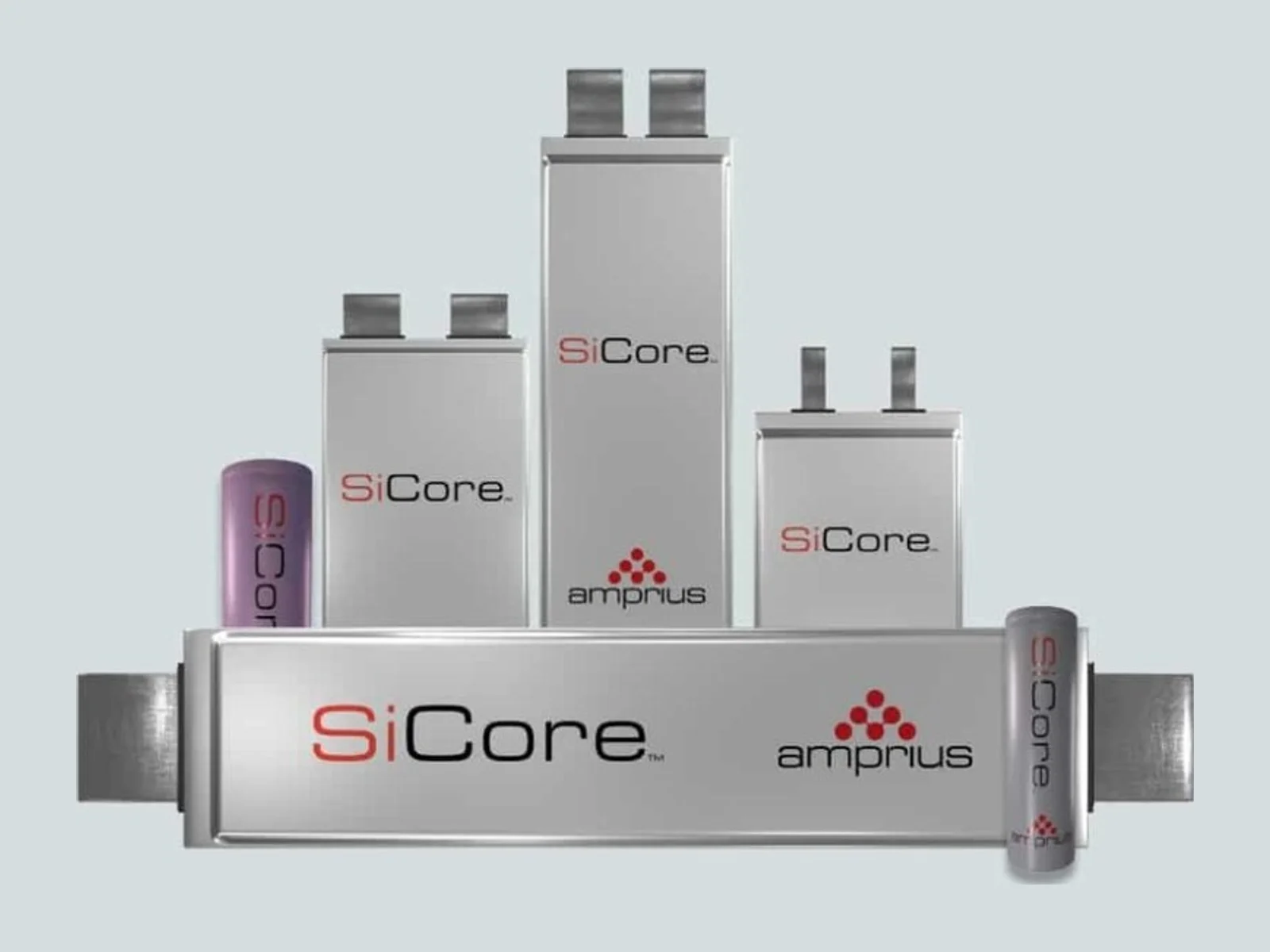
| SiCore silicon-anode lithium-ion battery-cell family | Amprius | 450 Wh/kg | 3 C |
| SA107 SiCore lithium-ion pouch cell | Amprius | 450 Wh/kg | 1 C |
| SA108 SiCore High Power Pouch Cell | Amprius | 345 Wh/kg | 5 C |
Filters
Try removing a filter.
Updated November 12, 2026
Silicon stores far more lithium per gram than graphite: about 3,600 mAh/g in theory against 372 mAh/g. Replacing part or all of the graphite anode with silicon raises cell specific energy from the 250 to 300 Wh/kg of conventional lithium-ion to roughly 350 to 450 Wh/kg in commercial cells.
Silicon swells by up to about 300 % when it takes up lithium. Repeated swelling cracks particles and consumes electrolyte, which shortens life. Manufacturers manage it with nano-structured silicon, silicon-carbon composites, silicon oxide blends and, in some designs, external pressure on the cells.
They suit endurance-driven aircraft, such as fixed-wing UAS and high-altitude platforms, where each extra Wh/kg extends flight time.
A lithium-ion cell whose anode contains silicon instead of, or mixed with, graphite. Silicon holds much more lithium, so the cell stores more energy for the same mass.
Commercial cells reach roughly 350 to 450 Wh/kg, against 250 to 300 Wh/kg for conventional lithium-ion cells with graphite anodes.
Silicon expands strongly on charge, which stresses the electrode and shortens cycle life. Check the number of cycles, the test conditions and whether the cells need external compression.
Brake specific fuel consumption (BSFC) is the mass of fuel an engine burns per unit of shaft energy delivered, usually in g/(kW·h); a lower value means a more efficient engine.
Disc loading is the aircraft's weight (or thrust) divided by the total area swept by its rotors or propellers, in kg/m2 or lb/ft2; it largely sets hover power and downwash.
A heavy-fuel engine is a combustion engine able to run on kerosene-type or diesel fuels such as JP-8 or Jet A-1 instead of gasoline, simplifying logistics and reducing fire risk.
The Kv rating of a brushless motor is its speed constant in rpm per volt, the no-load speed reached for each volt applied; it is the inverse of the back-EMF constant.
A PEM fuel cell is an electrochemical cell that turns hydrogen and oxygen from air into electricity across a solid polymer membrane at low temperature, giving a quiet, light power source for long-endurance drones and eVTOL aircraft.
A silicon anode is a lithium-ion negative electrode in which silicon, alone or blended with graphite, stores lithium, raising cell capacity and specific energy while swelling heavily during charge.
A literature-based review of air path and fuel-film models, feedforward-plus-feedback air-fuel ratio control, delay-limited bandwidth, sensor-failure detection and the regulatory requirements for electronic engine control.
A literature-based review of how axial-flux permanent-magnet machines are sized for direct-drive lift rotors: hover torque requirement, torque-sizing relations, design and optimisation methods, reported parameter ranges, fault behaviour and regulatory context.
For eVTOL aircraft, CATL aims to reach a battery energy density of 350 Wh/kg or more. Robin Zeng, who is chairman and CEO, names the number during the 2026 APEC CEO Summit in Shenzhen. The company adds that take-off and landing power…
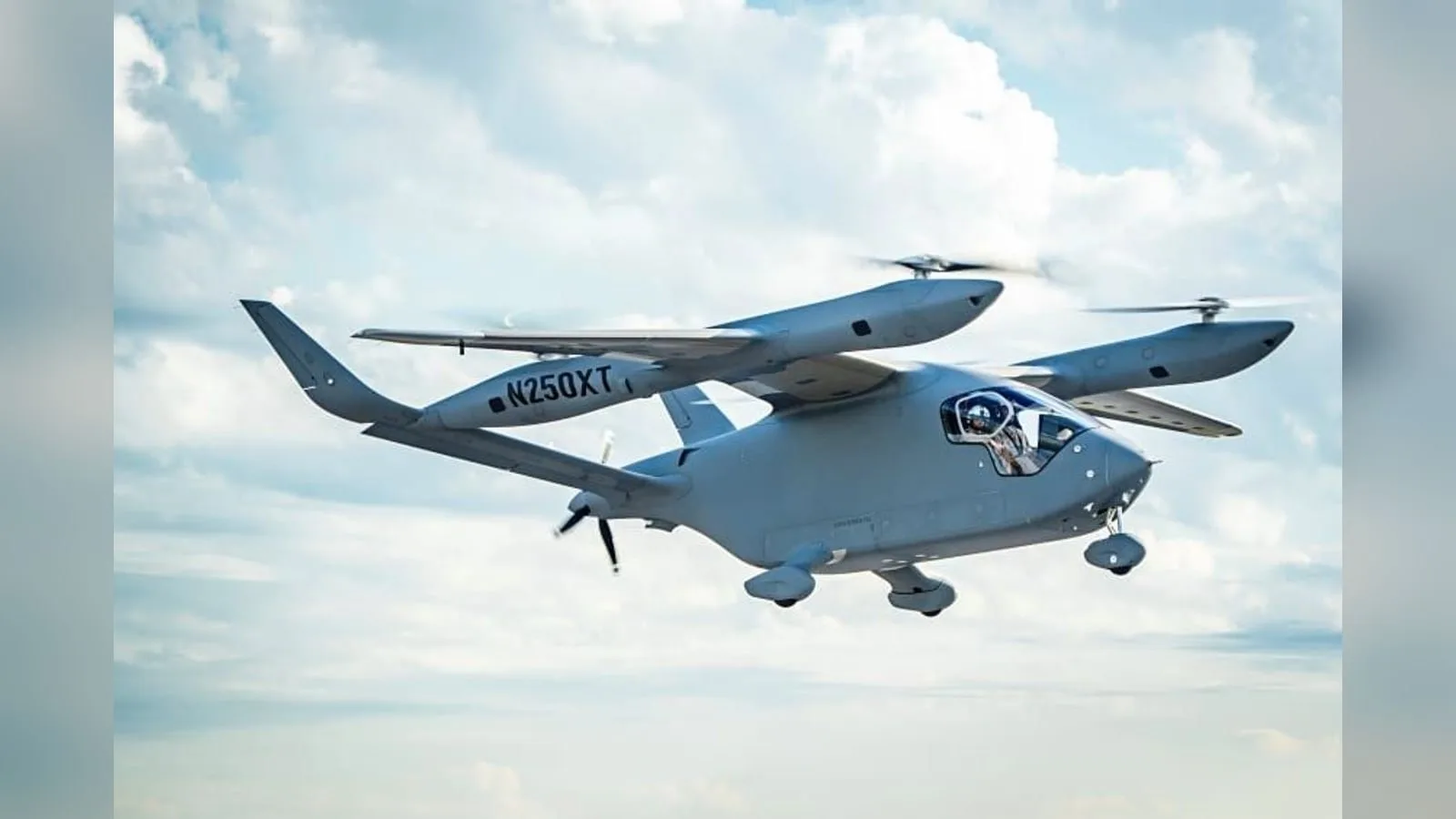
Astronics and BETA Technologies agree on series supply of CorePower electrical power systems for three BETA aircraft. The deal moves power hardware that has flown on BETA's development fleet since 2024 into production.
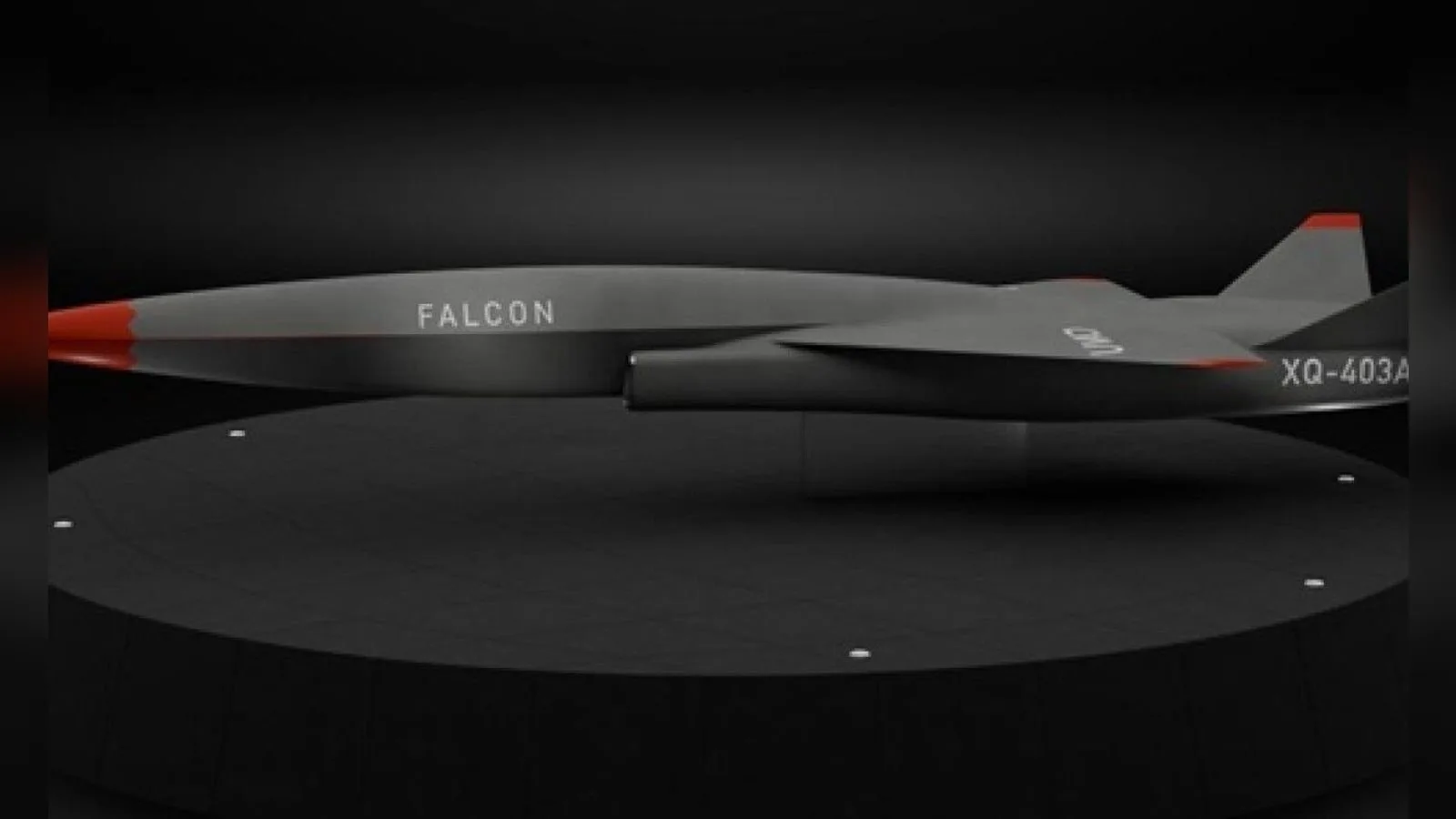
Falcon is a reusable supersonic uncrewed aerial target for missile-defense training, and its propulsion is the subject of a partnership between Safran Power Units and UVAD Technologies. Safran supplies two turbojet engines, and flight…