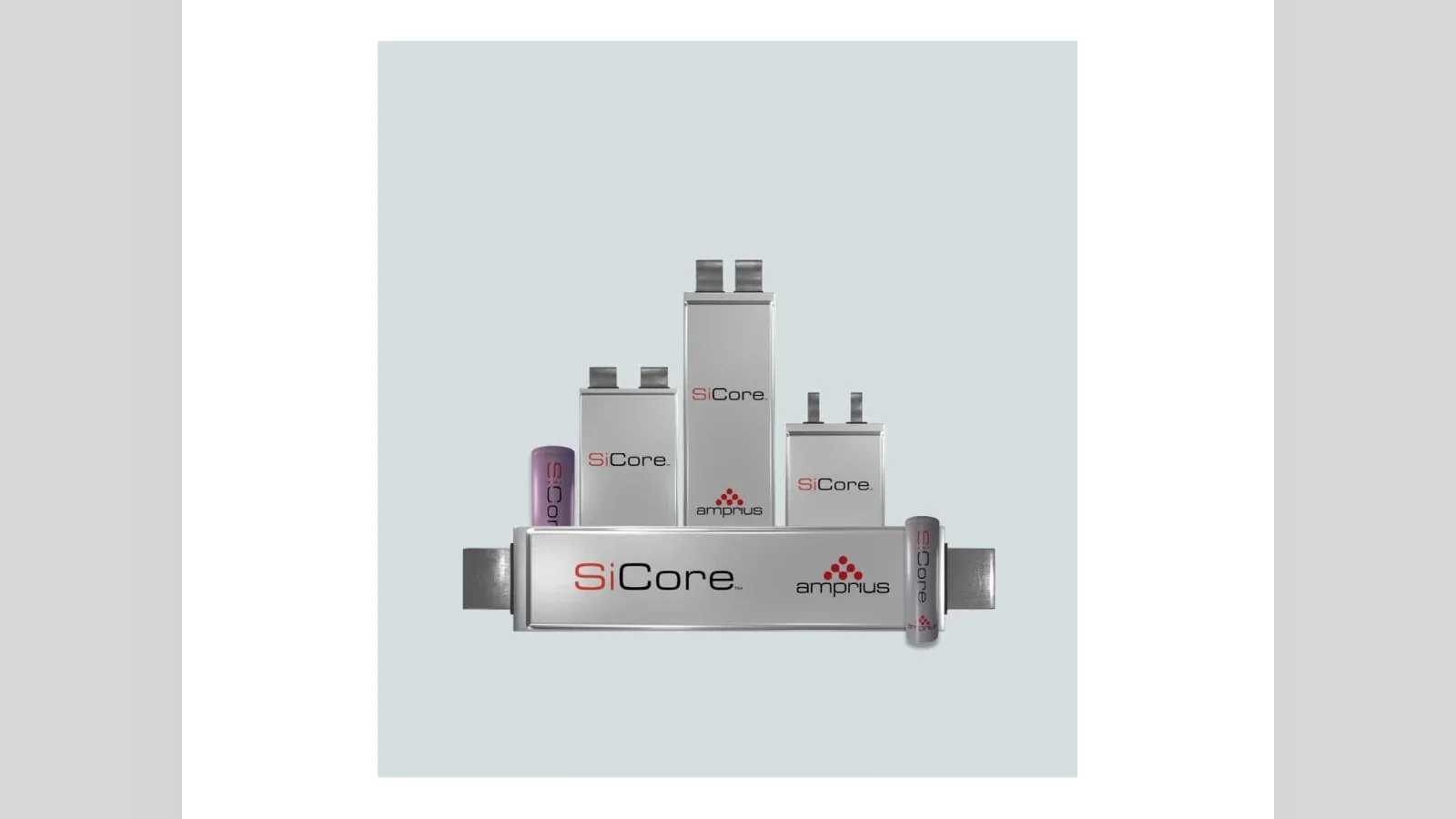
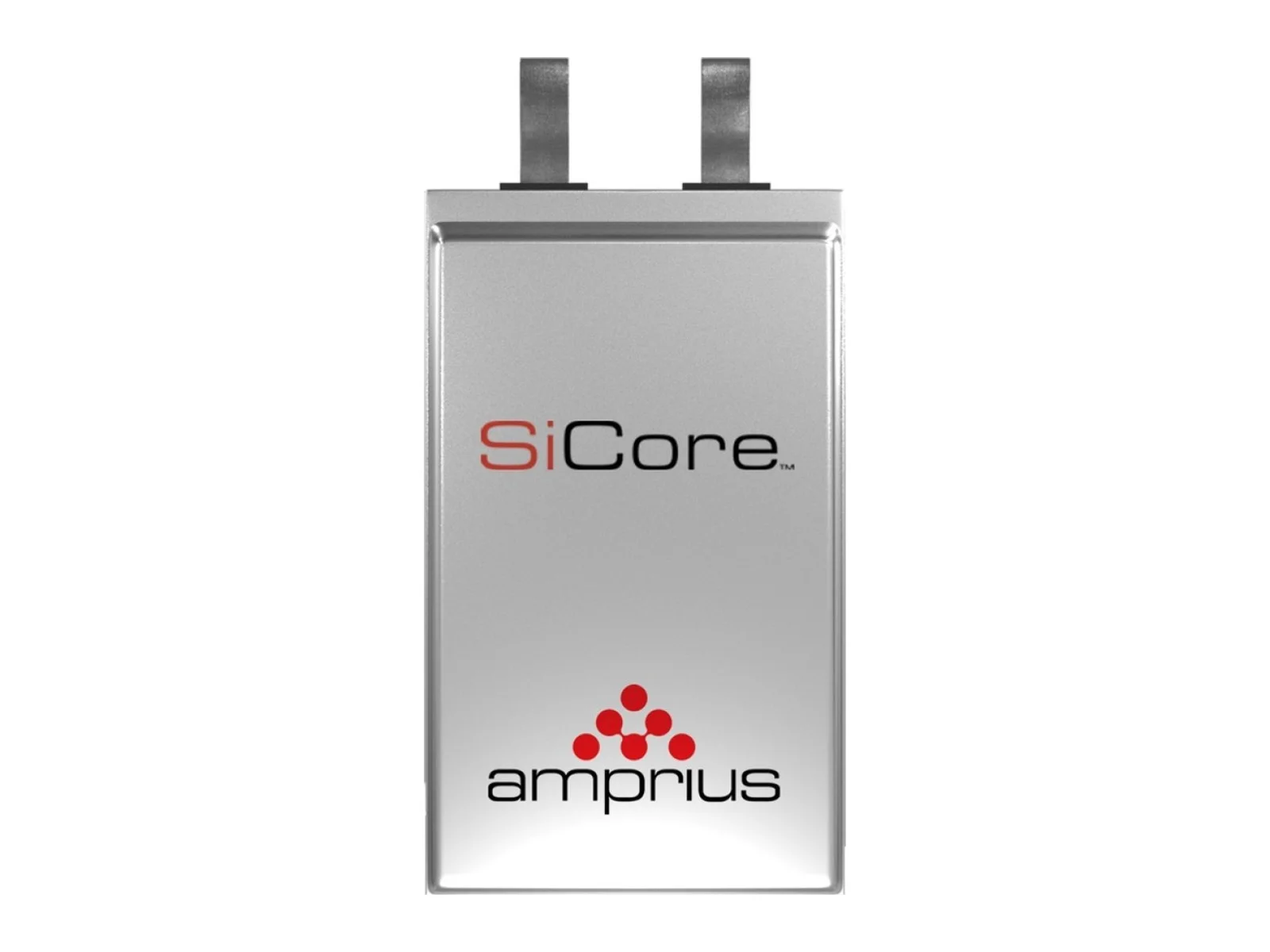
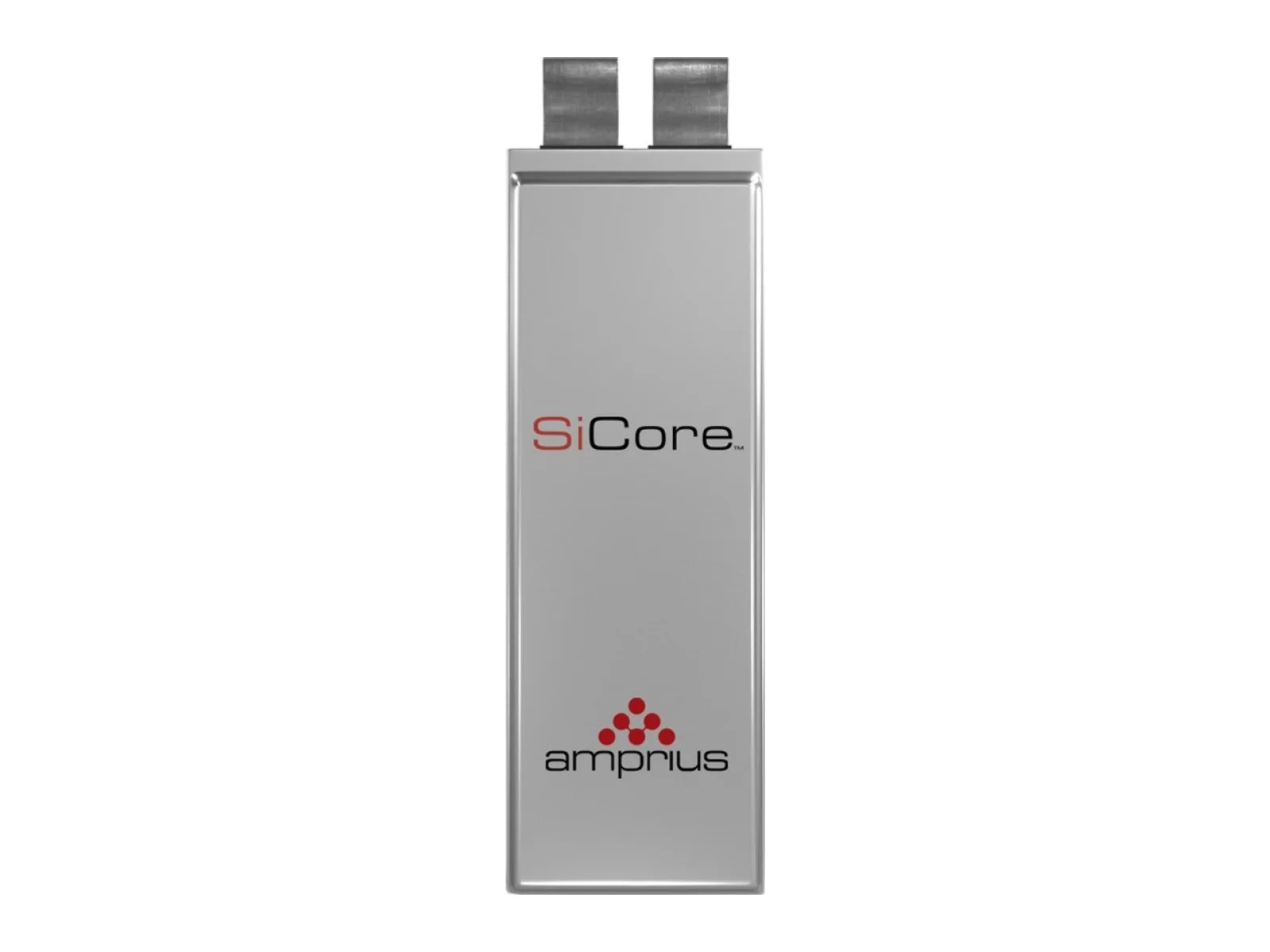
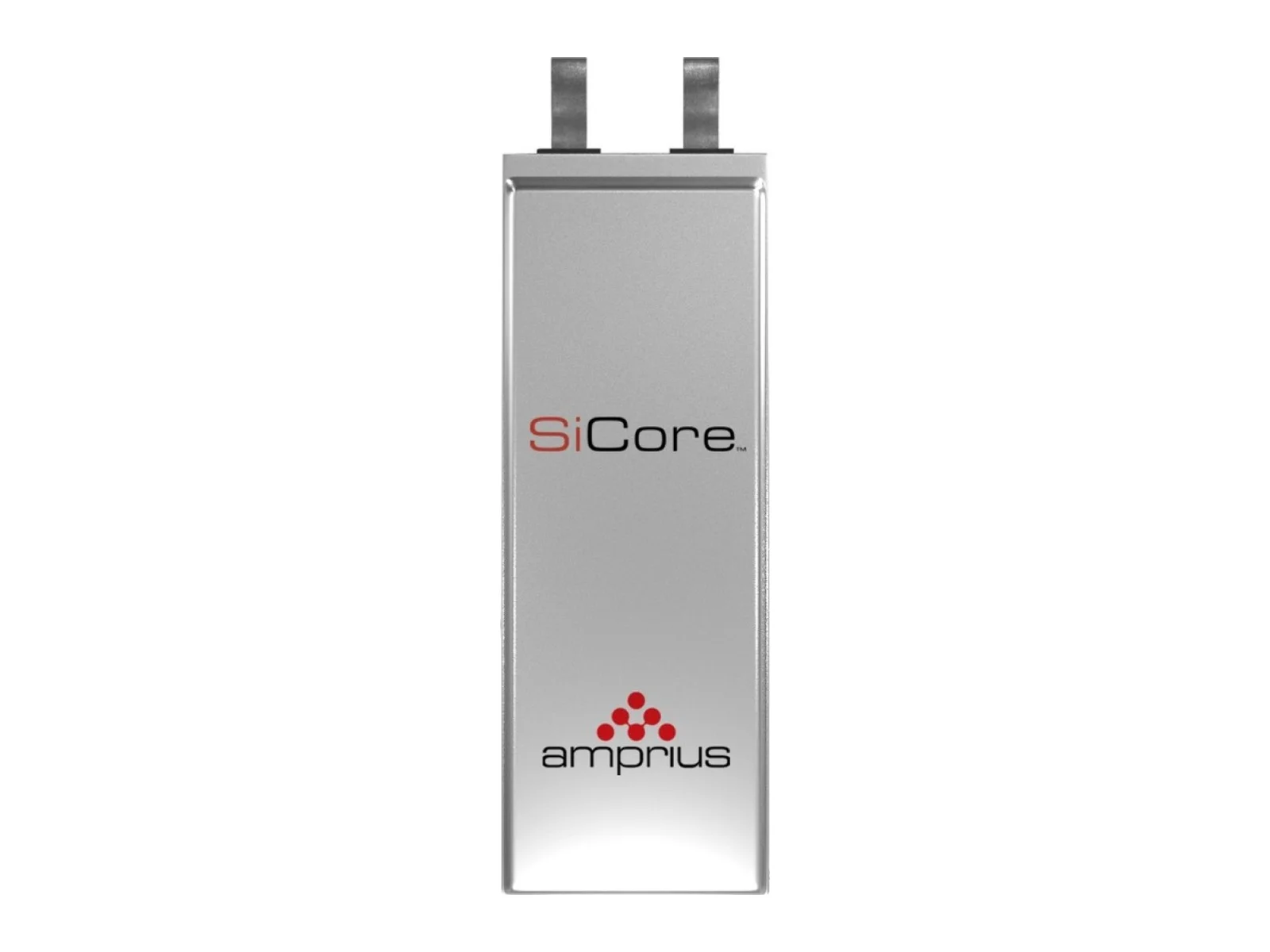
SA09 is a SiCore silicon-anode lithium-ion pouch cell for rechargeable battery assemblies. Its 8.2 Ah capacity and 1C continuous discharge rating support cell selection when specifying energy storage for an unmanned aircraft power system.
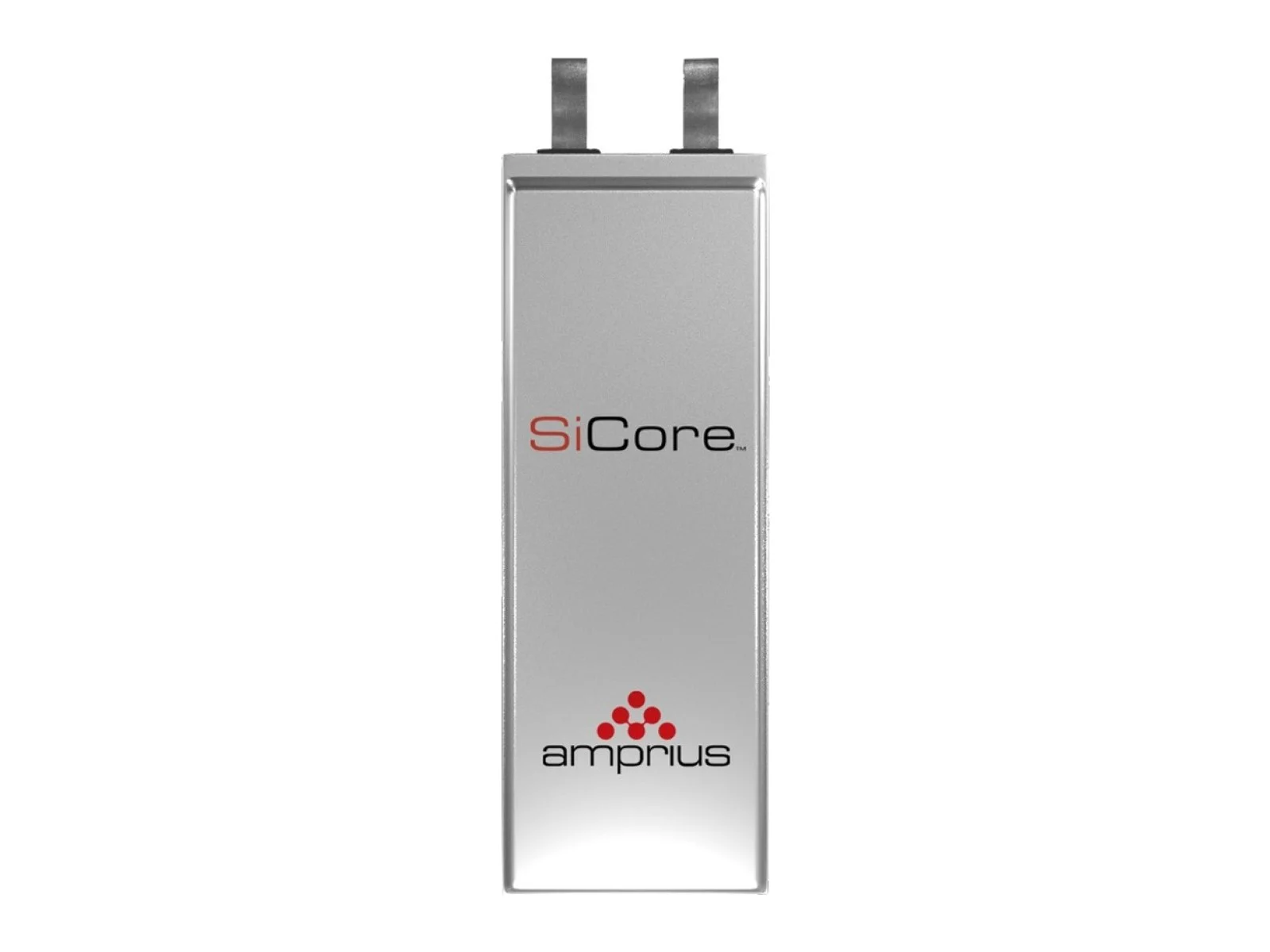
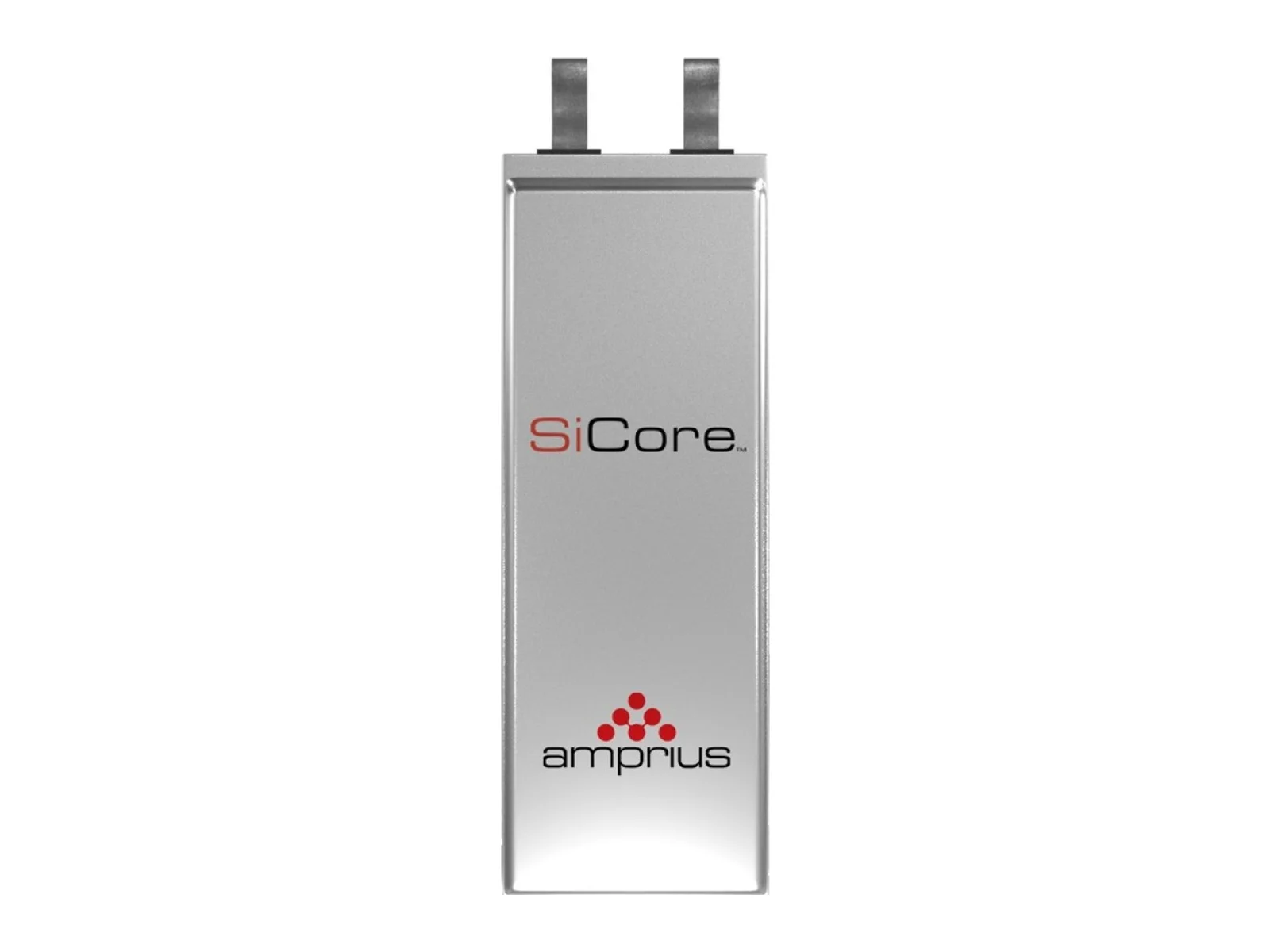
The SA09 SiCore lithium-ion pouch cell is a high-energy silicon-anode battery cell made by Amprius Technologies. It is a cell-level component, supplied for assembly into rechargeable battery packs, and it is aimed at electric aircraft and unmanned aircraft systems where the mass of the energy store decides endurance and payload.
Amprius lists the SA09 in its SiCore range as a High Energy cell. Its capacity is 8.2 Ah, and the maker quotes a gravimetric energy density of 395 Wh/kg and a volumetric energy density of 805 Wh/L. For a pack designer the first figure is the one that sets flight time per kilogram of battery, while the second shows how much cell volume a given pack energy needs inside an airframe, a battery bay or a fuselage section.
The continuous discharge rating is 1C, which for an 8.2 Ah cell corresponds to a continuous current of 8.2 A per cell. This is the profile of an energy-optimised cell: it suits steady cruise loads such as fixed-wing endurance flight, long-range surveillance or mapping missions, where the average current stays close to the capacity rating. Applications with short high-power demands, such as vertical take-off and climb of a multirotor or eVTOL aircraft, need parallel strings sized so that the current per cell stays within this limit, or a cell from a power-oriented design. Within the SiCore family, Amprius describes its Energy design class with a 1C continuous and 2C pulse discharge rate and a maximum charge rate of C/2, which gives an indication of how charging time should be planned for this type of cell.
The cell uses the pouch format, with a length of 95.5 mm and a width of 56.7 mm. Pouch cells have no rigid can, so a pack has to provide its own mechanical retention, even compression and thermal management, and it connects the cells through their tabs by welding or bonding. The silicon-anode chemistry is a lithium-ion variant, so the pack still needs a battery management system with per-cell voltage monitoring, over-current protection and temperature sensing, in line with the charge and discharge limits above. The stated cycle life is 150 cycles, a figure that designers should weigh against the mission cadence and the intended replacement interval of the pack.
Typical uses follow from the cell's energy-first design: battery packs for long-endurance unmanned aircraft, lightweight electric aircraft prototypes and demonstrators, payload-limited platforms in which every gram of battery matters, and robotics. Amprius lists drones, e-bikes and AI and robotics as the industries served by the SiCore range. The full technical specification of the SA09 is available from the maker on request through its catalog form.
CAMINUS, the Indianapolis cell maker formerly known as EnPower, signs a contract manufacturing agreement with Amprius Technologies to build Amprius-designed silicon-anode pouch cells in the United States. Amprius gains a US production…
Amprius Technologies is granted up to $75 million by the U.S. Department of War to convert an American EV battery line to cells for unmanned aircraft. The line will make Amprius pouch cells compliant with NDAA sourcing rules for drones in…
Amprius launches SiCore500, a silicon-anode cell rated at 500 Wh/kg under a 1C continuous discharge. Standard lithium-ion production lines can build it, and sales are expected to start in late 2026.










 FeaturedBatteries
 FeaturedBatteries
 FeaturedBatteries
 FeaturedBatteries
 FeaturedBatteries
 FeaturedBatteries
 FeaturedBatteries