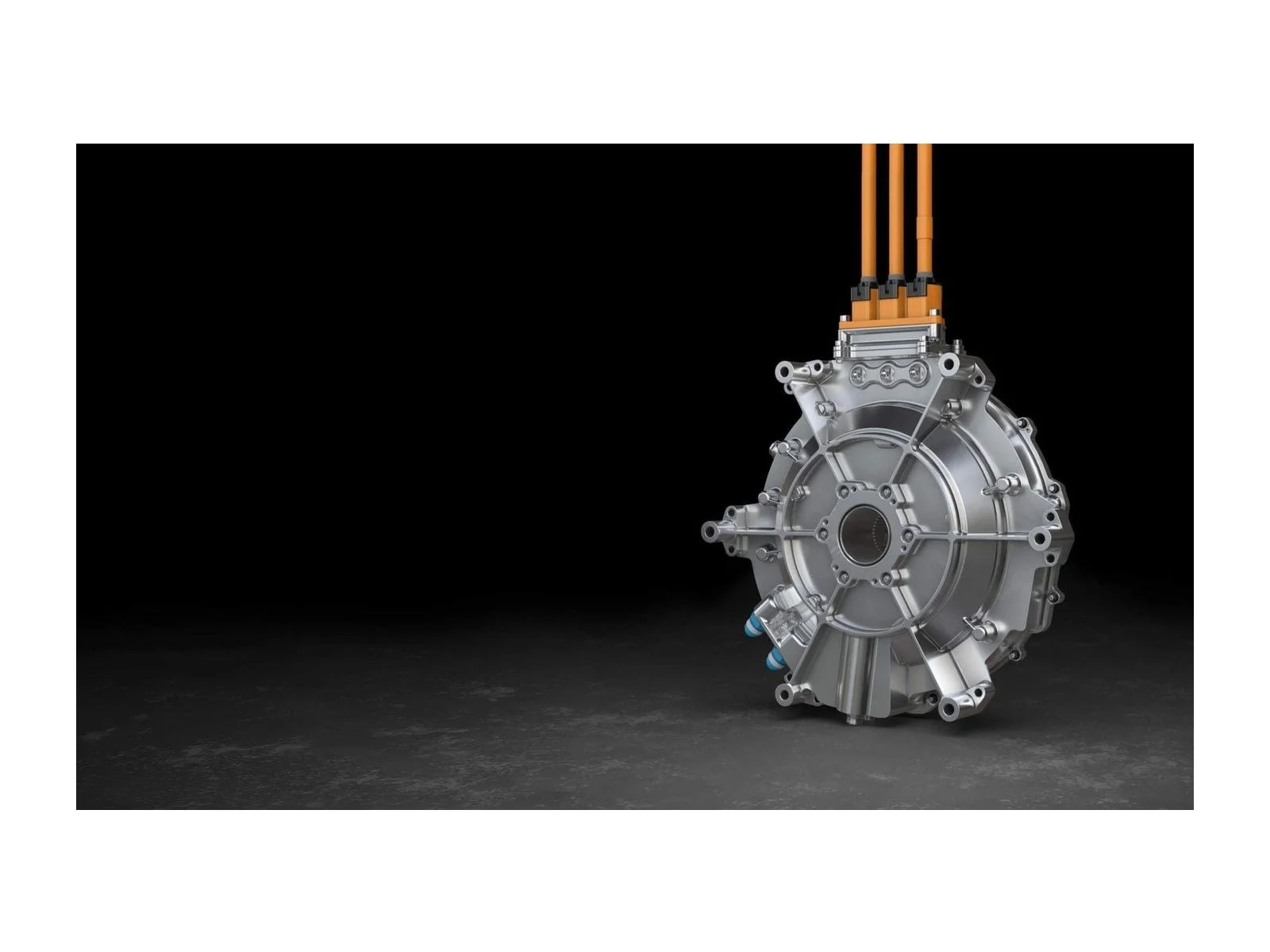
Kv is the speed constant of a brushless DC motor, expressed in revolutions per minute per volt (rpm/V). It states the unloaded rotational speed the motor tends to reach for each volt applied. It is the reciprocal of the back-EMF constant Ke, which is the voltage the spinning motor generates per unit of speed, and is tied to the torque constant Kt: a higher Kv means a lower torque per ampere.
Kv does not mean power. Two motors of the same size can have very different Kv values, depending on the number of winding turns and the wire gauge. A low-Kv motor turns slowly and at a given current produces more torque, so it suits large, slow propellers and high voltage; a high-Kv motor turns fast with less torque and suits small propellers. Large-drone and eVTOL motors typically have low Kv values compared with small hobby motors, but the range depends on the pole count and supply voltage.
On a datasheet Kv appears as rpm/V (sometimes rad/s/V, or Kt in N·m/A), with a tolerance and the measurement conditions, often line-to-line.
A frequent mistake is comparing Kv across motors without considering supply voltage, propeller and current: the same motor with a different pack voltage gives a different speed and thrust. Another is assuming the real speed equals Kv times voltage; under load the speed is lower, because of resistance and the load torque.