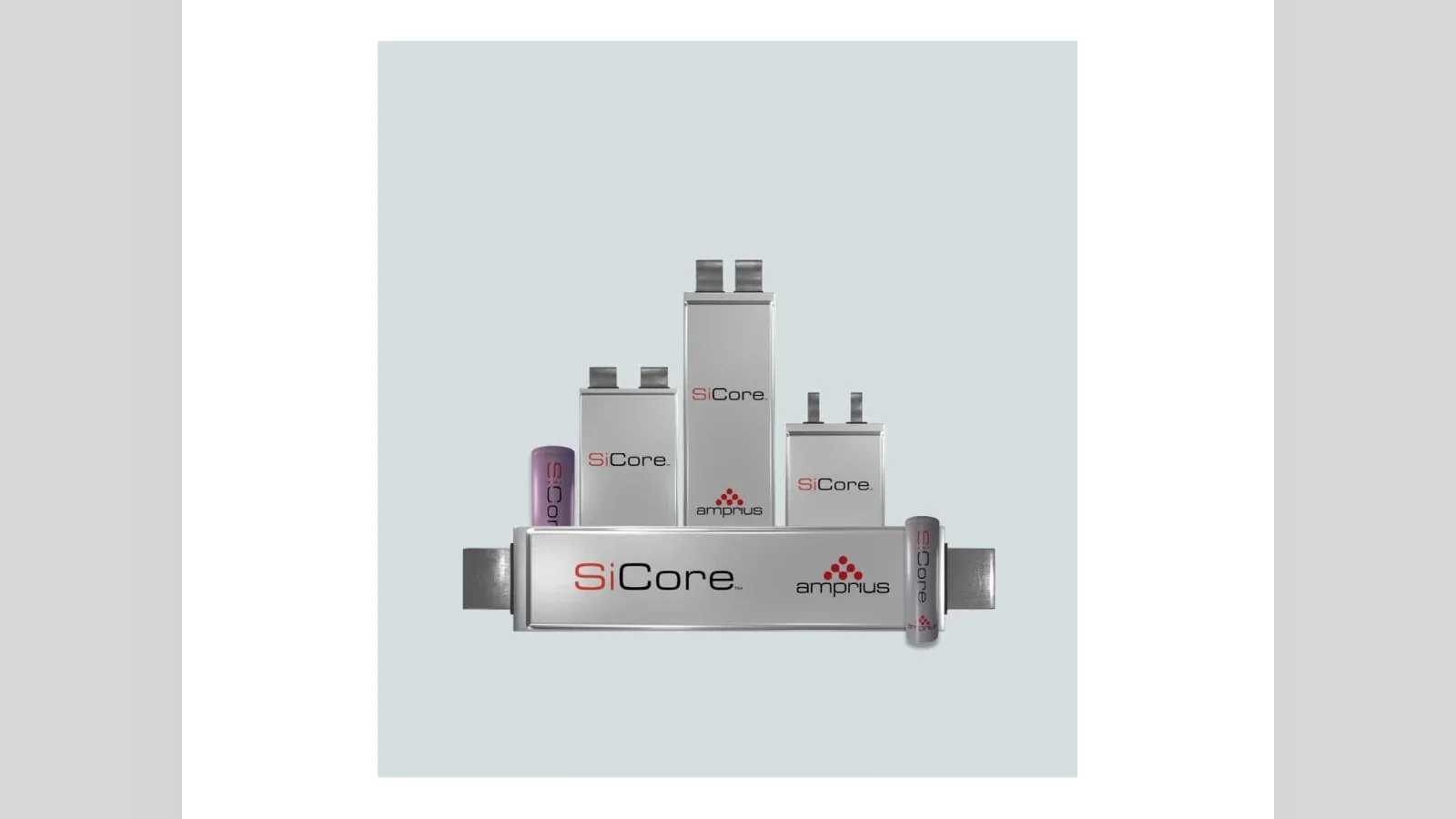
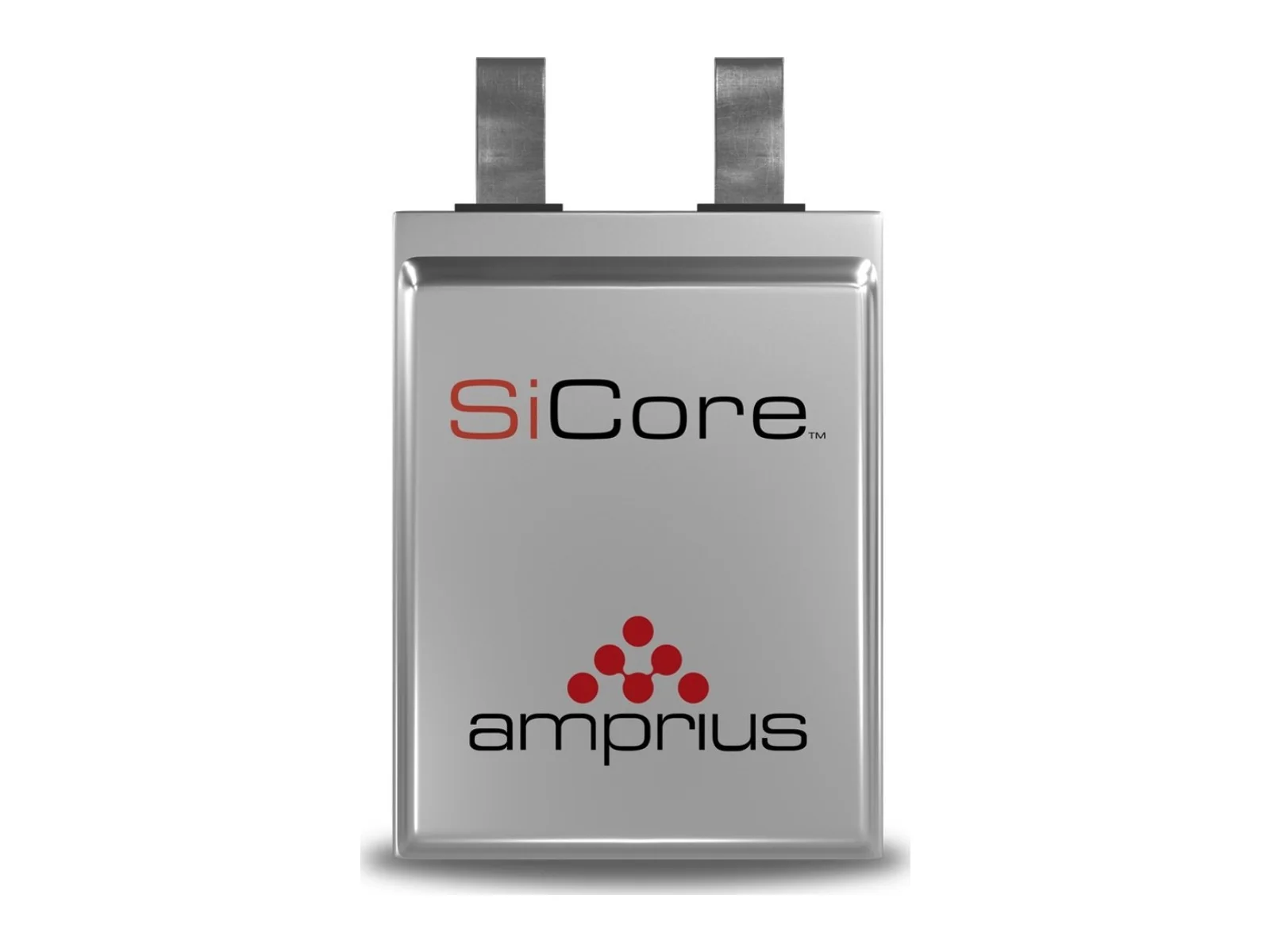
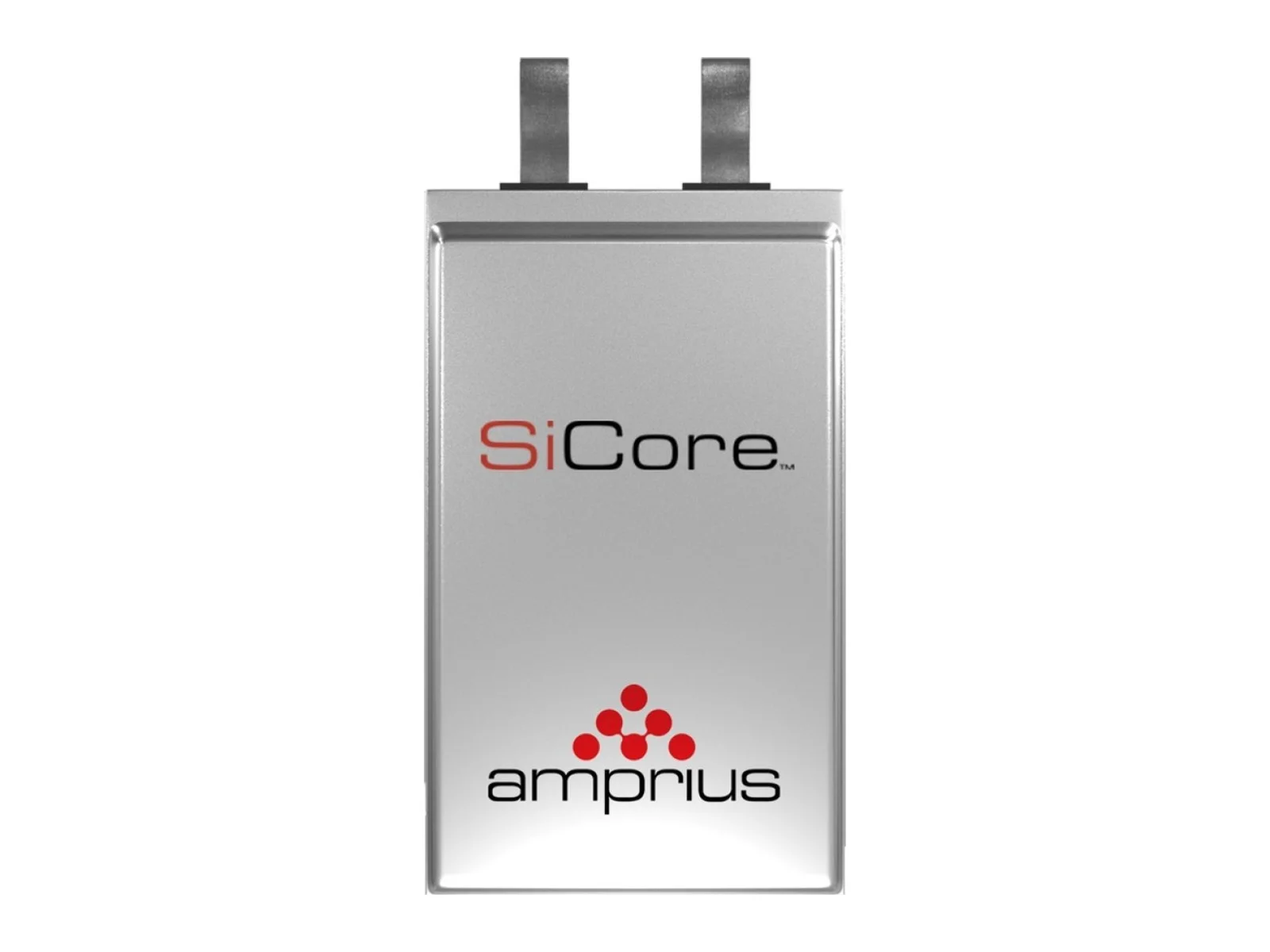
SA107 is a SiCore silicon-anode lithium-ion pouch cell for rechargeable battery assemblies. Its 5.8 Ah capacity and 1C continuous discharge rating support cell selection when specifying energy storage for an unmanned aircraft power system.
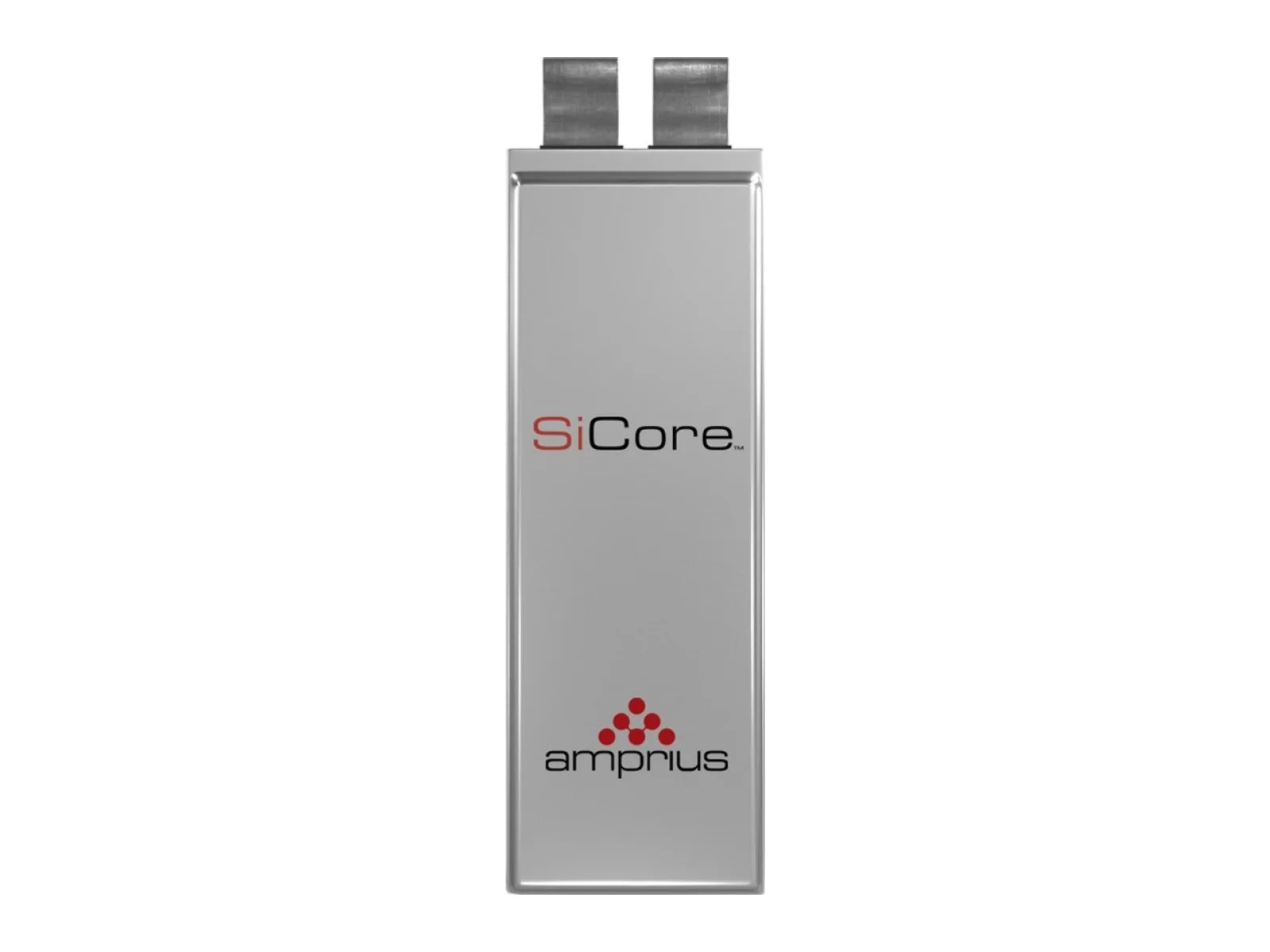
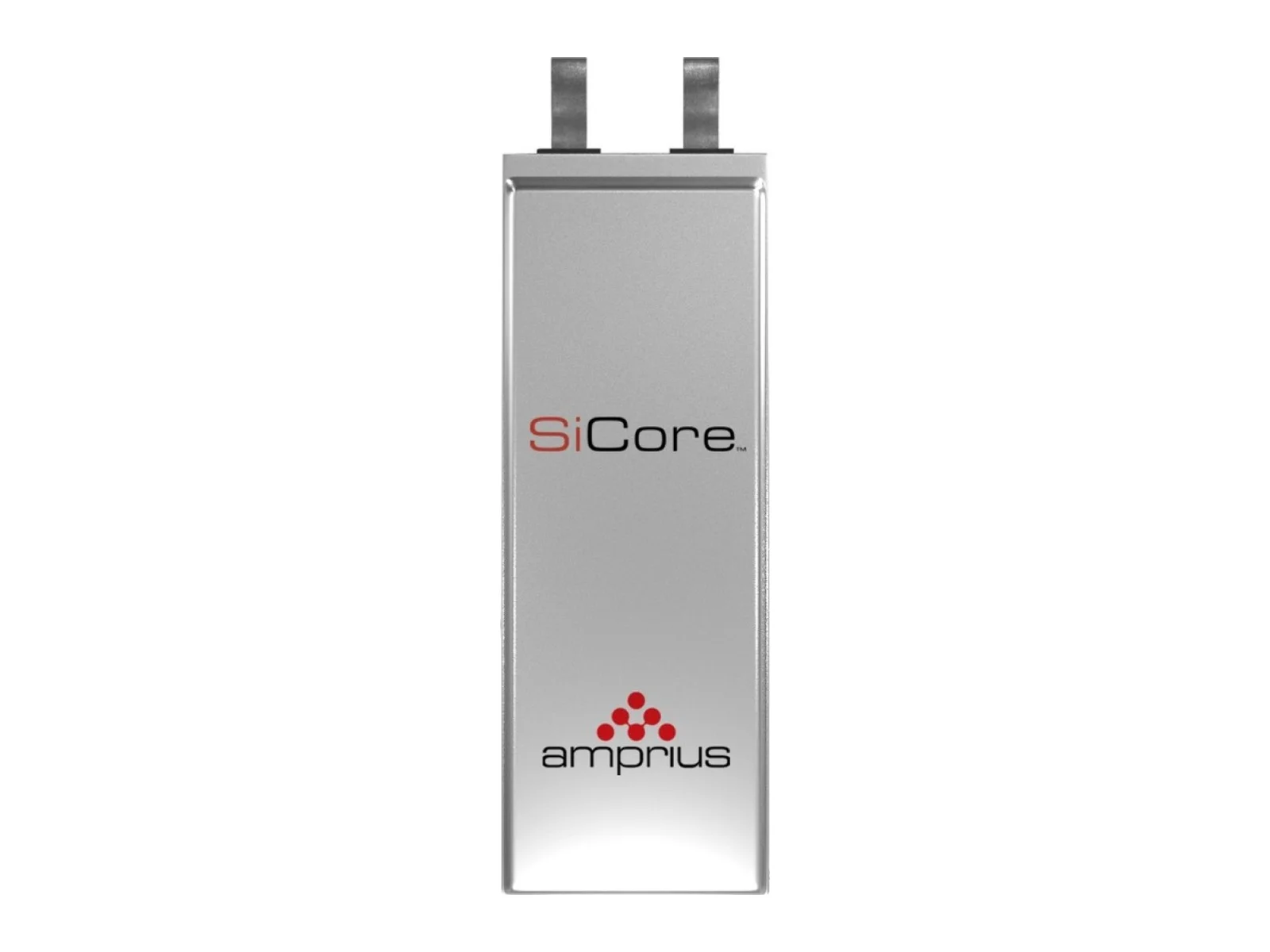
The SA107 SiCore lithium-ion pouch cell from Amprius Technologies is a silicon-anode cell in the high-energy design of the SiCore family, intended for rechargeable battery packs where mass is the limiting factor. It is a cell-level component: a pack builder combines it in series and parallel strings, adds a battery management system and a housing, and qualifies the assembly for the target platform.
The cell stores 5.8 Ah and is rated for a continuous discharge of 1C, which corresponds to a continuous current of 5.8 A per cell. Its specific energy is 450 Wh/kg and its volumetric energy density is 1,000 Wh/L. For an integrator, the first figure sets how much pack mass is needed for a given energy target, and the second sets how much volume the cells occupy in an airframe bay. A 1C continuous rating places the cell in the energy-optimised class: it suits cruise-dominated loads such as fixed-wing endurance flight or multirotor hover at moderate throttle, rather than sustained high-power climbs, and pack designers should size the number of parallel cells so that peak current stays within the rating.
The pouch measures 65.5 mm in length and 53.5 mm in width. The pouch format has no rigid can, so the cell must be supported by the pack structure, with the pressure, compression and venting arrangements defined by the pack designer in line with the maker's guidance. Thickness is not given on the product page, so the stack height of a pack has to be confirmed with the manufacturer before the mechanical layout is frozen.
The product page lists a cycle life of 125 cycles for this cell and marks the listing as preliminary, so the data should be confirmed with the manufacturer when a design is released. Across the wider SiCore range the maker publishes three cell designs: a power design at 390 Wh/kg and 860 Wh/L with 10C continuous discharge, an energy design at 450 Wh/kg and 1,000 Wh/L with 1C continuous and 2C pulse discharge and a C/2 maximum charge rate, and a balanced design at 340 Wh/kg and 770 Wh/L with 3C continuous and 5C pulse discharge. The SA107 belongs to the energy design, so charging is slower than with the power and balanced variants and the charger profile should follow the cell data.
The maker positions SiCore cells for unmanned aviation, manned aviation, light electric vehicles, electric vehicles, and AI and robotics. In unmanned aircraft, silicon-anode cells of this class are used to extend flight time or to raise payload mass for the same pack mass, in surveying, inspection, surveillance and logistics drones that fly long, steady profiles.
CAMINUS, the Indianapolis cell maker formerly known as EnPower, signs a contract manufacturing agreement with Amprius Technologies to build Amprius-designed silicon-anode pouch cells in the United States. Amprius gains a US production…
Amprius Technologies is granted up to $75 million by the U.S. Department of War to convert an American EV battery line to cells for unmanned aircraft. The line will make Amprius pouch cells compliant with NDAA sourcing rules for drones in…
Amprius launches SiCore500, a silicon-anode cell rated at 500 Wh/kg under a 1C continuous discharge. Standard lithium-ion production lines can build it, and sales are expected to start in late 2026.










 FeaturedBatteries
 FeaturedBatteries
 FeaturedBatteries
 FeaturedBatteries
 FeaturedBatteries
 FeaturedBatteries
 FeaturedBatteries