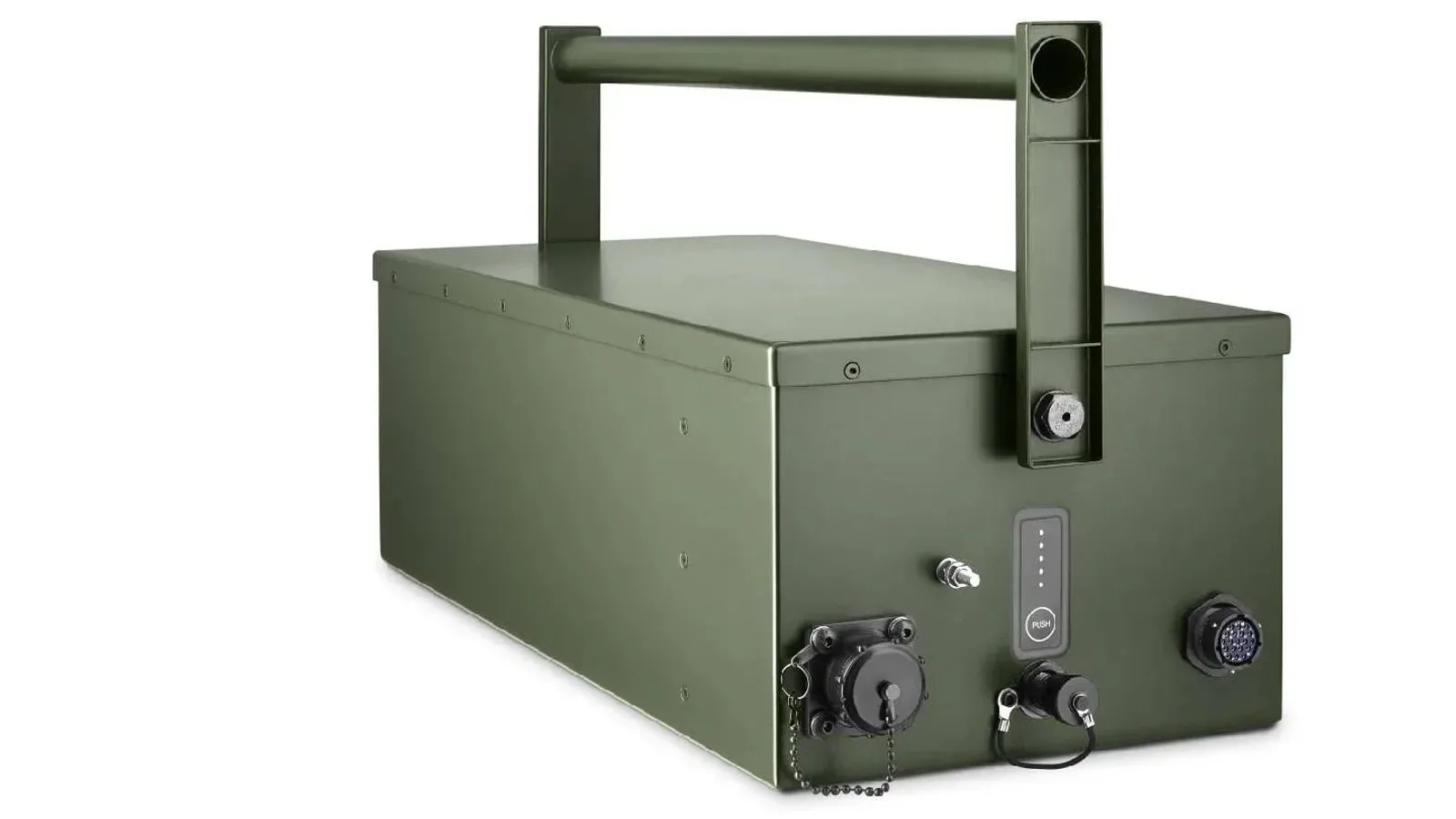
The LIPS 18 stores 2.6 kWh and weighs 16 kg. It is designed for systems that protect stationary military facilities and for backup power when the primary supply fails. Lincad states that the battery addresses the MOD’s need for higher energy density and greater operational resilience in mission-critical applications.
Nominal voltage is 24 V, and the maximum output current is 45 A. The operating temperature range is -40 to +60 °C. A fully metallic enclosure provides physical and electromagnetic protection, and standard military circular connectors are fitted. A press-to-test switch with a five-LED indicator lets operators check the charge level.
Chargers that the MOD already fields, namely the Caravel Mk2 and the Four Channel Caravel Mk2, can power up this battery. Its internal battery management system logs operational data at intervals to support maintenance and diagnostics, and operational software can be updated securely from a mobile device if required. Over-discharge protection is included, and the unit can be prepared for long-term storage or for air shipment under International Air Transport Association rules.







Lincad joint managing director Peter Slade says that balancing energy and power against weight is a persistent challenge for defense equipment manufacturers and military users. He adds that diagnostics, maintenance, storage and transport were built into the LIPS 18 design alongside its higher energy density.
Why it matters
The LIPS 18 succeeds the LIPS 8, an earlier Lincad battery already used in MOD equipment. Lincad states that the new unit offers more capacity and less weight than its predecessor.
The contract covers backup and facility-protection power for a UK military system, which is not named. For equipment makers and military users in this segment, the LIPS 18 combines a metallic enclosure, military connectors, a -40 to +60 °C operating range and preparation for air shipment. The ruggedized construction and the battery management features are intended to ease maintenance, transport and storage in difficult field conditions.
Because it is compatible with both Caravel Mk2 models, including the four-channel version, the MOD does not need to buy new charging hardware for it.
Source: Army Technology: Lincad to supply LIPS 18 lithium-ion military batteries to UK MoD
Was this article useful?
Thanks for your feedback. You can change your answer at any time.
Latest news
Latest news
Products in this article
- Featured
 FeaturedBatteries
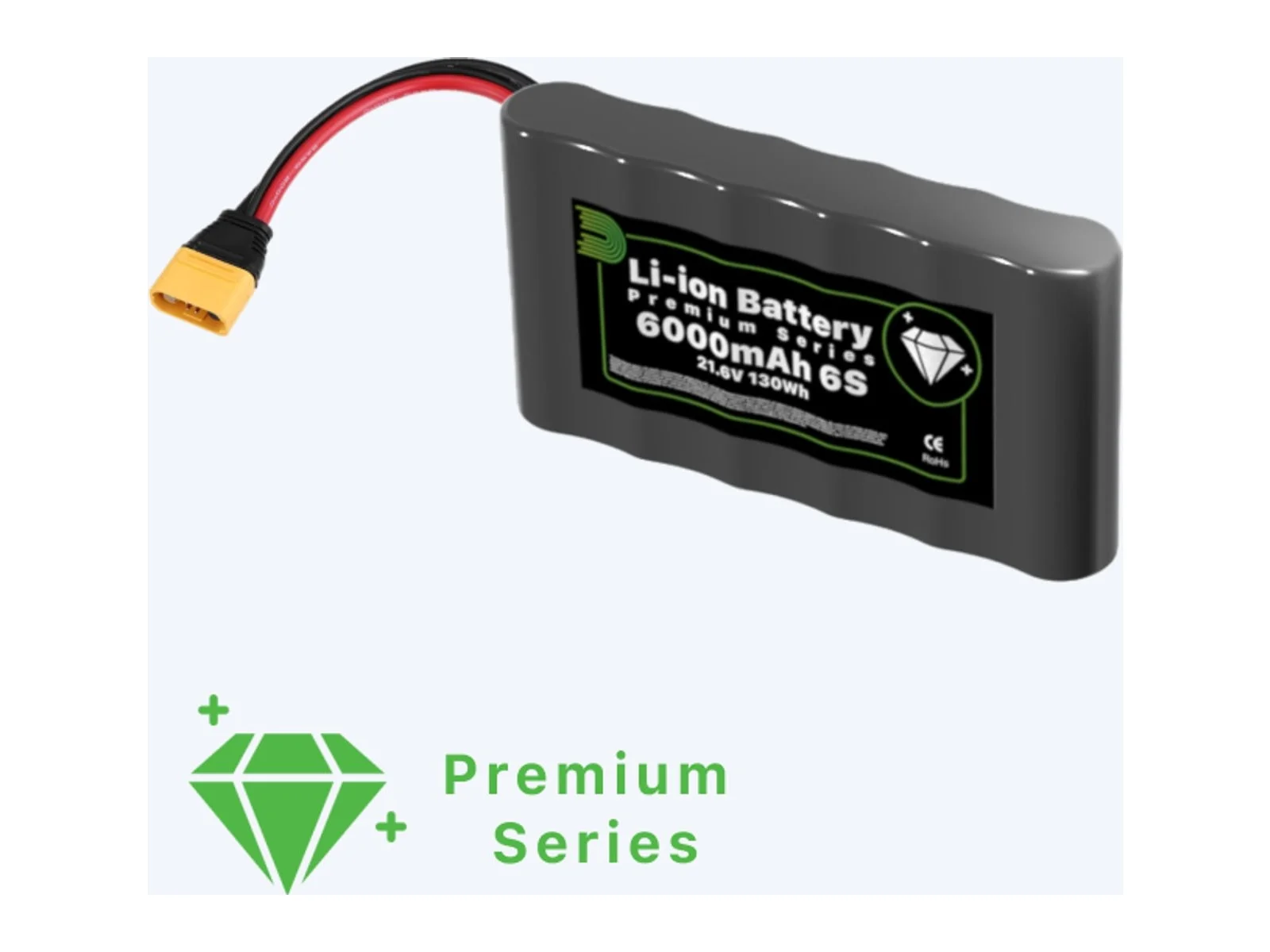
Premium High Power Tenpower 60XG Li-Ion Battery 6000mAh 21.6V 60A Max
- Energy
- 130 Wh
- Nominal voltage
- 21.6 V
- Specific energy
- 300 Wh/kg
 FeaturedBatteries
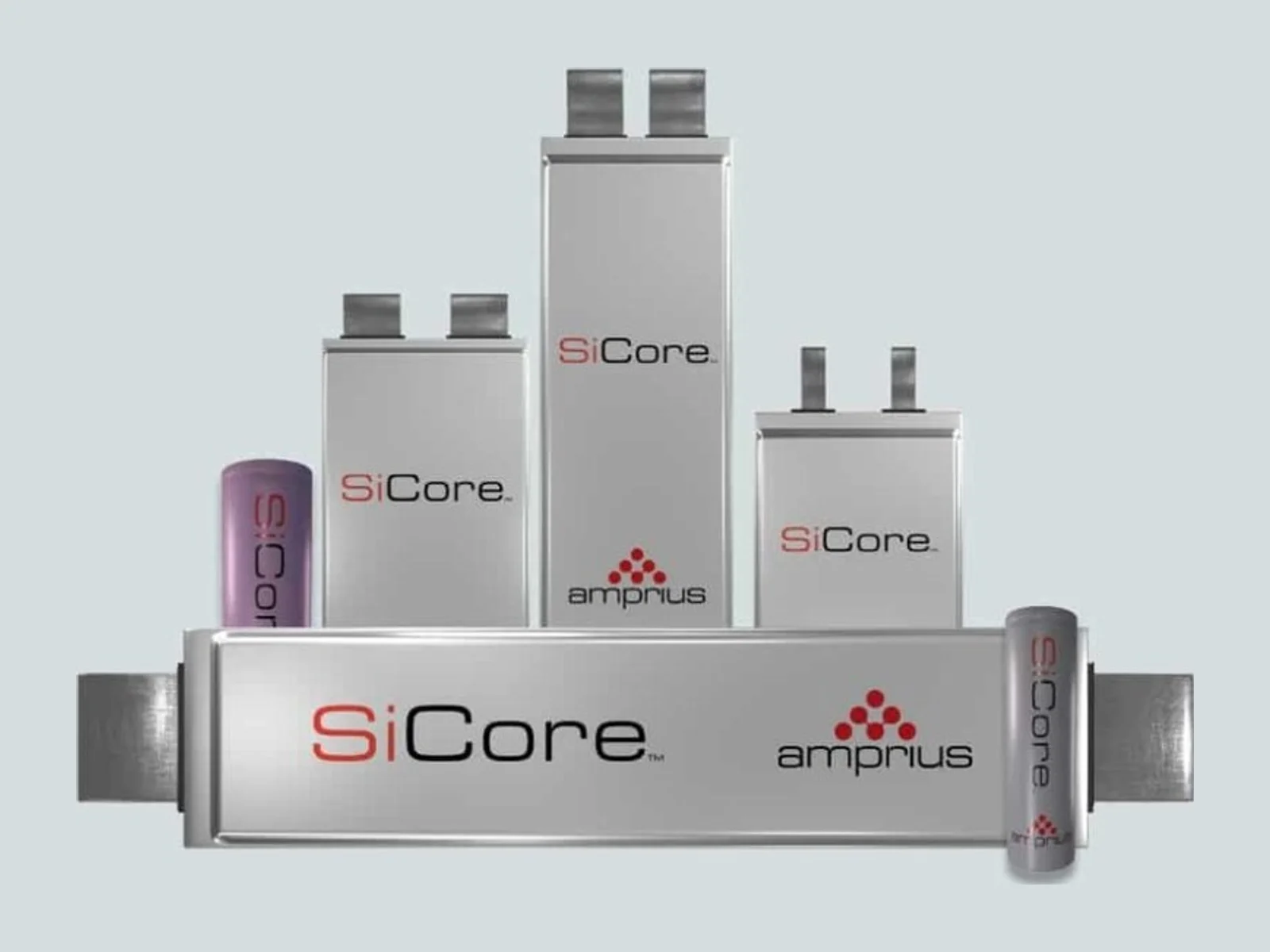
SiCore silicon-anode lithium-ion battery-cell family
- Specific energy
- 450 Wh/kg
- Continuous discharge rate
- 3 C
- Chemistry
- Li-ion silicon anode
Related articles
CATL works towards 350 Wh/kg battery energy density for eVTOL
For eVTOL aircraft, CATL aims to reach a battery energy density of 350 Wh/kg or more. Robin Zeng, who is chairman and CEO, names the number during the 2026 APEC CEO Summit in Shenzhen. The company adds that take-off and landing power…

Astronics CorePower power systems enter BETA production
Astronics and BETA Technologies agree on series supply of CorePower electrical power systems for three BETA aircraft. The deal moves power hardware that has flown on BETA's development fleet since 2024 into production.
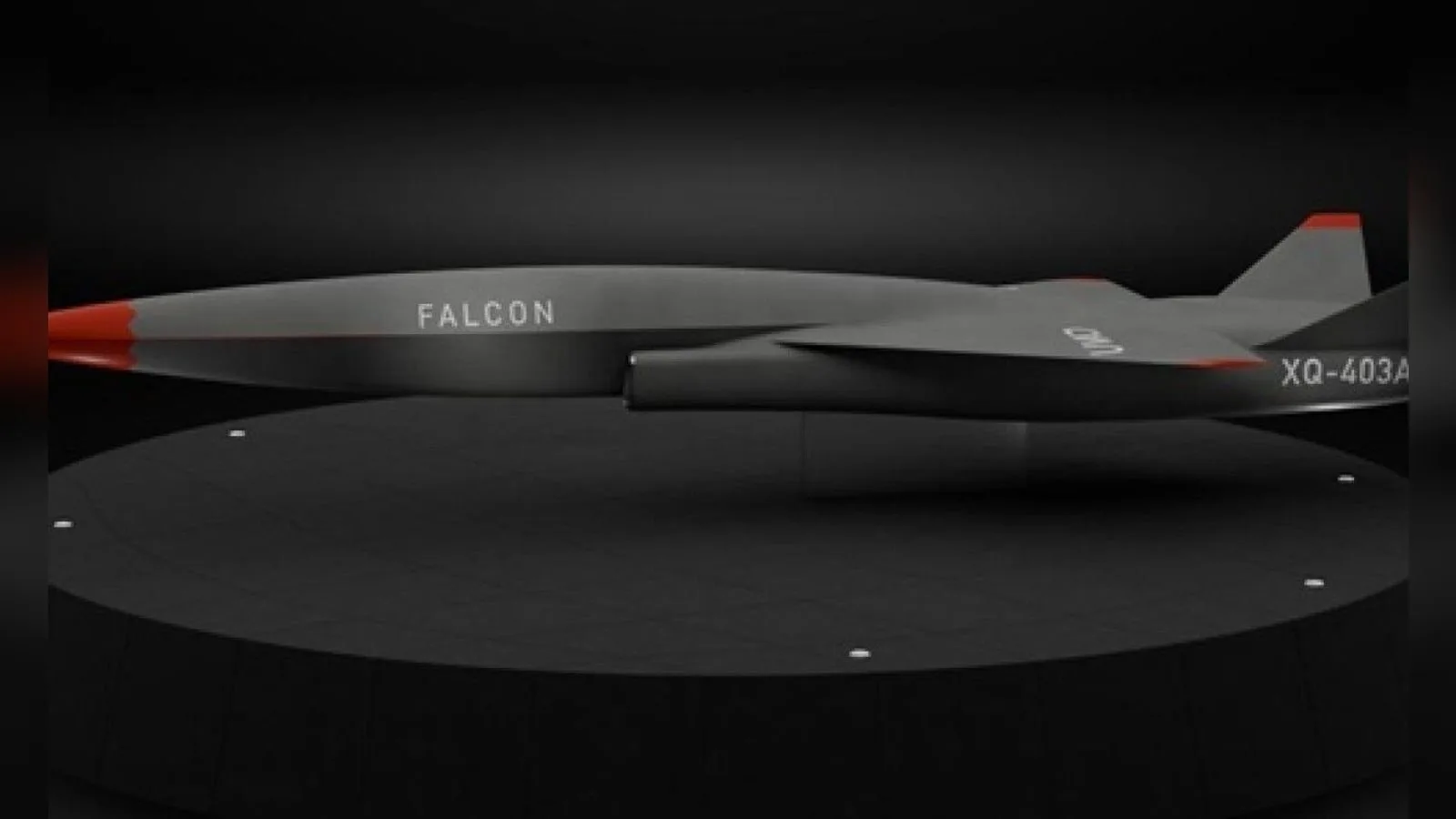
Safran turbojets to power Falcon supersonic UAV target
Falcon is a reusable supersonic uncrewed aerial target for missile-defense training, and its propulsion is the subject of a partnership between Safran Power Units and UVAD Technologies. Safran supplies two turbojet engines, and flight…

Honeywell tests 1 MW hybrid-electric generator for airship
Honeywell Aerospace tests a 1 MW generator in a Mexicali test cell, and Flying Whales will integrate it into the hybrid-electric powertrain of its LCA60T airship. The unit reaches 1 MW steady state at 97% efficiency, giving…