Unverified
Aero Blade M PICO Ka tracking antenna
Also known as: AeroBladeMPICOKa, Aero-Blade-M-PICO-Ka, Get SAT Aero Blade M PICO Ka, Get SAT AeroBladeMPICOKa
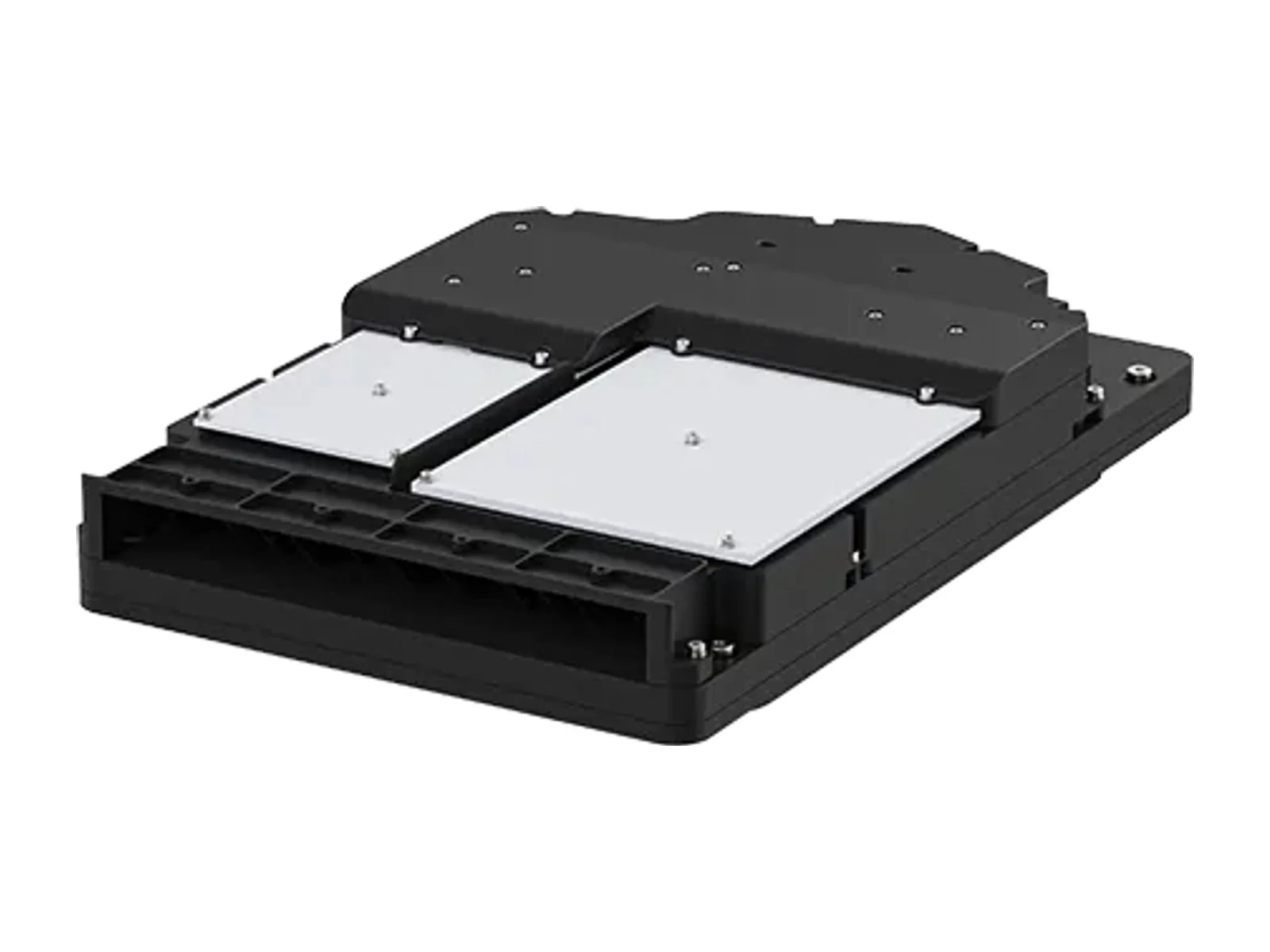
This low-profile tracking antenna provides satellite communication for airborne platforms. It features a mass of 1,600 g and a maximum power consumption of 200 W.
Description
The Aero Blade M PICO Ka by Get SAT is a compact electronically steered antenna for airborne platforms requiring reliable satellite connectivity. This tracking antenna operates without mechanical moving parts, ensuring long-term operational reliability and reduced maintenance requirements for integrators.
The system is designed for transmit and receive functions, supporting dual-beam operations to facilitate high-speed data transfer and voice over internet protocol applications. With a mass of 1,600 g and a compact form factor of 29.7 x 19.4 x 7 cm, it is optimized for platforms where space and weight are critical constraints. The antenna operates across the Ka-band, with transmit frequencies between 27.5–31 GHz and receive frequencies between 17.7–21.2 GHz.
Integration is simplified through a modem-agnostic architecture, allowing operators to interface the terminal with various external modems for flexible network selection. The system communicates via Ethernet and UART interfaces, with control managed through a combination of internal IMU, RSSI, and GPS sensors. Power is supplied via a 20–48 VDC input, with a maximum power consumption of 200 W during operation.
Designed for demanding environments, the terminal provides continuous 360° azimuth coverage and an elevation range of 20° to 90°. Its electronic steering capabilities allow for rapid initial acquisition in under 30 s and re-acquisition times of less than 100 ms. The polarization is electronically configurable between circular crosspol and copol modes.
This antenna is suitable for a wide range of applications, including general in-flight connectivity for commercial aviation. Its durable design is built to withstand harsh climates, making it a versatile solution for remote and inaccessible operational areas.
Aero Blade M PICO Ka specifications
| General | |
|---|---|
| Grade | Professional[1][2] |
| Market | Civil[1][2] |
| Platform class | Large UAS (25–150 kg), Heavy UAS (>150 kg), Manned aircraft[1][2] |
| Airframe | Any[1][2] |
| Availability | In production[1][2] |
| Mass | 1,600 g[1][2] |
| Dimensions (L × W × H, mm) | 29.7 x 19.4 x 7 cm[1][2] |
| Key specifications | |
| Tracking type | Electronic (phased array)[1][2] |
| Frequency bands | Ka band (Tx: 27.5–31 GHz, Rx: 17.7–21.2 GHz)[1][2] |
| Azimuth range | 360 °[1][2] |
| Elevation range | 2,090 °[1][2] |
| Additional specifications | |
| Pointing source | Combined IMU/RSSI/GPS[1][2] |
| Physical interfaces | Ethernet, UART, USB[1][2] |
| Protocols | Proprietary[1][2] |
| Supply voltage | -48 – 20 V[1] |
| Power consumption (typical) | 200 W[1][2] |
Sources
- getsat.com/products/aero-blade-m-pico-ka · checked November 22, 2026
- getsat.com/esa/aero-blade-series · checked November 17, 2026
Frequently asked questions
Does the Aero Blade M PICO Ka require mechanical calibration?
No, the antenna operates without moving parts, which eliminates the need for calibration.
Which satellite constellations is the Aero Blade M PICO Ka compatible with?
The terminal is designed to support transmit and receive functions for GEO, MEO, and LEO satellites.
What is the power input requirement for this terminal?
The terminal operates on a power input of 20-48 VDC, with 28VDC being the standard.
Is the Aero Blade M PICO Ka compatible with third-party modems?
Yes, the system is modem agnostic and supports the use of any external modem.
What is the weight of the Aero Blade M PICO Ka terminal?
The terminal weighs 1.6 kilograms, which is equivalent to 3.5 pounds.
Reviews & Ratings
– / 5
No reviews yet. Be the first to rate.
Rate this product
Almost done: send the form below to publish your rating.
Thank you: your review is published and already counts in the rating.
Demo mode: the form is not connected yet and nothing was sent.








Similar tracking antennas from other manufacturers
- FeaturedTracking antennas
AMT 1800 Intermediate Gain Antenna
- Tracking type
- Electronic (phased array)
- Grade
- Professional
- Market
- Dual-use
 FeaturedTracking antennas
TRACKER 6000 tracking antenna
- Tracking type
- Mechanical (pedestal)
- Grade
- Professional
- Market
- Defense
 FeaturedTracking antennas
TRACKER 2400 TT tracking antenna
- Tracking type
- Mechanical (pedestal)
- Gain
- 55.2 dBi
- Slew rate
- 5 °/s
- FeaturedTracking antennas
TACTICAL TRACKER 1350 tracking antenna
- Tracking type
- Mechanical (pedestal)
- Slew rate
- 11 °/s
- Grade
- Professional
View all: Similar tracking antennas from other manufacturers
More from Get SAT
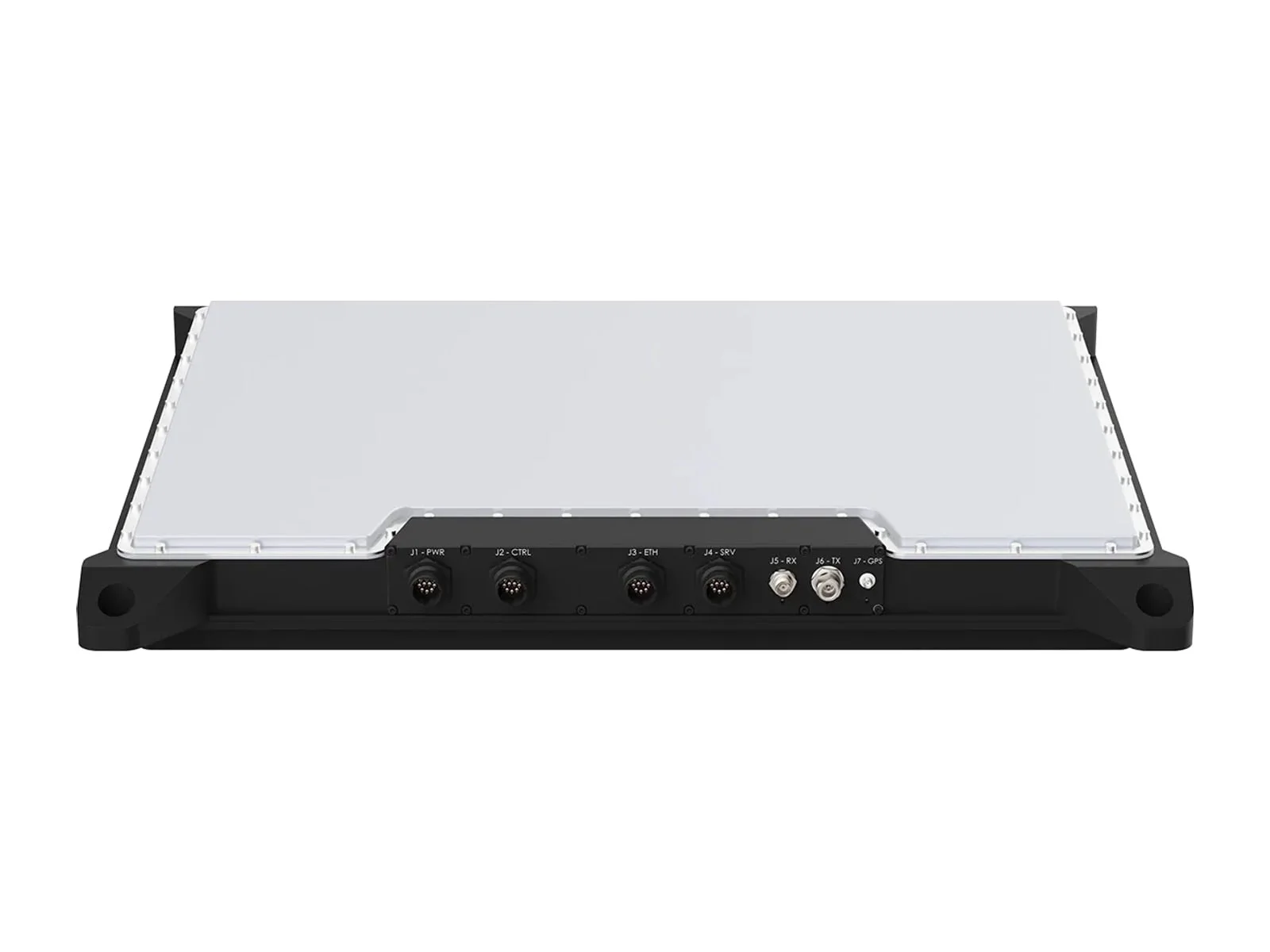 FeaturedTracking antennas
Sling Blade SOLO LM Ku electronically steerable antenna
- Tracking type
- Electronic (phased array)
- Azimuth range
- 360 °
- Elevation range
- 1,590 °
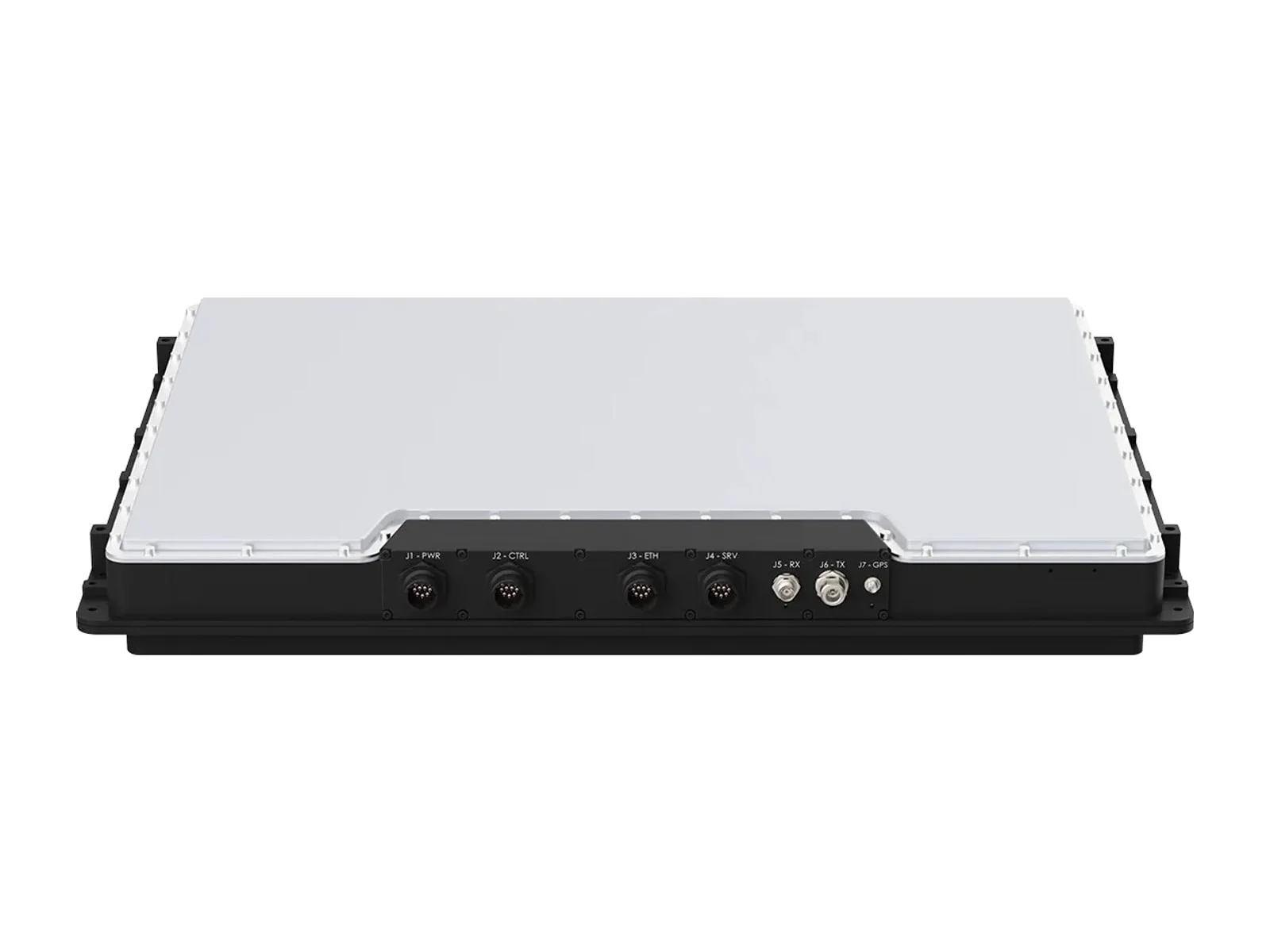 FeaturedTracking antennas
Aero Blade SOLO Ku electronically steered antenna terminal
- Tracking type
- Electronic (phased array)
- Azimuth range
- 360 °
- Elevation range
- 1,590 °
- FeaturedTracking antennas
Sling Blade DUO LM Ku electronically steerable antenna
- Tracking type
- Electronic (phased array)
- Azimuth range
- 360 °
- Elevation range
- 1,590 °
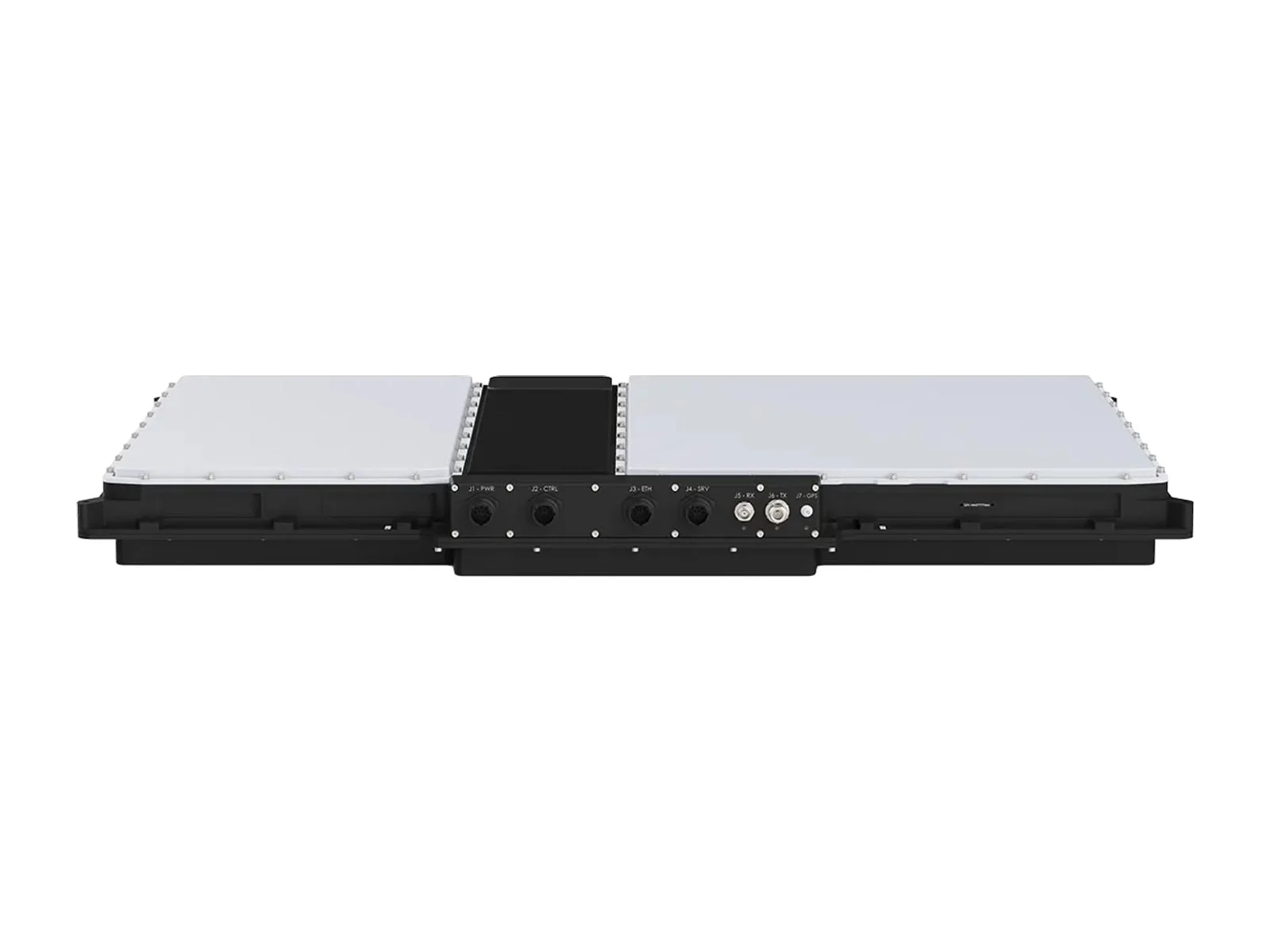 FeaturedBLOS links
Aero Blade DUO Ku electronically steered SATCOM terminal
- Coverage
- Global
- Grade
- Professional
- Market
- Civil
Key terms
- COFDM
COFDM is coded orthogonal frequency-division multiplexing, a modulation that spreads data over many narrow subcarriers and adds error-correcting coding, used for robust video and data links to moving aircraft.
- DO-160
DO-160 is the RTCA standard (EUROCAE ED-14) that defines environmental test conditions and procedures for airborne equipment, covering temperature, altitude, vibration, humidity, EMI and lightning among other sections.
- GNSS anti-jamming (CRPA)
GNSS anti-jamming with a controlled reception pattern antenna (CRPA) uses an array of antenna elements and adaptive processing to place nulls toward interference and keep satellite signals usable.
- link budget
A link budget is the accounting of all gains and losses between a transmitter and a receiver, in decibels, used to find the received power and the margin above the receiver's minimum.
Related news
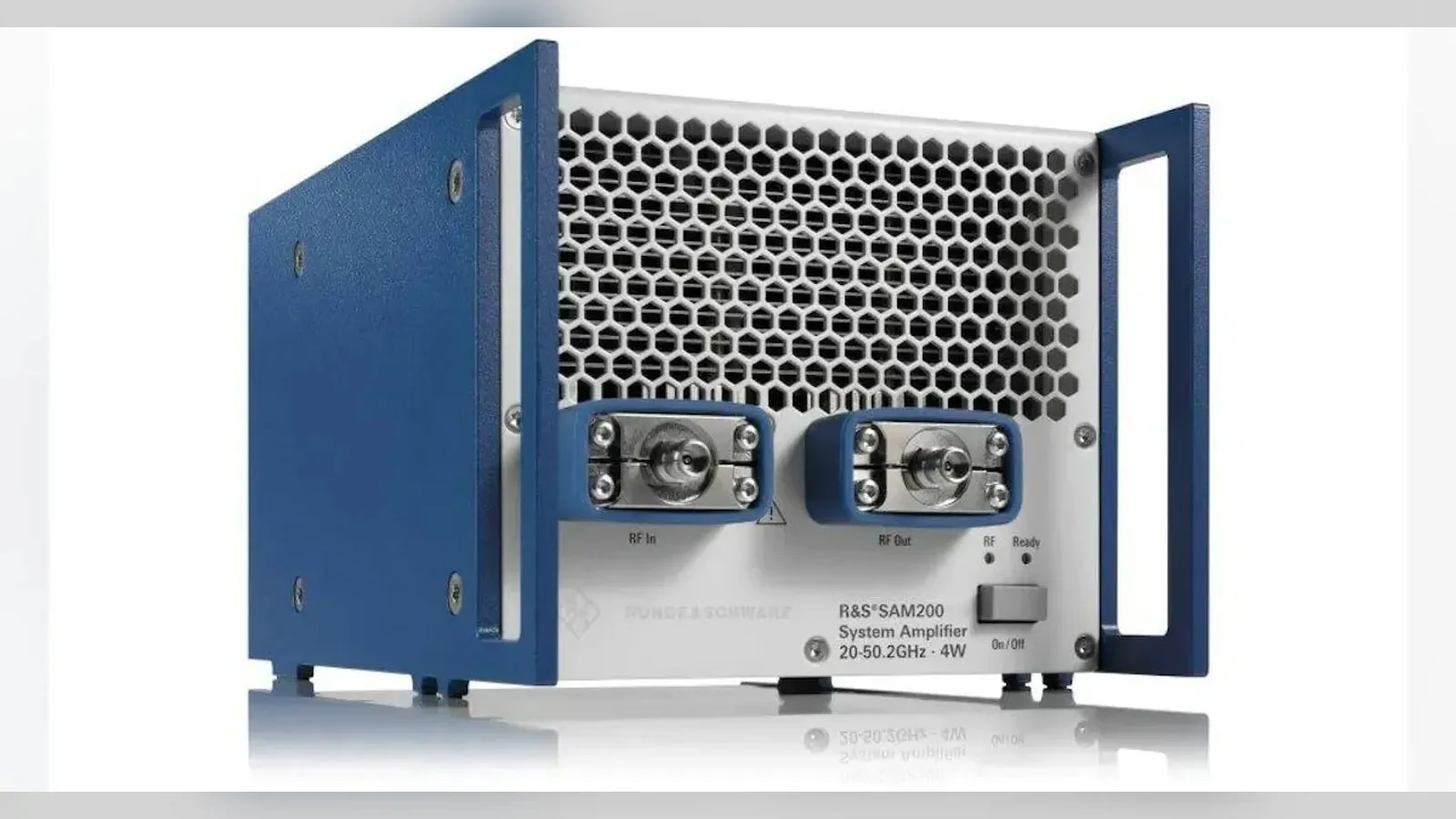
20-53 GHz system amplifiers for RF test from Rohde & Schwarz
Rohde & Schwarz introduces the R&S SAM200 and SAM200 Advanced, two solid-state system amplifiers that cover 20 to 53 GHz for testing high-frequency RF components. Both reach up to 4 watts of saturation power, aimed at Ka-, Q- and V-band…

Elsight Halo multilink unit named Award-Ready by Army lab
Elsight's Halo multilink unit earns Award-Ready status in DevX Autonomy, the Army Applications Laboratory's marketplace of assessed solutions. The status makes the unit's assessment video available to government customers who can consider…
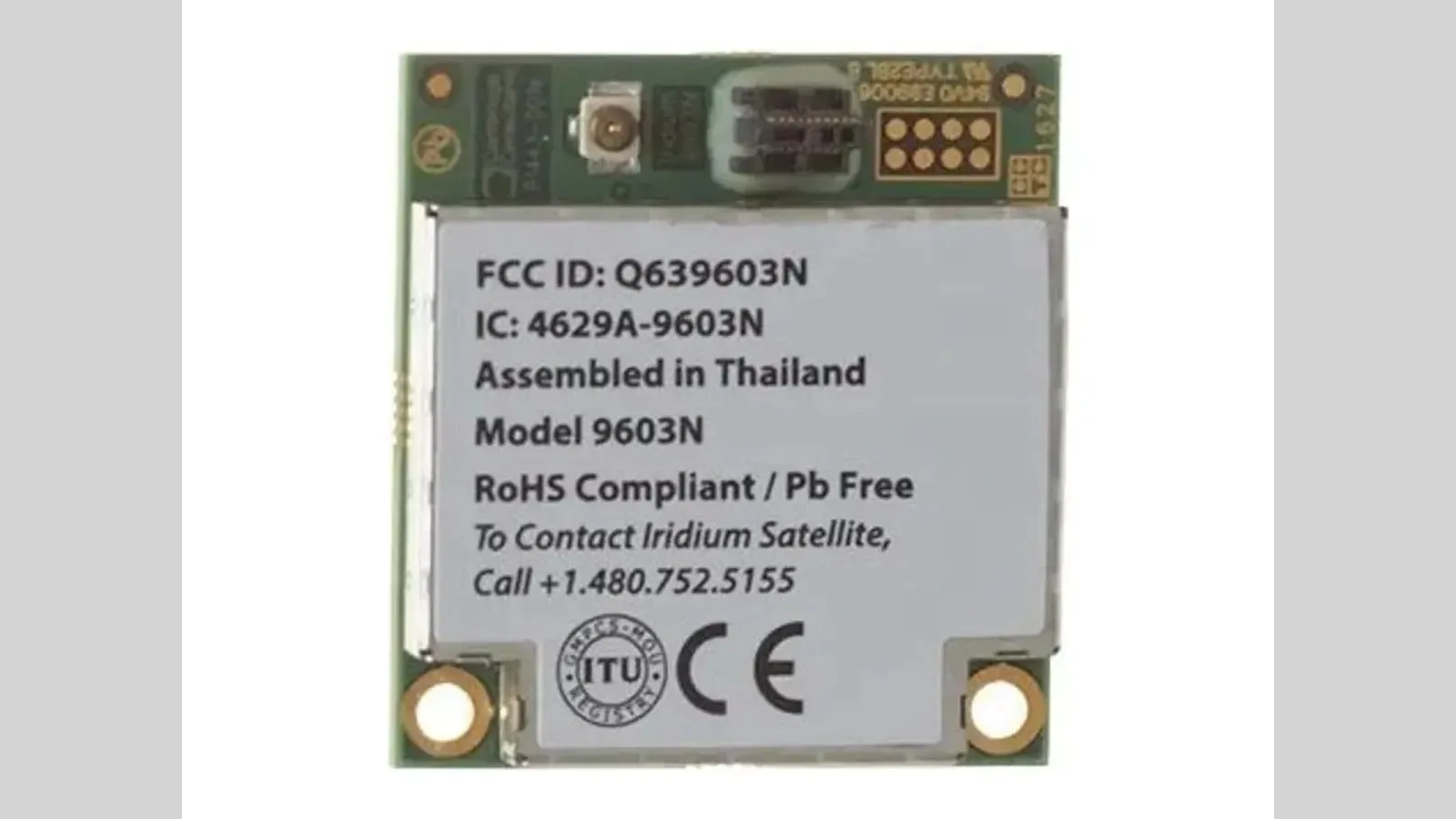
Iridium NTN Direct activates NB-IoT satellite service
Iridium activates Iridium NTN Direct, a 3GPP standards-based NB-IoT and direct-to-device satellite service with global coverage. Chipset makers, mobile network operators and device manufacturers can add an Iridium satellite link to…
This product listing is maintained by our editorial team and may contain errors. Last updated .