Link budget is a calculation of the transmitter power, antenna gains, and path losses to determine the received power at the receiver. A link budget adds the transmitter power and the antenna gains and subtracts the losses along the path to give the power at the receiver. In logarithmic form, received power in dBm equals transmitted power in dBm plus gains in dB minus losses in dB. The largest loss is usually the path loss; in free space it grows with 20 times the base-10 logarithm of distance and of frequency, so doubling the range costs about 6 dB. Cable and connector losses, polarization mismatch, fading and body or airframe blockage are added as separate terms.
The result is compared with the receiver sensitivity, the minimum power at which a given modulation can be decoded. The difference is the link margin, a safety reserve chosen according to how serious a dropout would be.
For drones and eVTOL aircraft, a budget is made for the command and control link, the video link and the ADS-B or telemetry links, and is repeated for the worst case: maximum range, aircraft banked so that its antenna points away, and a rainy or urban path. Typical margins are set by the operator or the regulator rather than by a single number.
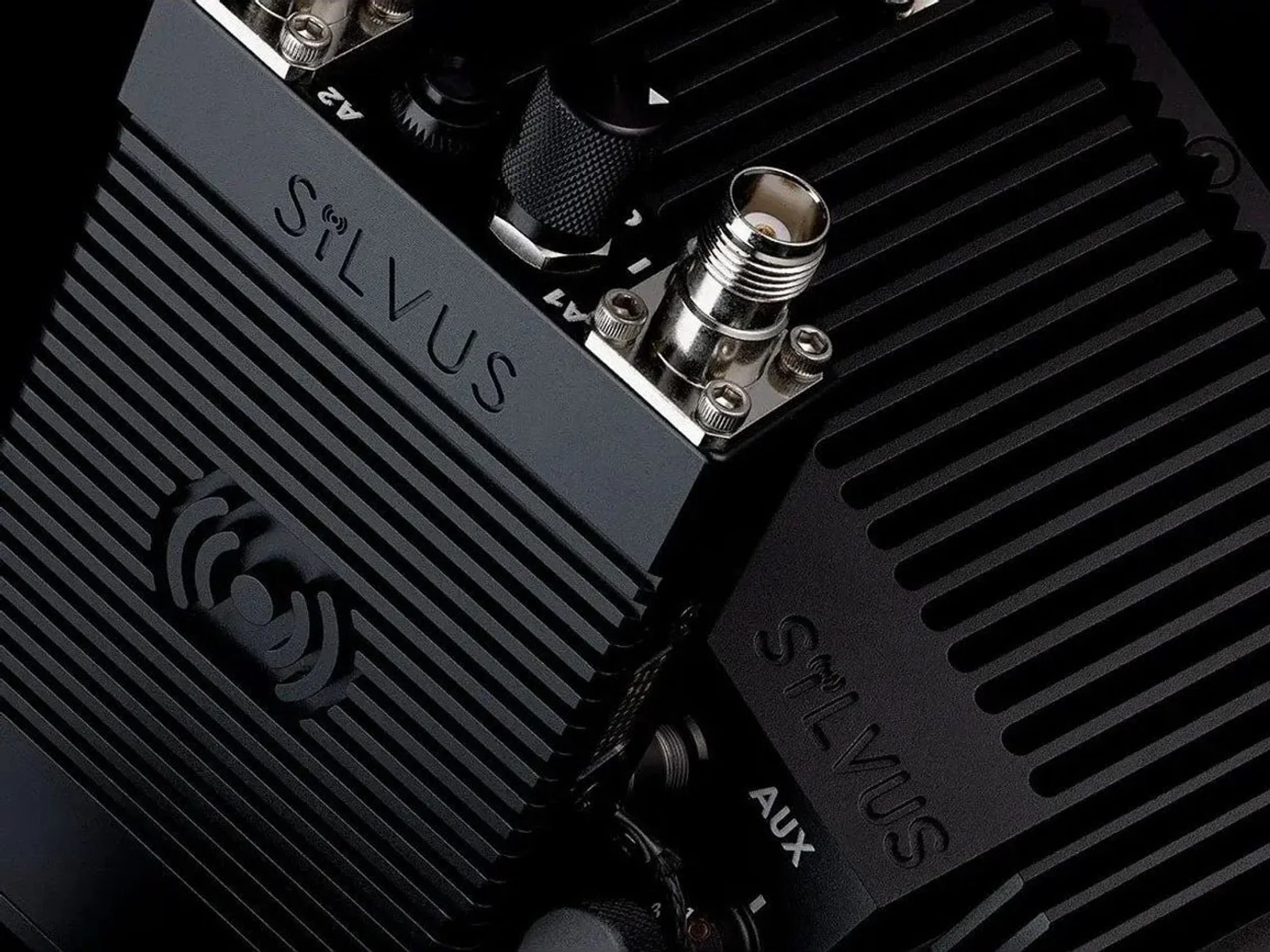
On datasheets the inputs appear as output power (dBm), antenna gain (dBi), sensitivity (dBm at a modulation and bandwidth) and cable loss (dB).
A frequent mistake is to quote range from free-space loss alone, ignoring the margin, antenna pattern and sensitivity at the data rate actually needed.