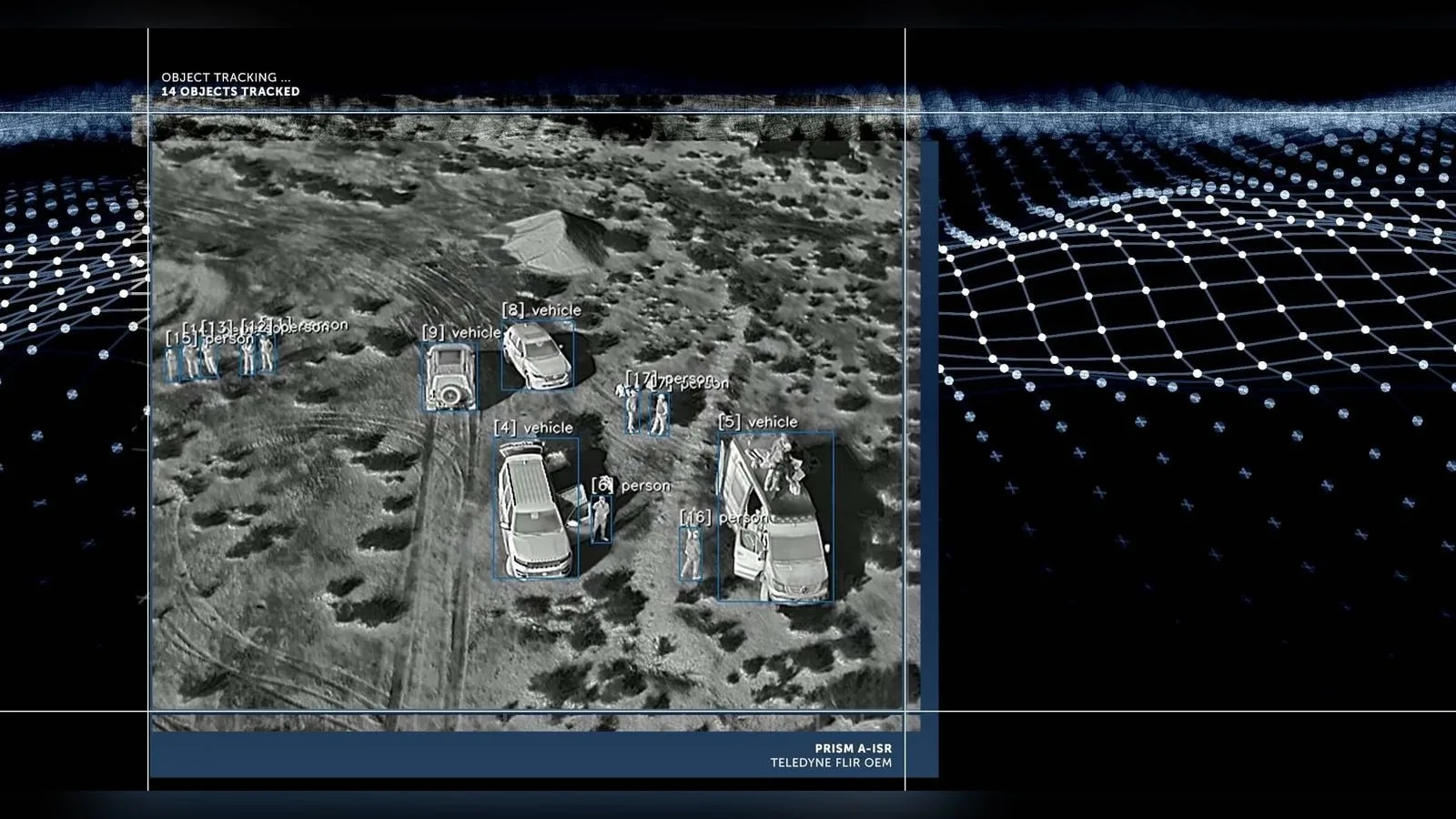
The software ingests imagery from visible cameras and from passive thermal sensors in the midwave and longwave bands. It fuses both with AI-based perception to follow several targets at once. Teledyne FLIR OEM announces the module on October 6.
Denoise and super-resolution processing, which the company says improves signal-to-noise performance while lowering bit rate and bandwidth demand, lets systems respond sooner. Stabilization and dehaze algorithms target image quality and detection range.
Jared Faraudo, vice president for product management at Teledyne FLIR OEM, says the software improves situational awareness at long range in cluttered scenes and poor visibility, with fewer false alarms and lower integration risk. Intended uses are persistent surveillance, force protection and defense autonomy.







For custom target classes or shifting requirements, the AIMMGen synthetic model-training service delivers updated mission models in days instead of weeks, the company says.
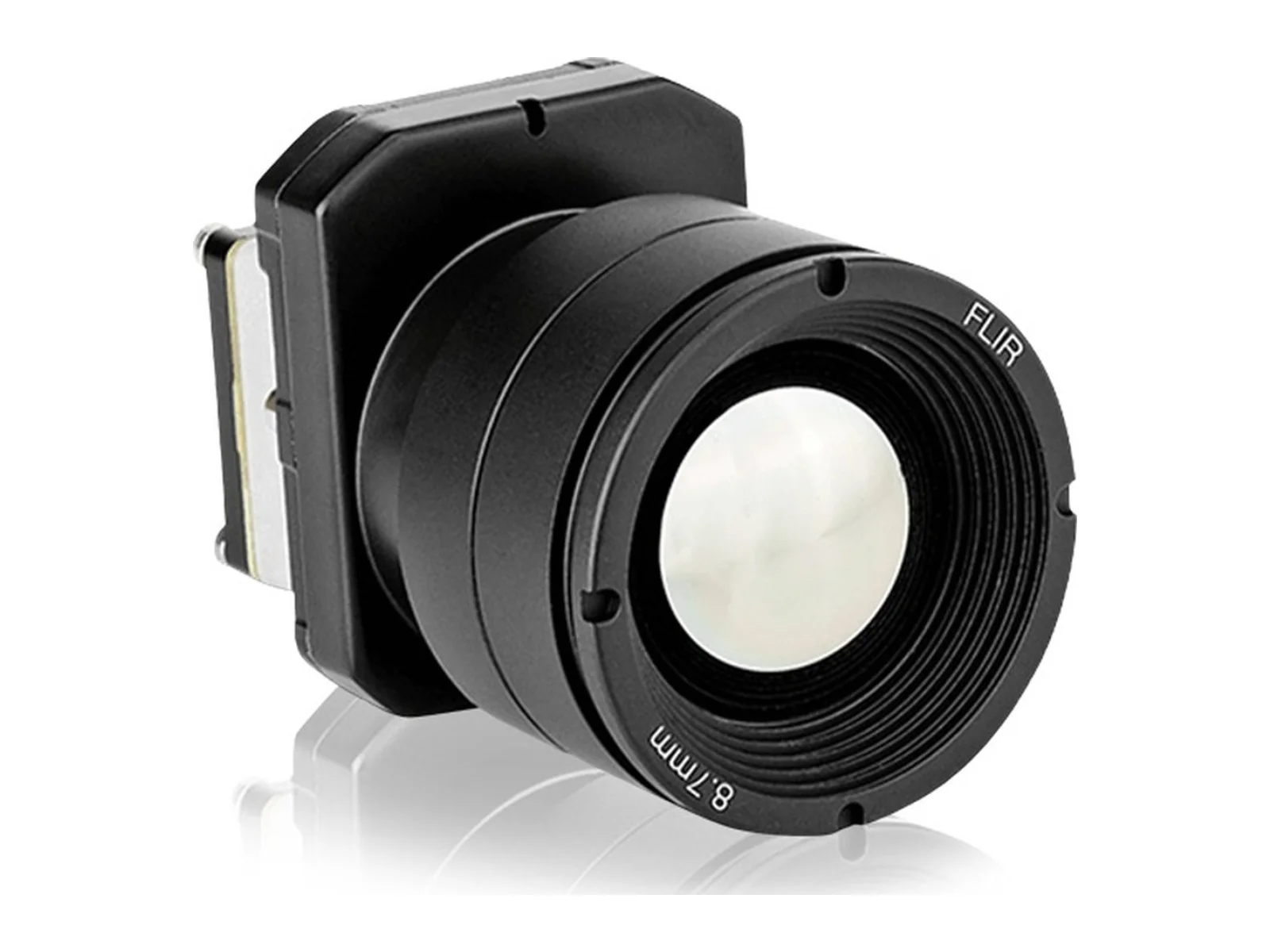
The software is tuned for embedded AI processors from NVIDIA and Qualcomm. It works with Teledyne FLIR thermal cores such as the Boson+ and Neutrino families, both NDAA-compliant, and with selected third-party infrared and electro-optical cameras.
The company shows Prism A-ISR at the AUSA annual meeting in Washington, D.C., from October 12 to 14, at booth 6013.
Why it matters
Prism A-ISR joins C-UAS, Ground ISR and SKR in the Prism family. Teledyne FLIR OEM positions the line as the perception layer for defense integrators building UAS, ground ISR systems and automatic target recognition.
For payload integrators, the module moves detection and tracking onto the embedded processor next to the camera. The claimed bit-rate reduction is relevant where datalink bandwidth is limited, a common constraint on Group 2–3 UAS and other long-endurance ISR platforms.
NDAA compliance of the Boson+ and Neutrino cores matters to US defense programs with sourcing restrictions. Teledyne FLIR’s Boson+ 640 is the thermal module in the directory that fits this pairing. Support for third-party cameras and for both NVIDIA and Qualcomm platforms lets integrators keep existing sensor and compute choices.
More on the manufacturer is on the Teledyne FLIR profile.
Source: Inside Unmanned Systems: Teledyne FLIR OEM Launches Prism A-ISR for Airborne Detection and Tracking
Was this article useful?
Thanks for your feedback. You can change your answer at any time.
Latest news
Latest news
Companies in this article
 Payload · 2
Products in this article
 Featured
 FeaturedCameras
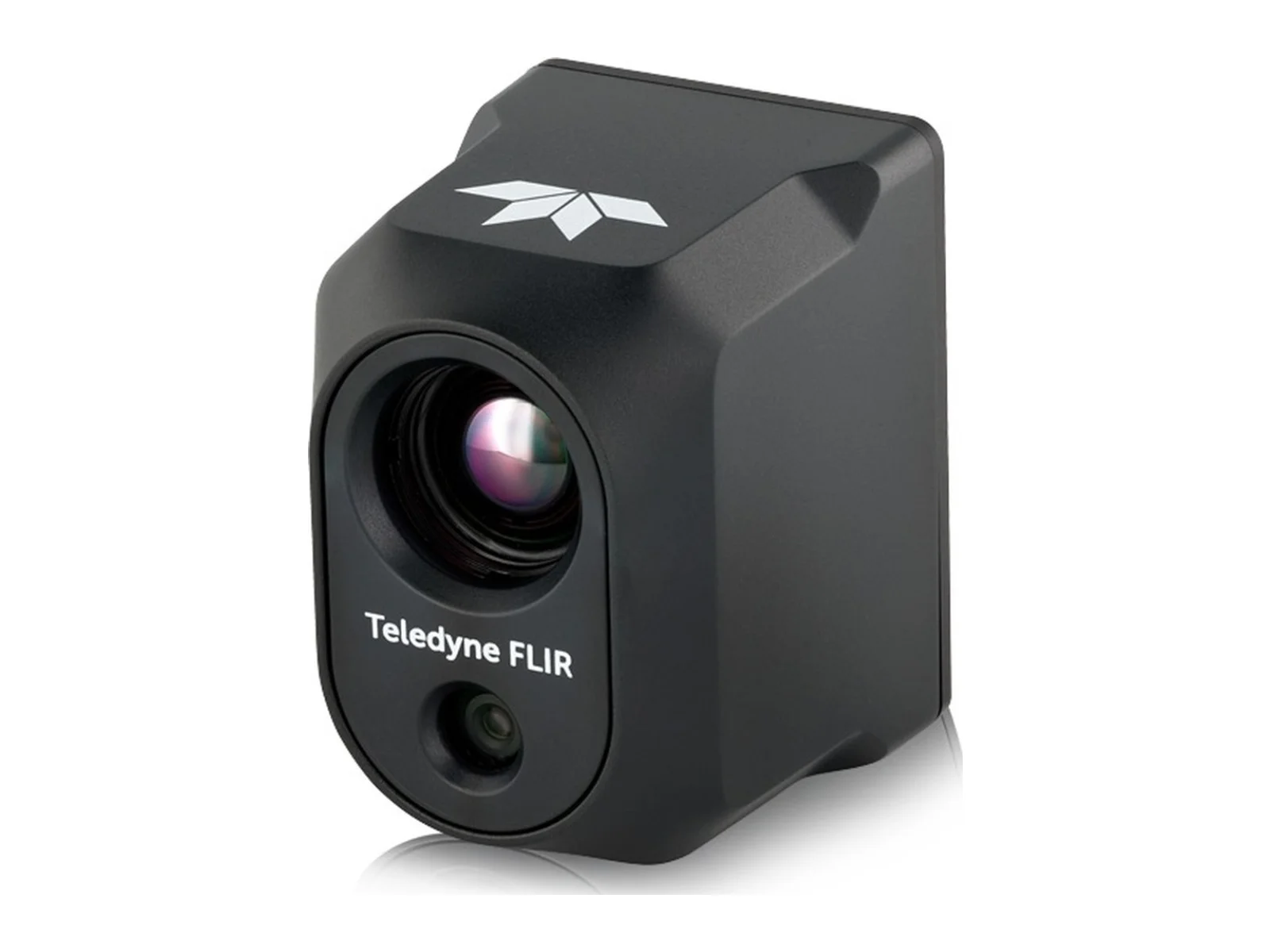
Hadron 640R dual visible and thermal camera module
- Grade
- Professional
- Market
- Dual-use
- Availability
- In production
Related articles
Ouster L3 chip powers REV7 lidar lineup with OSDome
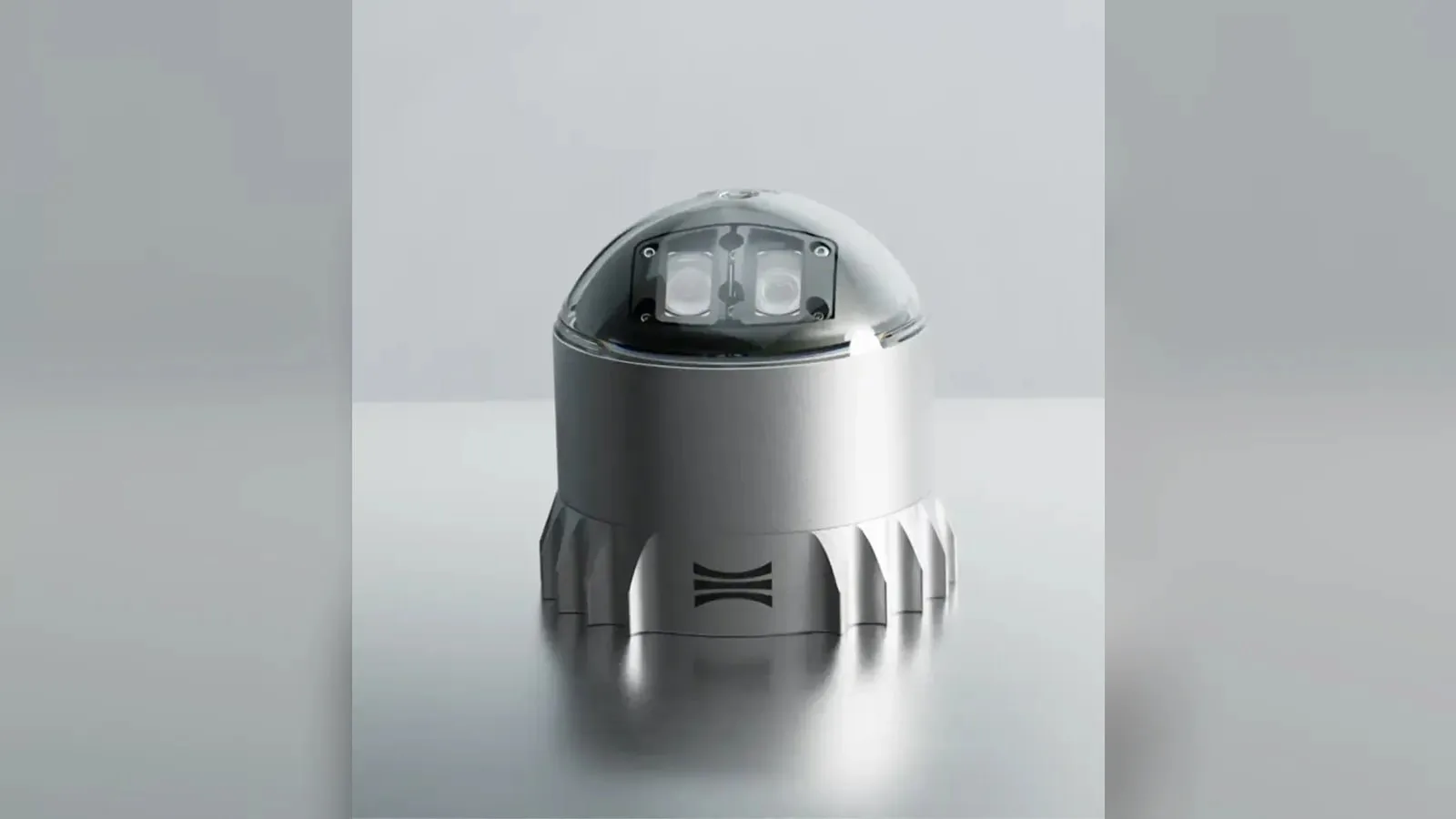
Ouster's REV7 lidar family, built on the L3 digital chip, spans the OS0, OS1 and OS2 plus the new 180° hemispherical OSDome. Ouster claims higher range and finer precision with no change in sensor size or weight.

Gremsy and NINANO sign MoU on EO/IR payload integration
Gremsy has signed a memorandum of understanding with South Korean UAV manufacturer NINANO to explore integrating Gremsy's EO/IR camera payloads into NINANO's unmanned platforms. The agreement sets a framework for technical collaboration…

Phase One imagery feeds SimActive Correlator3D for defense maps
SimActive launches an integrated workflow that brings Phase One aerial imagery into its Correlator3D photogrammetry software for large-scale defense mapping. The link targets the processing stage, where users who collect tens of thousands…
Trillium adds lower-cost MWIR HD59 gimbals for tactical UAS
For tactical UAS, two new HD59 variants from Trillium Engineering, the HD59-MVV-C and the HD59-MLVV-C, pair MWIR imaging with a built-in laser rangefinder and laser pointer. Trillium puts system cost more than 30 percent below traditional…