tactical-grade IMU

A tactical-grade IMU is an inertial measurement unit whose gyroscopes are good enough, typically below 1 degree per hour bias instability, to keep navigating through GNSS outages of a few minutes.

Also known as: tactical grade inertial measurement unit

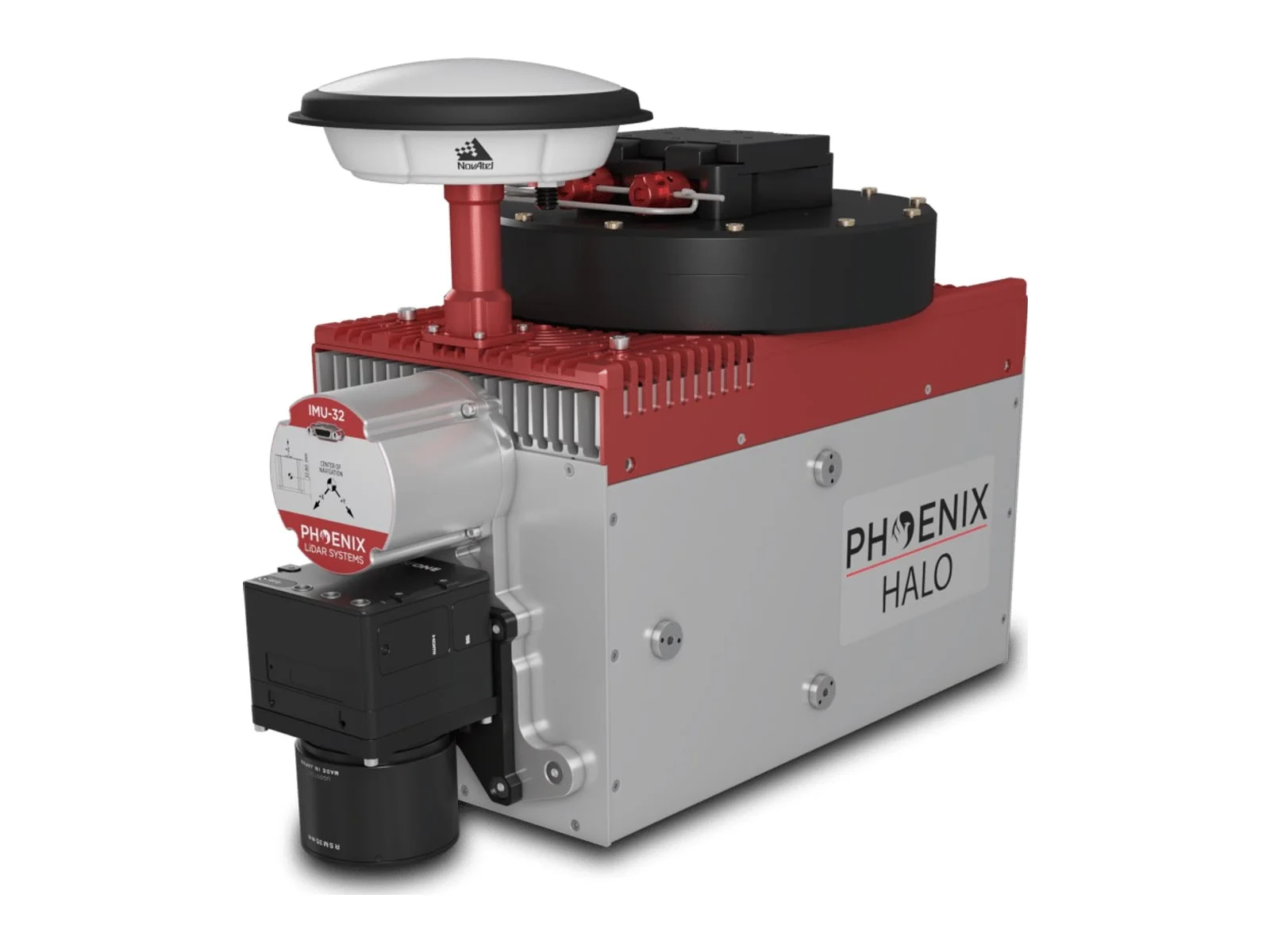
Tactical-grade IMU is a manufacturer of tactical-grade inertial measurement units that combine three gyroscopes and three accelerometers for use when GNSS is degraded or jammed. A tactical-grade IMU combines three gyroscopes and three accelerometers with performance between industrial sensors and navigation-grade systems. The grade is set mainly by the gyroscope. It is built with high-end MEMS or fibre-optic gyroscopes, and is used where the aircraft must keep a usable attitude, velocity and position when GNSS is degraded or jammed.

Typically, manufacturers describe tactical grade as gyroscope bias instability below 1 degree per hour and angle random walk below 0.15 deg/sqrt(h). Industrial MEMS units sit at roughly 1 to 10 degrees per hour and 0.1 to 0.5 deg/sqrt(h). Accelerometer bias instability of a few micro-g is common in tactical products. There is no formal standard for the grade names, so limits vary between suppliers.

The datasheet items to read are gyroscope and accelerometer bias instability, angle random walk, velocity random walk, scale factor stability, bias over temperature, vibration rectification, bandwidth, and mass and power. Large drones and eVTOL aircraft use such units in GNSS-denied navigation, payload stabilisation and as redundant sources.

A frequent mistake is to rely on the grade name. Check which figures are in-run and which are over temperature, whether they are typical or maximum values, and how the unit behaves under the airframe vibration, since a good laboratory bias figure does not guarantee navigation drift in flight.

Related terms

  • bias instability — Bias instability is the slowest, flicker-like drift of a gyroscope or accelerometer bias during operation at constant conditions, and sets the best accuracy with which that bias can be estimated.
  • angle random walk — Angle random walk (ARW) is the growth of angle error in a gyroscope caused by white noise on its rate output, specified in degrees per root hour or degrees per root second.
  • Allan variance — Allan variance is a time-domain statistic of the difference between consecutive averages of a signal; plotted against averaging time, it separates the noise types of gyroscopes, accelerometers and oscillators.
  • MEMS — MEMS (micro-electromechanical systems) are microscopic mechanical structures etched in silicon and integrated with electronics, used in drones and eVTOL aircraft mainly as gyroscopes, accelerometers and pressure sensors.
  • multi-band GNSS — Multi-band GNSS is a receiver capability to track signals on two or more frequency bands, such as L1 and L2 or L5, so that ionospheric delay can be measured and removed and robustness improves.
  • GNSS anti-jamming (CRPA) — GNSS anti-jamming with a controlled reception pattern antenna (CRPA) uses an array of antenna elements and adaptive processing to place nulls toward interference and keep satellite signals usable.

Topics

All terms

Contact

We send your message and contact details to — by email, with a copy to you, so they can reply. NomyParts keeps a record of the request. More information in our privacy policy.