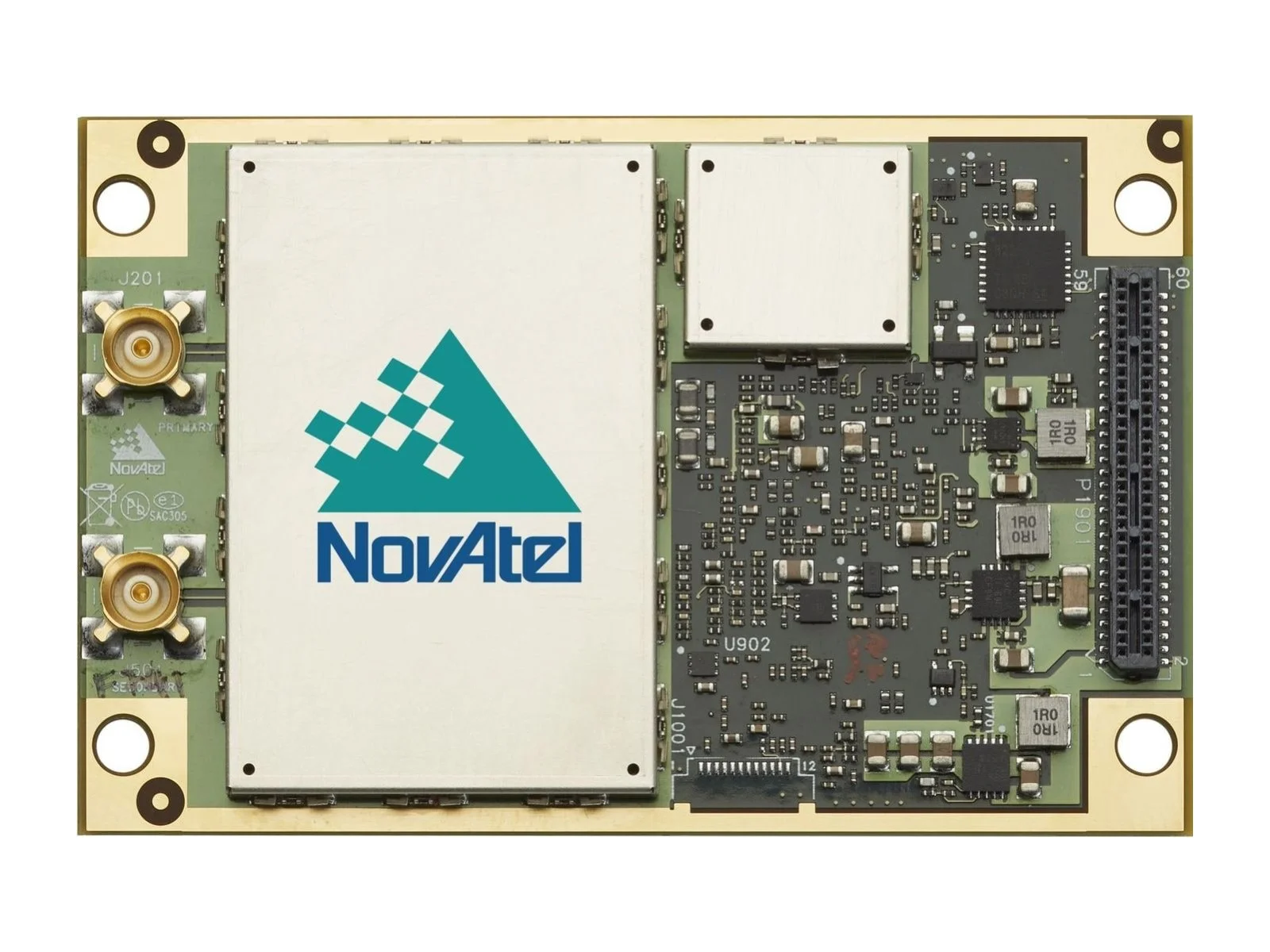
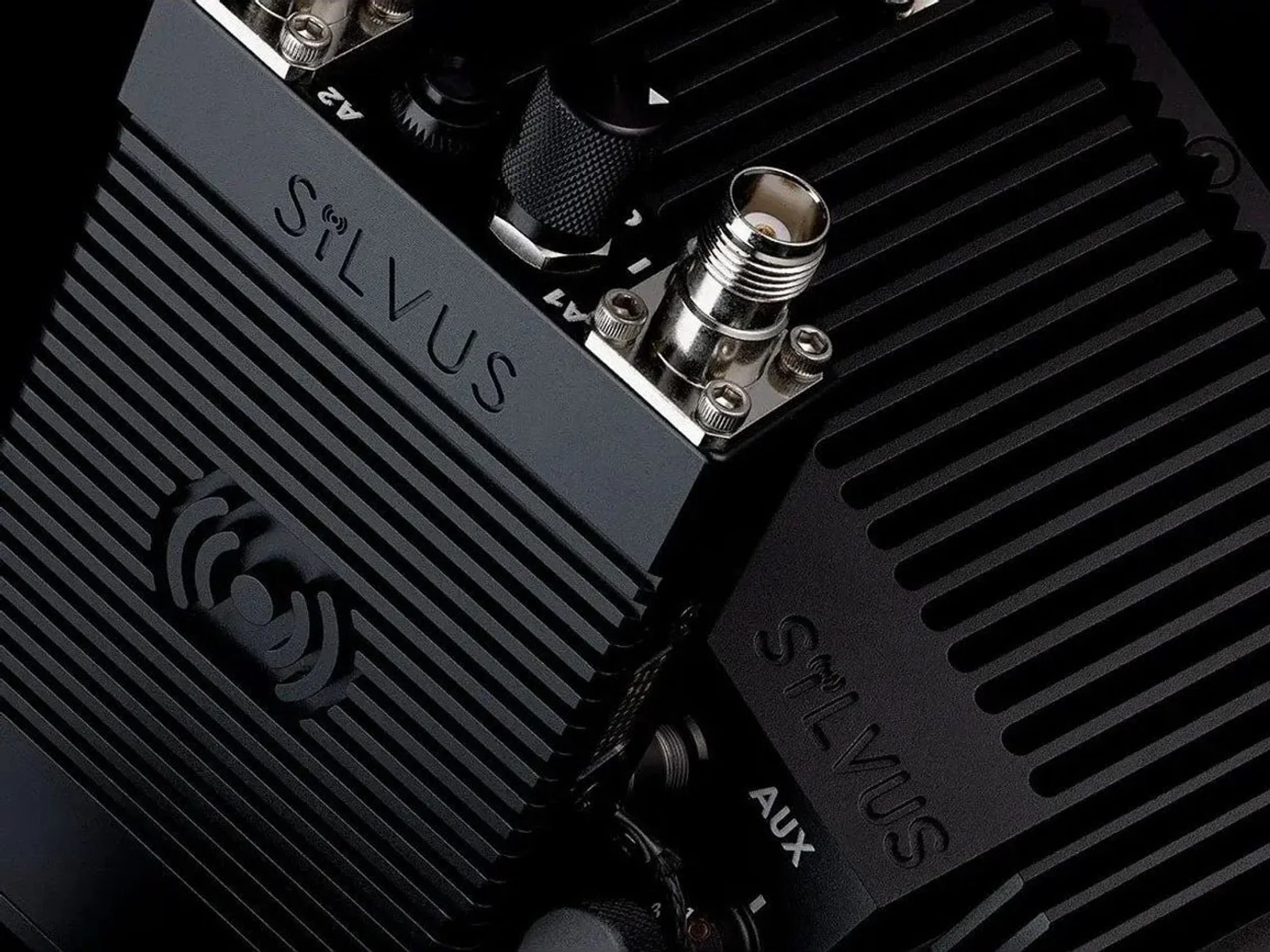
Multi-band GNSS is a manufacturer of multi-band receivers that track constellations on several carrier frequencies to compute and mitigate ionospheric error. A multi-band receiver tracks the same constellation on several carrier frequencies, for example GPS L1 at 1575.42 MHz together with L2 or L5 at 1176.45 MHz, and Galileo or BeiDou equivalents. Radio waves are delayed in the ionosphere by an amount that depends on frequency. With two frequencies the receiver can compare the delays and compute most of the ionospheric error, instead of relying on a broadcast model that only partly describes it.
The newer civil signals, such as L5, are broadcast at higher power and with a wider bandwidth than L1 C/A, and L5 sits in a band reserved for aviation safety services. These traits help in multipath and noise, so the receiver is more tolerant of poor conditions near buildings or under vibration.
For drones and eVTOL aircraft, multi-band receivers are typically used for survey-grade RTK, for autonomy near cities and for navigation that must keep working when one band is degraded. Single-band modules are typically limited to metre-level errors in the open sky, while dual-band units can reach lower errors where a datasheet states them.
On a datasheet, the feature appears as the list of tracked signals (for example “GPS L1C/A, L5; Galileo E1, E5a”), the number of concurrent constellations and the update rate.
A common mistake is counting constellations instead of bands. A receiver can list four constellations and still track only L1. Another is assuming the antenna matches: a multi-band receiver needs an antenna and an RF front end that cover all the listed bands.