OEM7720 is a satellite-navigation receiver that processes GNSS signals to determine position and timing. It supplies navigation information to a host installation, with antenna selection and correction services defined by the required positioning performance.
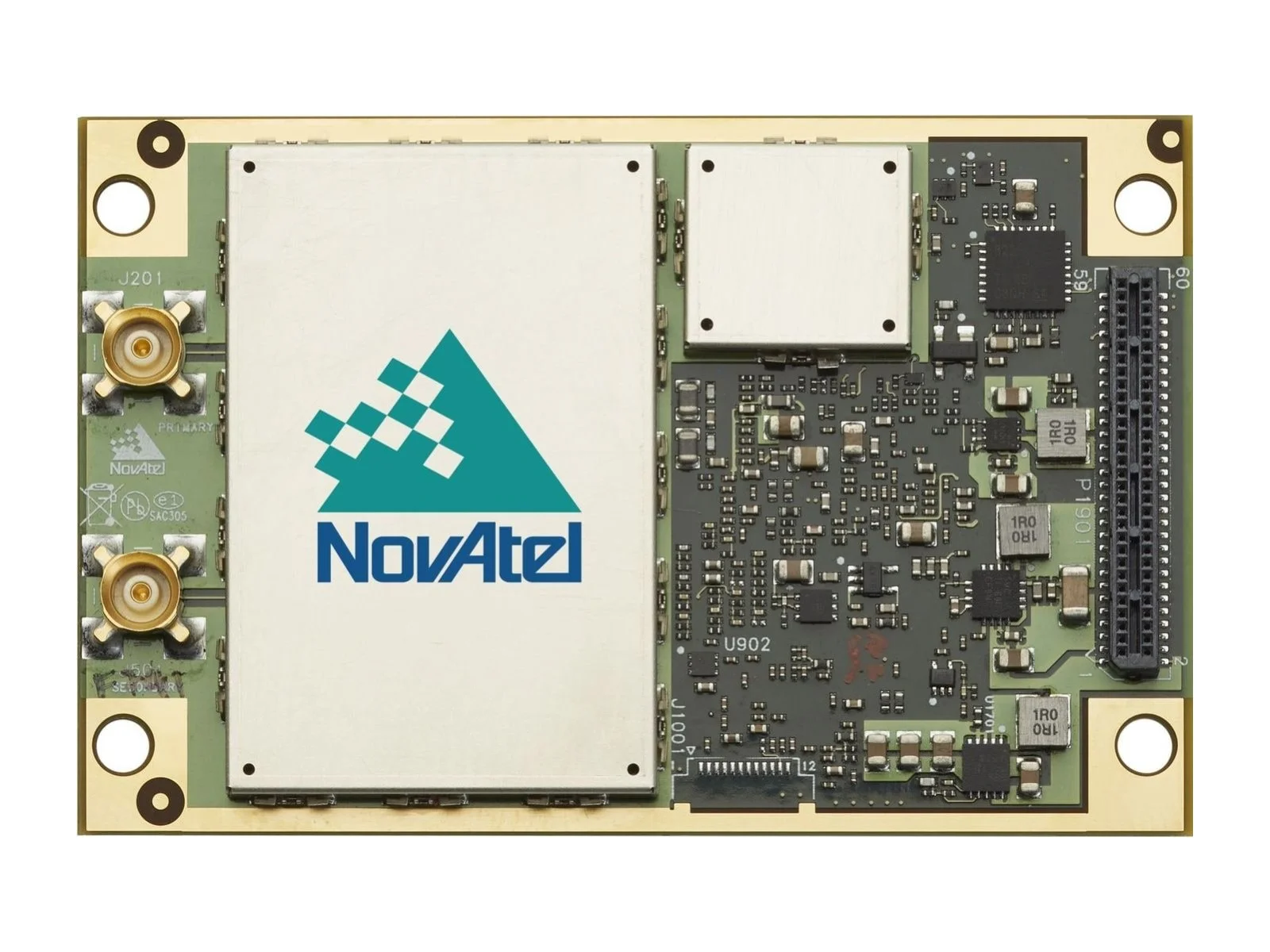
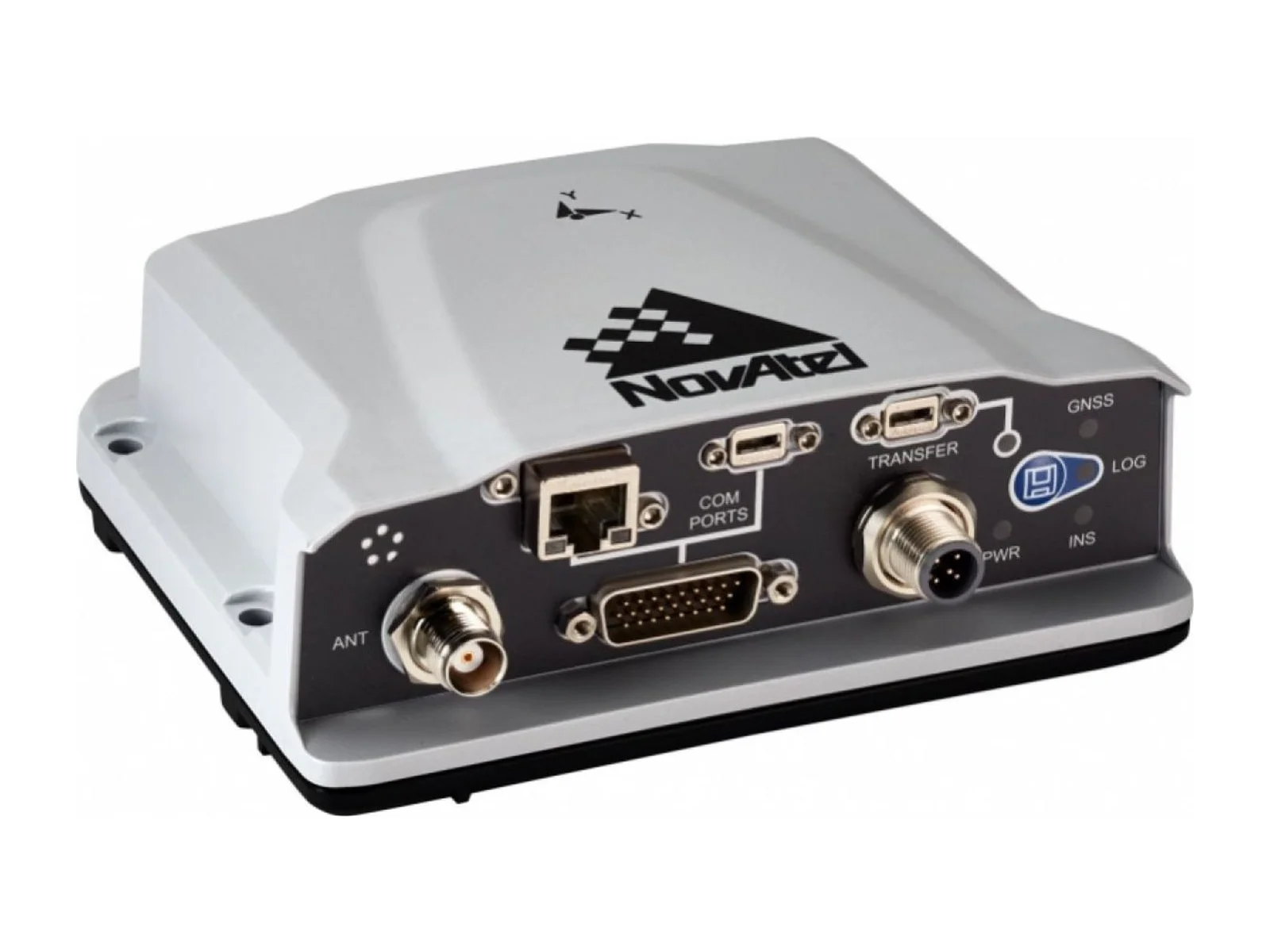
The OEM7720 is a multi-frequency, multi-constellation GNSS receiver board from NovAtel, part of the Hexagon group. It is an OEM satellite-navigation receiver that tracks GPS, GLONASS, Galileo and BeiDou signals, plus L-band correction signals, and delivers position and timing data to a host computer, flight controller or payload in a vehicle or aircraft.
The board is small and light, with a footprint of 46 by 71 mm, a thickness of 7.5 mm and a mass of 29 g, so it can be mounted inside a compact enclosure or a UAV avionics bay. The RF input frequencies are GPS L1, L2 and L5; GLONASS L1, L2 and L3; Galileo E1, E5a, E5b and E5; BeiDou B1I, B1C, B2I, B2a and B2b; and L-band from 1525 to 1560 MHz. Tracking several constellations and frequencies gives more satellites in view and supports the dual- and triple-frequency processing that precision applications require. Which signals are used depends on the receiver configuration.
Power comes from a single supply of 3.0 to 5.0 VDC with allowed input ripple of 100 mV peak to peak. Typical consumption is 1.8 W for GPS L1 and GLONASS L1, 2.3 W for GPS and GLONASS L1/L2, and 2.7 W with all constellations, all frequencies and L-band. Inrush at switch-on is typically 2.0 A, lasting under 1.8 ms. The antenna connection is an MMBX female connector with 50 ohm impedance. The board supplies 5.0 VDC plus or minus 5% up to 200 mA to an active antenna through the centre conductor, and the antenna amplifier gain can be 15 to 55 dB, with 26 dB typical, when HDR is disabled on firmware 7.04 and later.
The data interfaces are broad. There are five LVCMOS serial ports, COM1 to COM5, at 2400 to 460800 bit/s with 9600 bit/s as default; two CAN buses with a maximum of 1 Mbps; two USB 2.0 high-speed ports; and 10BASE-T/100BASE-TX Ethernet. Integrators should note that the serial ports have no electrostatic discharge protection on the board, and that rates above 115200 bit/s may need special computer hardware.
The environmental ratings suit vehicle and airborne installations. Operating temperature is -40 to +85 °C, storage temperature -55 to +95 °C and humidity 95% non-condensing. Random vibration is tested to MIL-STD-810G Method 514.7 Category 24 at 20 g RMS, which requires mechanical mounting rails (7.7 g without them); sinusoidal vibration follows IEC 60068-2-6, bump testing to ISO 9022-31-06 at 25 g, operating shock MIL-STD-810G Method 516.7 at 40 g and non-operating shock at 75 g, and acceleration 16 g. High-current configurations may need the optional heat spreader (01020014) at the upper temperature range.
Typical applications are navigation, georeferencing and timing in UAVs, autonomous ground vehicles, survey payloads and other OEM systems that need a compact, high-grade GNSS receiver.
Shield agrees to buy Echodyne, the Kirkland-based radar maker, in a deal valued at $5.3 billion. The purchase brings software-defined MESA radars, used in counter-UAS systems and for UAS detect-and-avoid, into Shield's Mission Systems…
Ouster releases Firmware 3.2 for its lidar sensors, adding on-sensor 3D zone monitoring, optical window blockage detection and time-synchronized IMU data. The update shifts occupancy logic and motion compensation from the host computer to…
Shield has agreed to buy Echodyne, the Washington-based maker of MESA radars for counter-UAS and airspace sensing, for $5.3bn. Echodyne's radars stay available as standalone products, and the deal adds production capacity for the sensor…











 FeaturedGNSS receivers
 FeaturedGNSS receivers
 FeaturedGNSS receivers
 FeaturedGNSS receivers
 FeaturedGNSS receivers