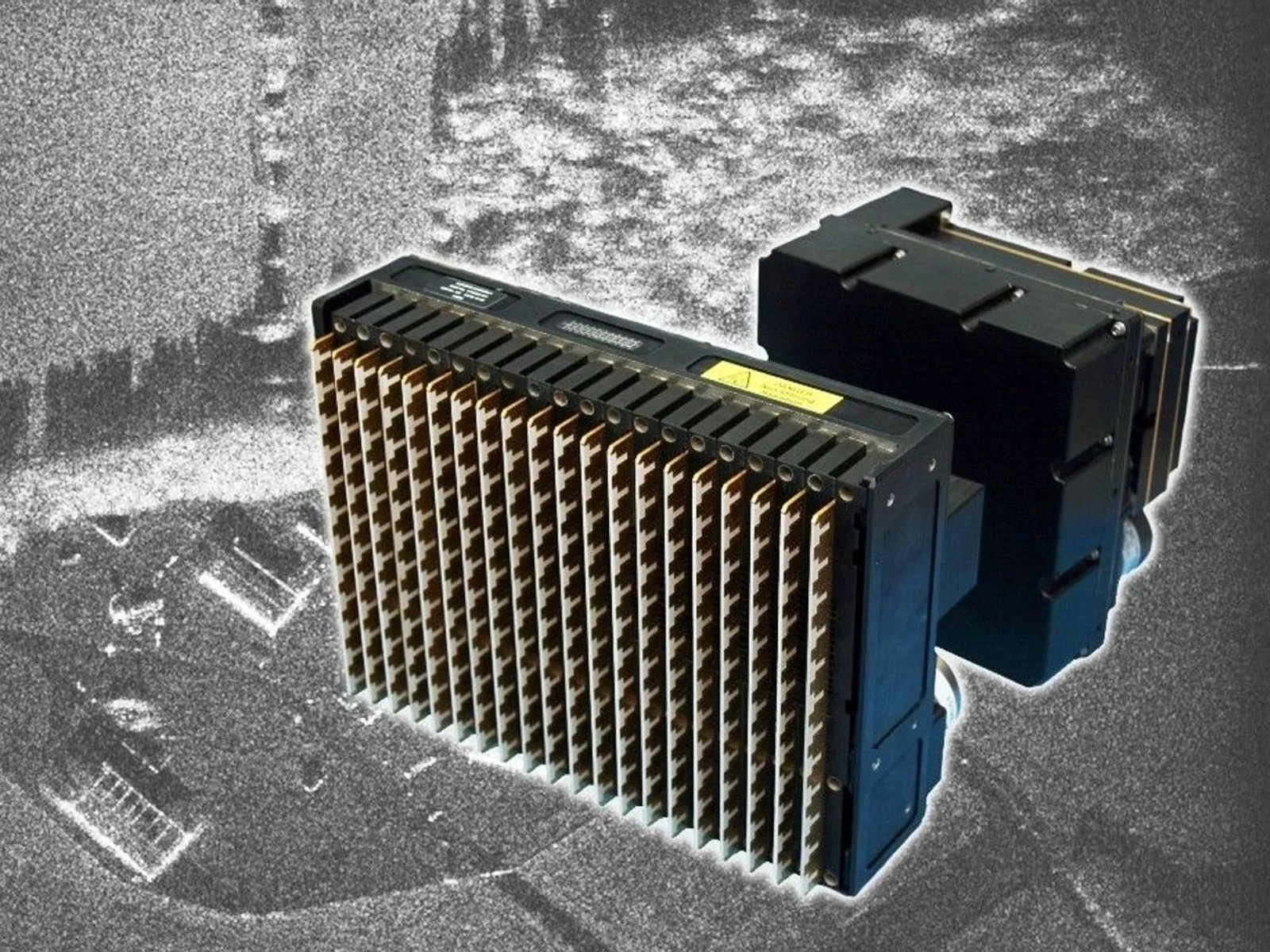
PicoSAR is an airborne synthetic-aperture radar that collects radar observations for imaging and surveillance. It forms a mission payload for an aircraft installation, with the sensor and processing interfaces integrated into the host surveillance architecture.
The PicoSAR from Leonardo is an airborne synthetic-aperture radar with an active electronically scanned array (AESA) antenna, a compact SAR and GMTI radar sensor for uncrewed aircraft, fixed-wing aircraft and helicopters. It gives a platform all-weather ground mapping and moving-target detection from a single small unit, and is intended to be mounted next to electro-optical and infrared sensors on aircraft with a limited payload allowance.
The radar operates in X band and delivers synthetic-aperture imaging in strip mode, as well as ground moving-target indication (GMTI). Map resolution is better than 1 m, and the maximum range is 20 km, which depends on the resolution chosen. Scan coverage is plus or minus 45 degrees, so the beam is steered electronically across a sector without a moving antenna, and for a wider field of view the antenna can be placed on a gimbal.
The antenna uses many low-power solid-state transmit/receive modules. Because the modules are spread over a fixed array, the failure of an individual module reduces performance gradually and does not take down the radar, which is an availability argument for operators who cannot recover the aircraft easily after a fault.
For integration, PicoSAR is a single line-replaceable unit that can be split into an antenna unit and a processor unit to fit the airframe. The antenna measures 310 mm wide, 220 mm high and 85 mm deep; the processor is 200 mm wide, 200 mm high and 125 mm deep (140 mm at most). Total mass is 10 kg and input power is below 300 W at 28 V DC. Cooling uses unconditioned air through the existing internal fans, so no liquid or dedicated cooling loop is required. The electrical connectors carry a GPS antenna feed, 28 V DC power and Ethernet. The antenna can be resized to meet a platform's space constraints or a customer's performance requirement.
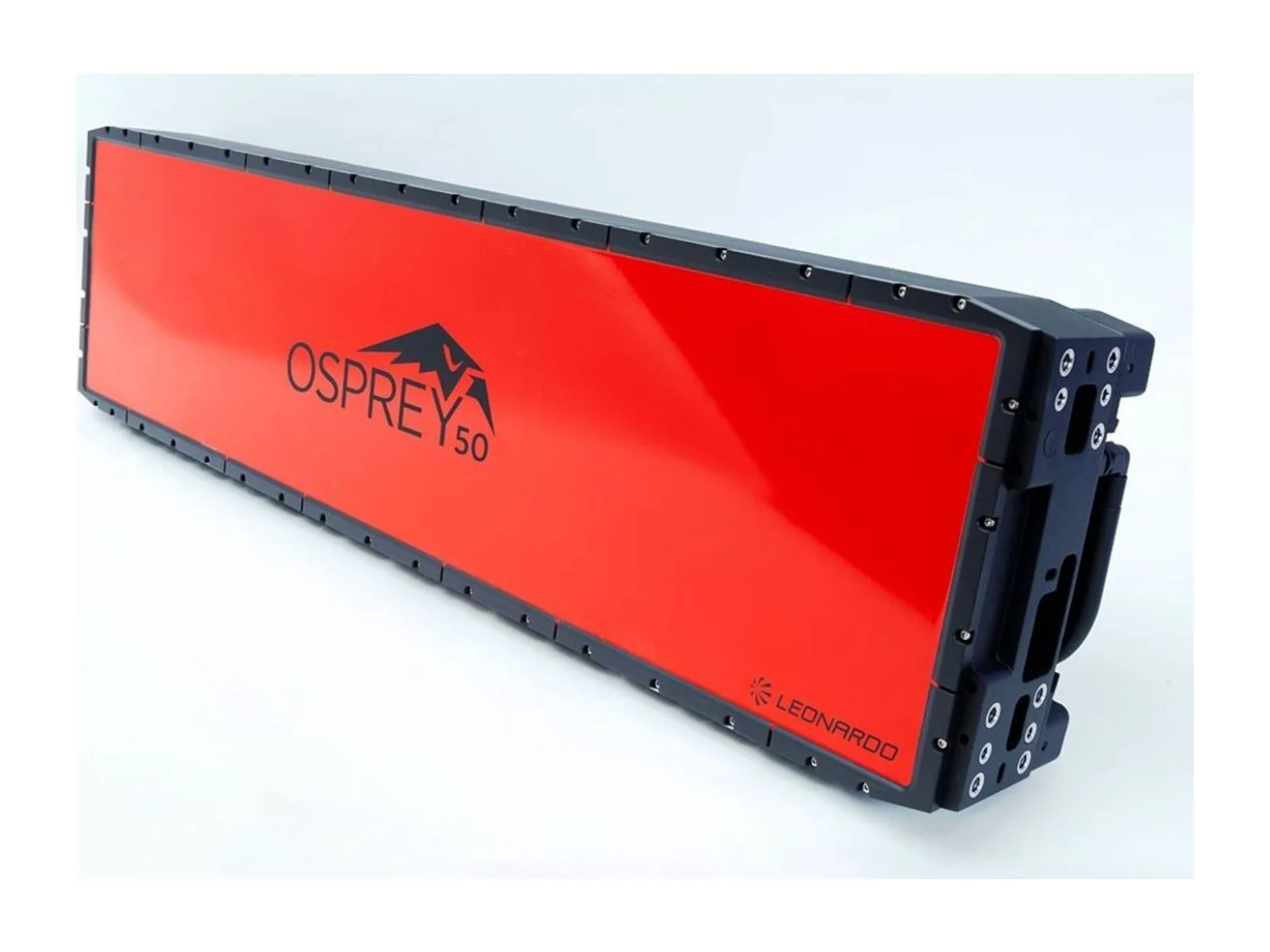
Typical applications are persistent surveillance, border and maritime patrol, and reconnaissance and ground mapping in cloud, rain, smoke or darkness, on medium and large uncrewed aircraft or on crewed fixed-wing and rotary-wing aircraft. The radar forms part of a family of AESA radars from the same maker.
Leonardo DRS secures a three-year IDIQ vehicle from NAVAIR to begin low-rate initial production of its AN/AAQ-45 DAIRCM survivability system for aircraft. The award moves a modular missile-warning and countermeasure suite for small and…
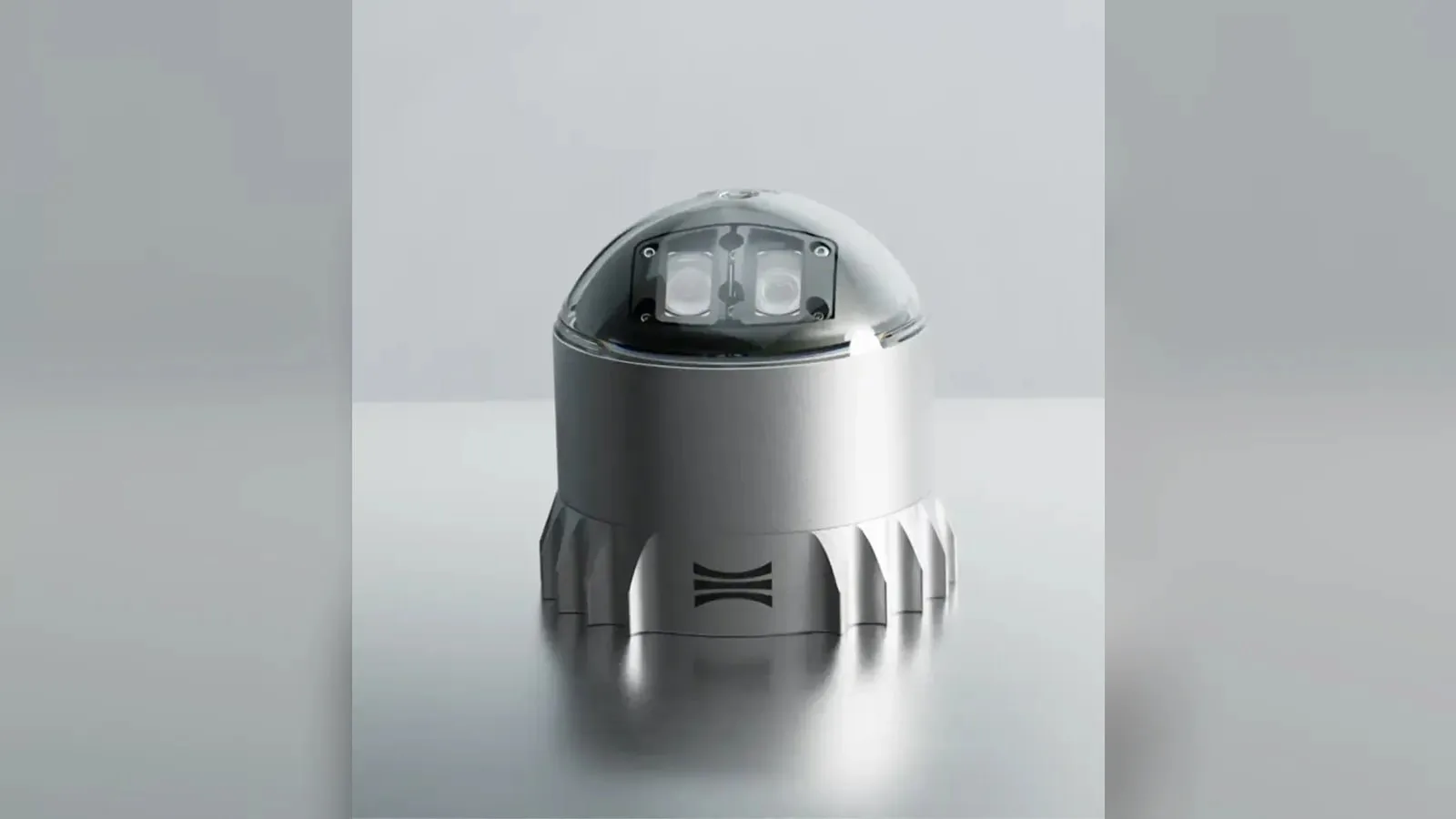
Ouster's REV7 lidar family, built on the L3 digital chip, spans the OS0, OS1 and OS2 plus the new 180° hemispherical OSDome. Ouster claims higher range and finer precision with no change in sensor size or weight.
Gremsy has signed a memorandum of understanding with South Korean UAV manufacturer NINANO to explore integrating Gremsy's EO/IR camera payloads into NINANO's unmanned platforms. The agreement sets a framework for technical collaboration…











 Featured
 Featured
 Featured