ADIS16495 is an inertial sensing unit that measures vehicle motion for navigation and control applications. It supplies inertial information to the host system, where attitude or position processing and the aircraft control architecture can use the measurements.
The ADIS16495 is a tactical-grade MEMS inertial measurement unit (IMU) from Analog Devices that combines a triaxial gyroscope and a triaxial accelerometer in one aluminum package, intended for navigation, guidance and stabilization on unmanned aircraft and other precision platforms.
The unit reports angular rate and linear acceleration on three axes each, and also provides delta angle and delta velocity outputs that an attitude or navigation filter in the host can integrate directly. The gyroscope range is selectable between +/-125 degrees per second, +/-450 degrees per second and +/-2000 degrees per second, so the same part can serve a slow, heavily damped gimbal as well as an agile airframe. The accelerometer measures up to +/-8 g.
For an integrator, the stability figures matter most. Gyroscope in-run bias stability is 0.8 degrees per hour and angular random walk is 0.09 degrees per root hour, which sets how slowly heading and attitude drift when GNSS or vision corrections are unavailable. Accelerometer in-run bias stability is 3.2 micrograms, which limits the error in velocity and tilt estimates over time. Sensitivity, bias and axial alignment are calibrated at the factory over a temperature range of -40 degrees C to +85 degrees C, with axis-to-axis misalignment of +/-0.05 degrees, so little extra calibration is needed in the airframe. Configurable FIR filters, automatic and manual bias correction, and an on-demand self-test of the inertial sensors are available through the register set.
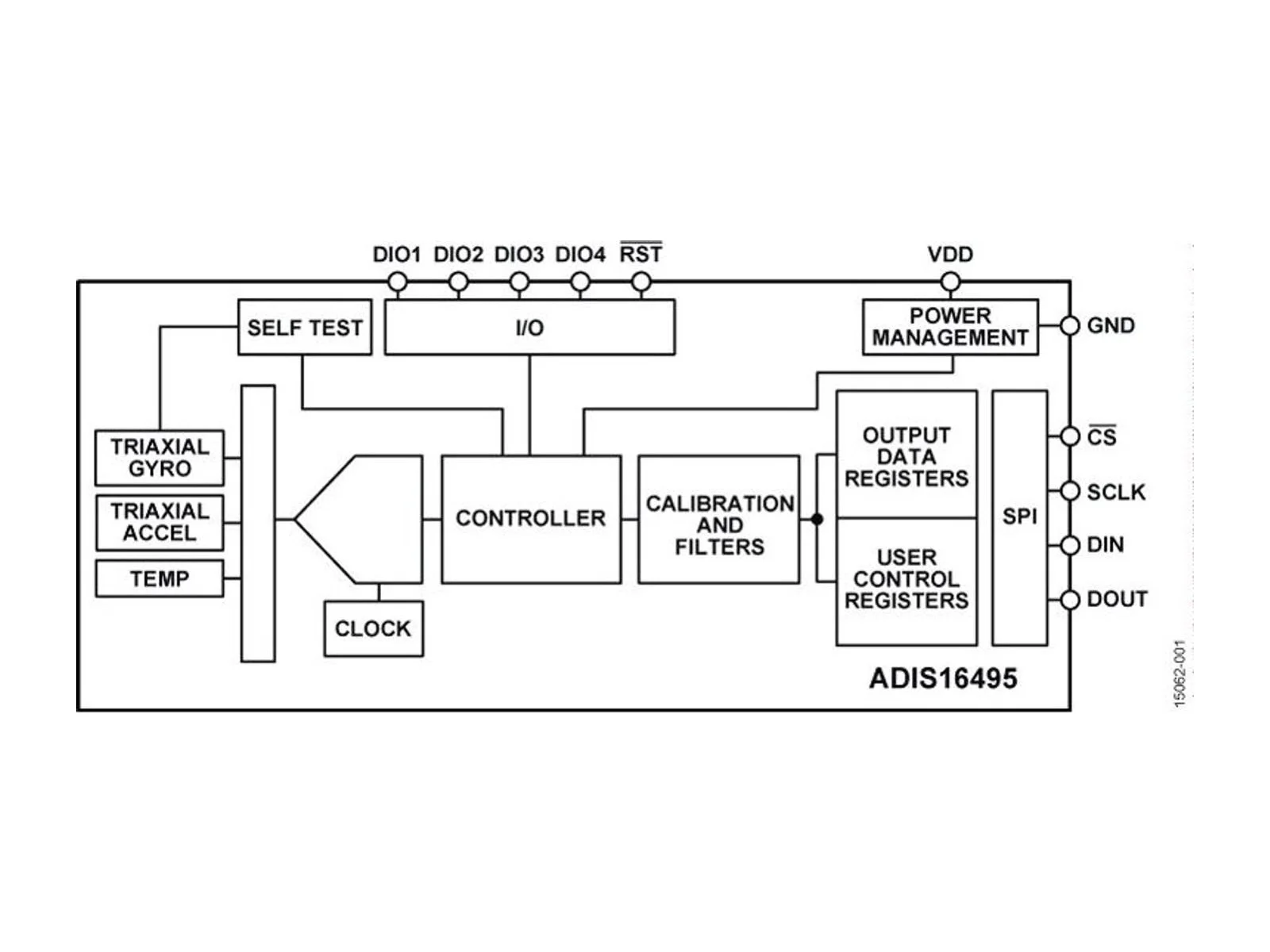
Integration is through an SPI-compatible digital interface with a programmable register structure. The unit has digital inputs and outputs for a data-ready signal and for an external clock, and its sample clock can run internally, from an external source or scaled, which lets a flight computer lock IMU sampling to its own timing. It runs from a single supply of 3.0 V to 3.6 V. The package measures approximately 47 x 44 x 14 mm, uses a standard connector, and shares its footprint and connector with several earlier devices of the same family, which allows a drop-in upgrade on existing designs.
The operating temperature range is -40 degrees C to +105 degrees C and the package survives mechanical shock of 1500 g, which suits mounting close to motors, payload electronics and airframe structure on vehicles that see wide thermal and vibration loads.
Typical applications are guidance, navigation and control, avionics and unmanned vehicles, precision instrumentation and stabilization, and autonomous machines and robotics. Buyers comparing IMUs for UAS flight controllers, inertial navigation systems, gimbals and stabilized payloads will find the combination of tactical-grade stability, factory calibration and a compact SPI-based package suited to those roles.
Specifications
Specifications · ADIS16495 inertial sensing unit
General
Grade
Professional
Market
Dual-use
Platform class
Small UAS (<25 kg), Large UAS (25–150 kg), Heavy UAS (>150 kg), eVTOL
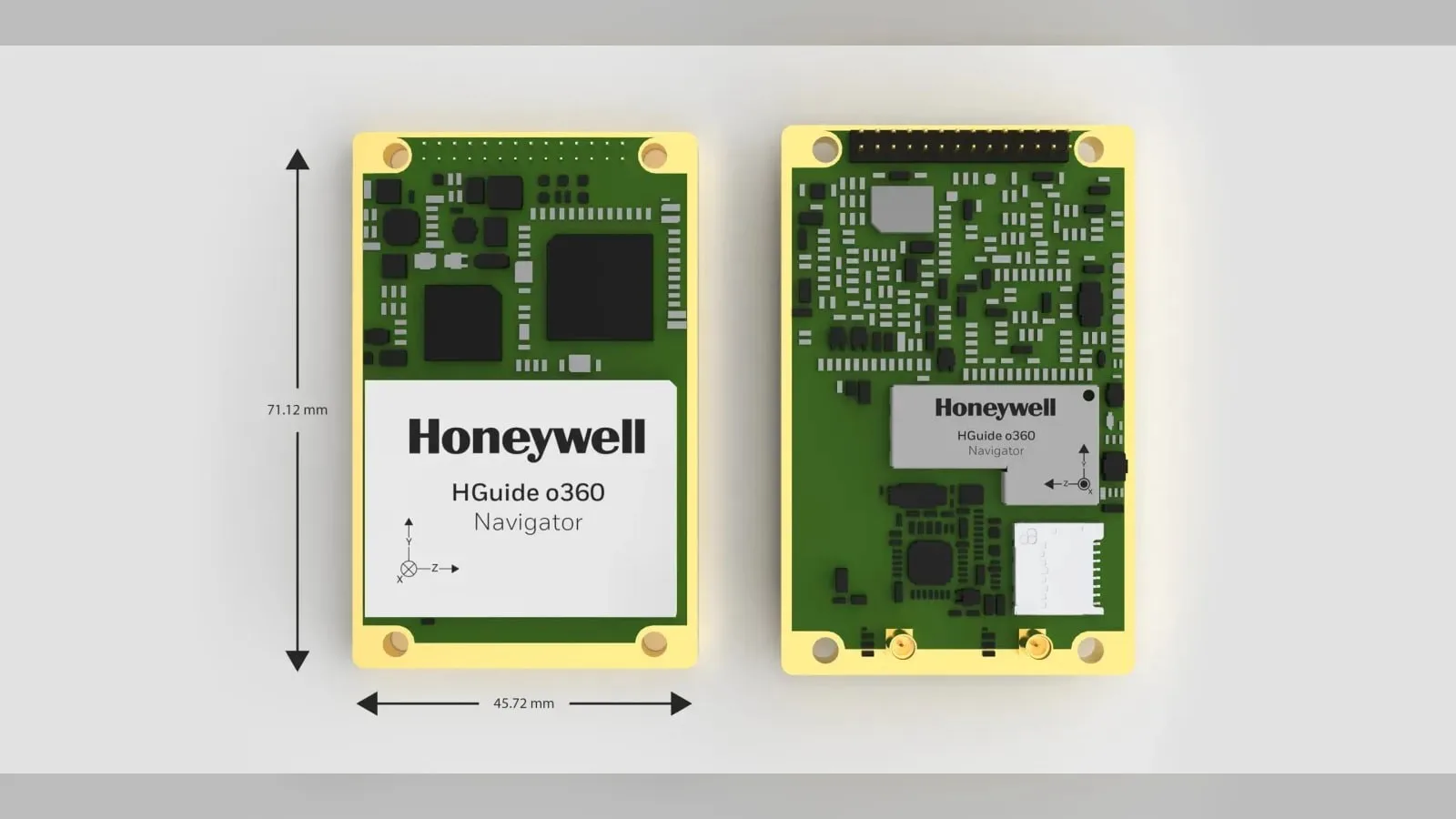
Honeywell Aerospace marks five years of its HGuide Industrial Navigation group, which adapts inertial navigation technology from the company's defense and aerospace lines for industrial platforms. MEMS inertial measurement units such as…
Shield agrees to buy Echodyne, the Kirkland-based radar maker, in a deal valued at $5.3 billion. The purchase brings software-defined MESA radars, used in counter-UAS systems and for UAS detect-and-avoid, into Shield's Mission Systems…
Ouster releases Firmware 3.2 for its lidar sensors, adding on-sensor 3D zone monitoring, optical window blockage detection and time-synchronized IMU data. The update shifts occupancy logic and motion compensation from the host computer to…











 FeaturedIMUs
 FeaturedIMUs
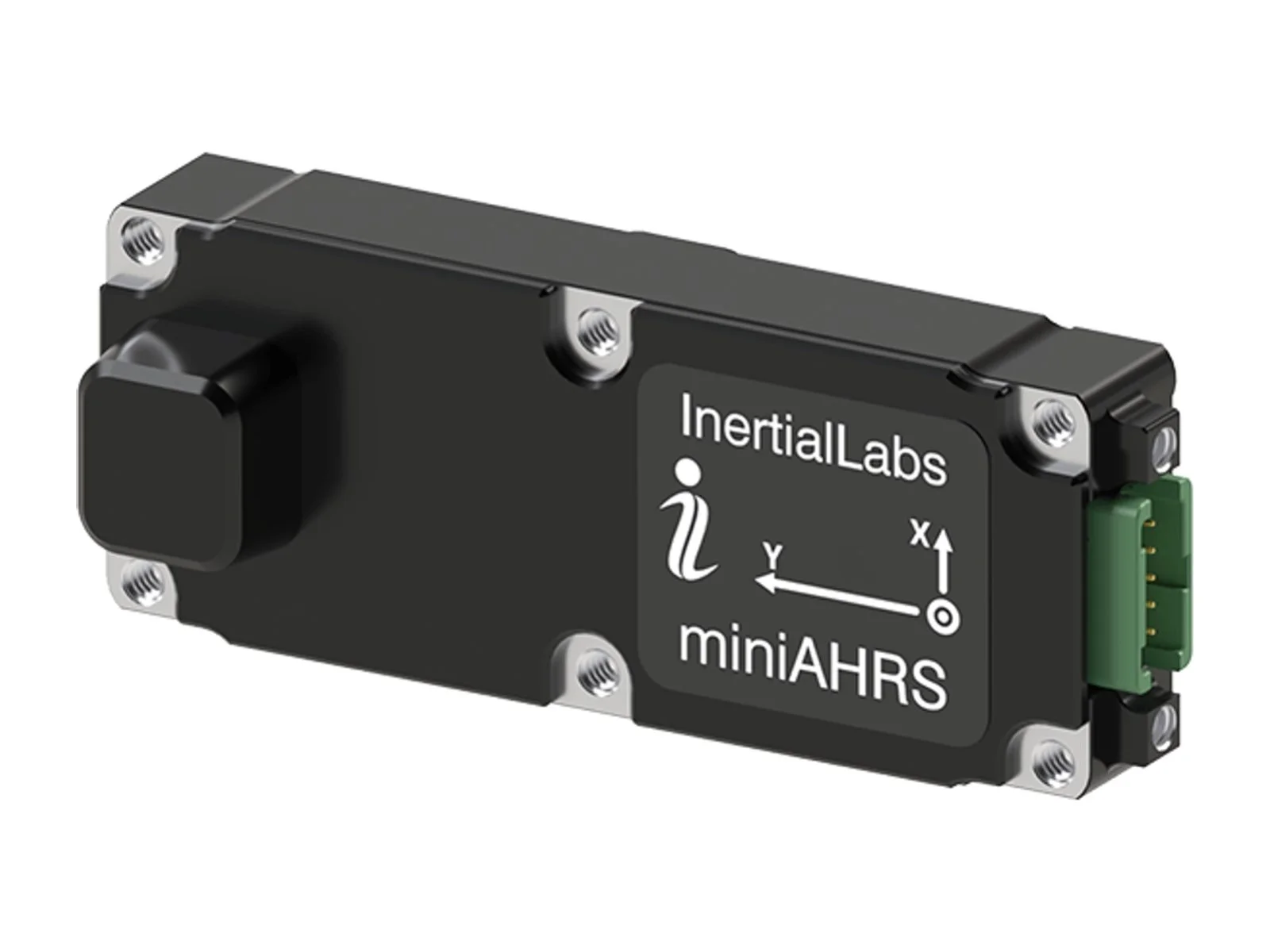 FeaturedIMUs
 FeaturedIMUs
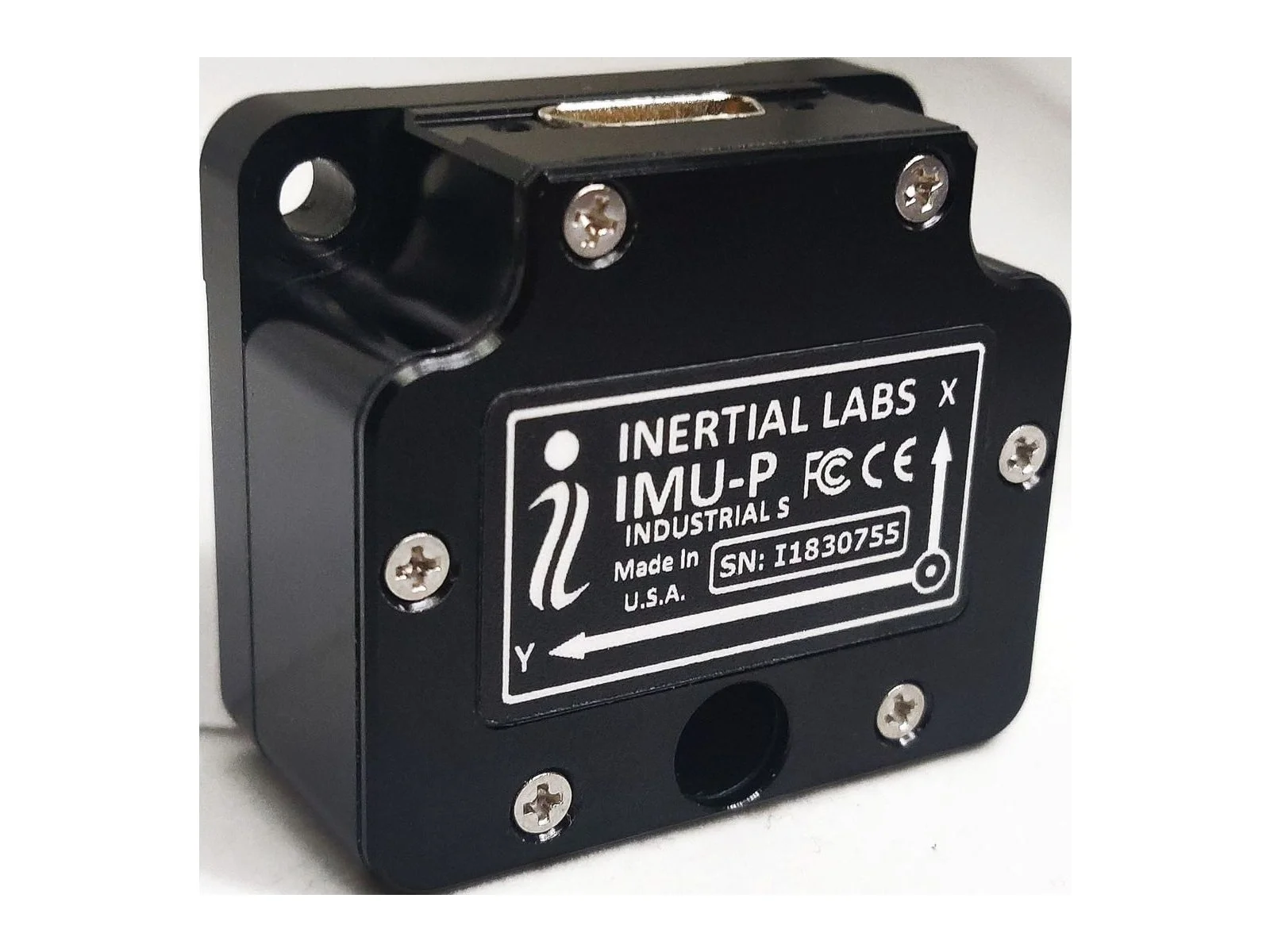 FeaturedIMUs