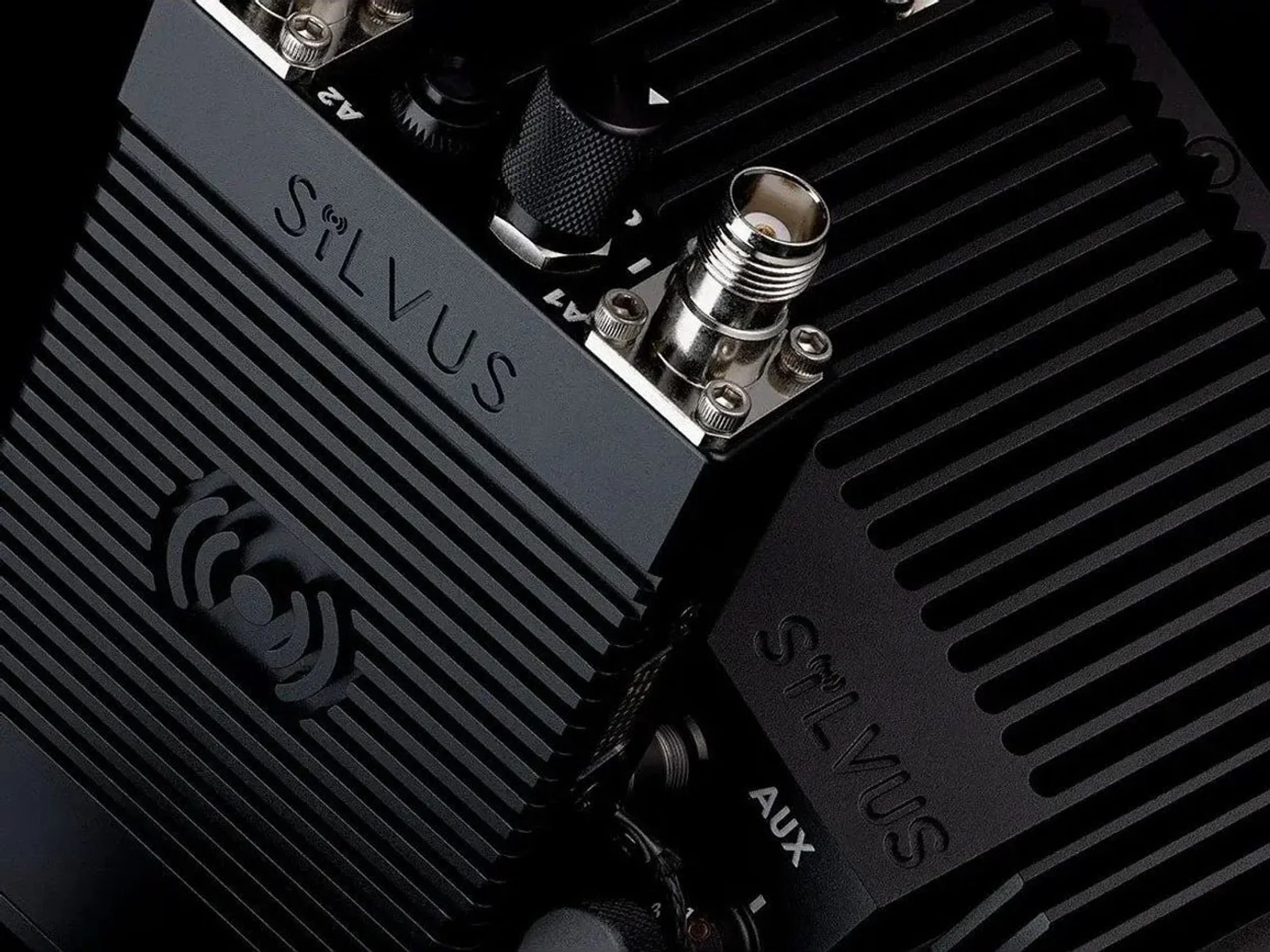
MIMO is a manufacturer of data transmission technology for drones and other applications that utilizes spatial multiplexing, diversity, and beamforming to optimize signal performance. MIMO sends several data streams at once in the same frequency channel from separate antennas. In a scattering environment each stream reaches the receiving antennas with a different spatial signature, and the receiver separates them by signal processing. This is spatial multiplexing. The same antennas can instead be used for diversity, sending redundant copies so that a fade on one path does not break the link, or for beamforming, which concentrates energy towards the other end.
For drones and eVTOL aircraft, MIMO is used in video and C2 radios and in mesh radios, typically as 2x2 (two transmit, two receive) with some products offering more chains. Gain from multiplexing is roughly proportional to the number of streams, but only when the channel offers enough multipath and the signal is strong enough; at long range in clear line of sight the benefit is mostly diversity.
On a datasheet it appears as “2x2 MIMO” or “2T2R”, the number of antenna ports, the per-chain output power and the receiver sensitivity per modulation. Integration also needs antenna spacing and polarization diversity on the airframe.
A frequent mistake is to read a MIMO rate as available at any range. The headline rate uses the maximum number of streams and the densest modulation, which needs a high signal-to-noise ratio. Also check whether the quoted output power is per chain or the sum over chains, because the two differ by 3 dB for two chains.