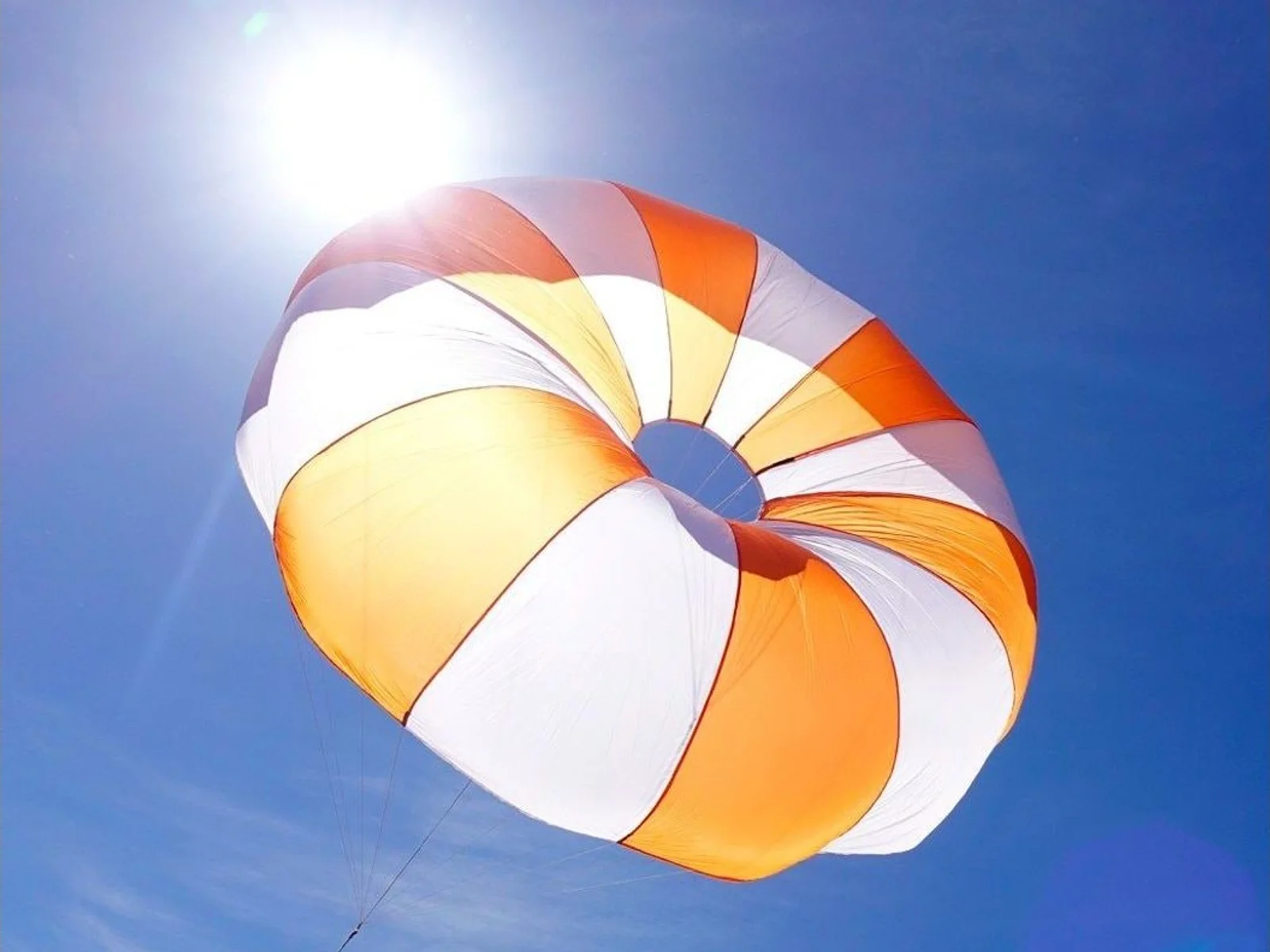
GRS 350 is a ballistic aircraft recovery parachute system using a rocket to extract the canopy. Its deployment and attachment equipment must be matched to the approved aircraft mass, installation configuration and flight conditions during activation.
The GRS 350 is a ballistic parachute rescue system from Galaxy GRS for ultralight and light aircraft up to 350 kg maximum operational weight. It is a whole-aircraft recovery parachute: a rocket pulls the canopy out of its container, so the canopy opens quickly even at low altitude.
The canopy has an area of 70 square metres and a nominal diameter of 8.3 m, with 24 lines and panels and a central cord. At the maximum weight and at 1,000 m above mean sea level, the descent rate is 6.7 m/s, which defines the sink speed that the airframe and its occupants must be able to withstand on impact. The total safety coefficient of the canopy was tested to ASTM F2316-12.
Speed and height limits decide where the system can be used. The never-exceed speed for deployment is 160 km/h, or 190 km/h for the slider version. At that speed and at maximum weight, the canopy opens fully in 1.5 to 2.3 s and the opening shock is 18.5 kN/G. For horizontal flight, the minimum projected rescue height is 40 m at 65 km/h. These figures let a designer compare the limits with the aircraft's own speed range and load paths.
Deployment uses a container sleeve-rocket system. The MK4 rocket engine is ignited by a mechanical igniter with a dual primer and can be activated mechanically or electrically. Stationary rocket pull is 68 kg (670 N/s), the maximum pull is 94 kg (930 N/s), and the burn time is 1 s plus or minus 0.2 s between -40 C and +60 C. The ballistic and drawing device weighs 2.62 kg.
For installation, the canopy is packed in a soft pack, with size B1 measuring 15 x 25 x 45 cm, and the rocket is 580 mm long with a 185 mm diameter. The packed unit weighs 11.3 kg in the IN/OUT configuration, and soft-pack and rocket variants from B1 to B12 differ in width, height and length. The pack and the attachment lines must be matched to the airframe's structure and to the approved aircraft mass. The system is certified by tests to the ULL-05/94 requirement, performed by ZS-2 LAAČR, and the maker specifies repacking, a cycle exchange, every 6 years.
Typical applications are ultralight aircraft, light sport aircraft, gyroplanes and small unmanned aircraft close to this weight class that need an emergency recovery device. The system also suits airframes where the pilot or an automatic trigger must be able to deploy the parachute at low height.
Aernnova signs a deal to take over GE Aviation's Hamble site in the UK, its first operating base in Britain. The deal brings about 700 employees, the A350 XWB wing fixed trailing-edge program and roughly $200 million in additional yearly…
Hitec Commercial Solutions releases the DPC-20, a USB-C programmer that configures and tests its digital servo actuators over PWM, TTL, RS-485, CAN and DroneCAN. It replaces three earlier programmers, the DPC-11, DPC-485 and DPC-CAN, so…
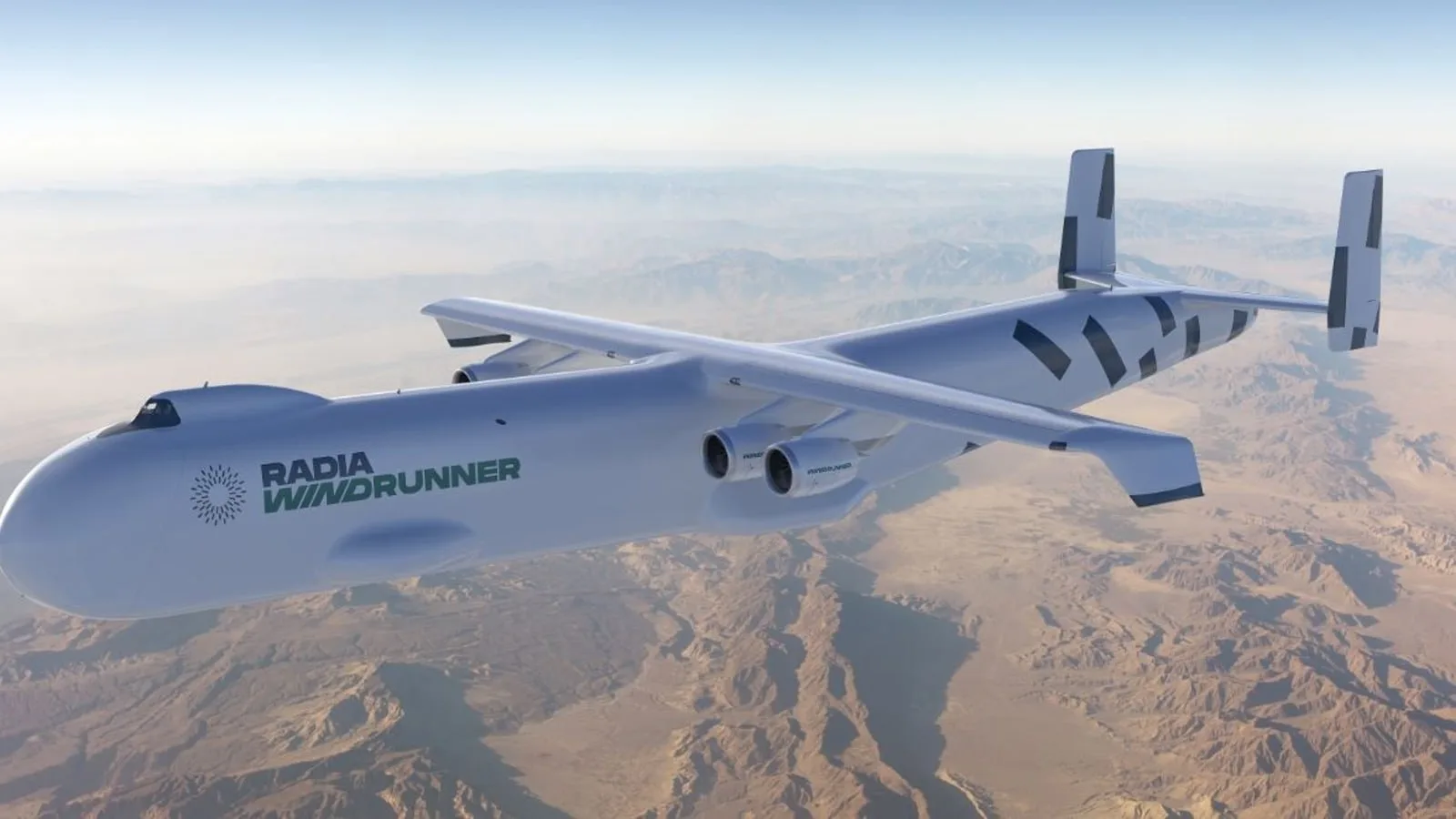
Aernnova partners with Radia on the wing and engine pylons of WindRunner, the cargo aircraft Radia is developing to carry wind turbine blades. Leonardo and AFuzion join the same ecosystem for fuselage engineering and for safety and…









 FeaturedParachutes
 FeaturedParachutes
 Featured
 Featured