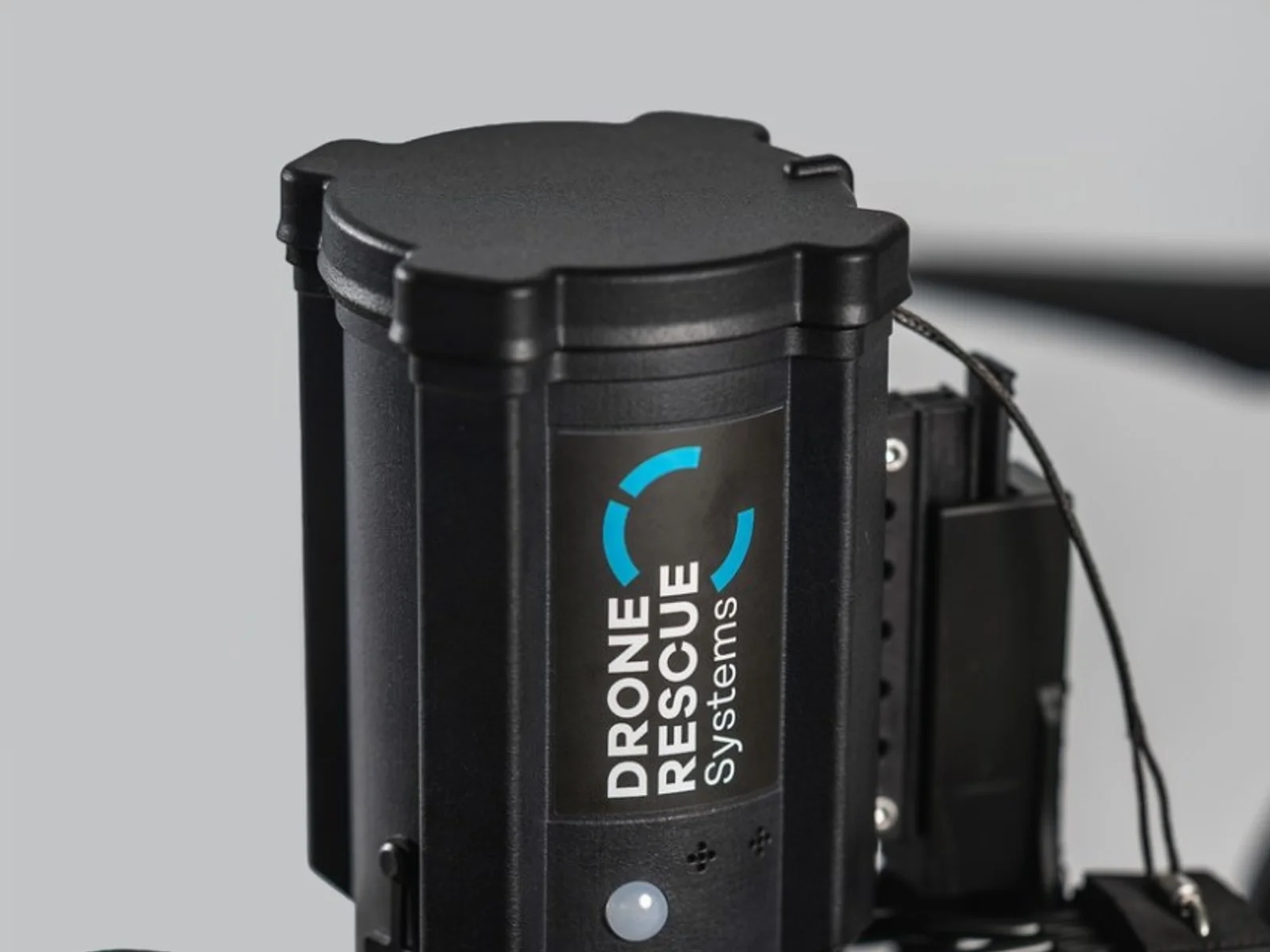
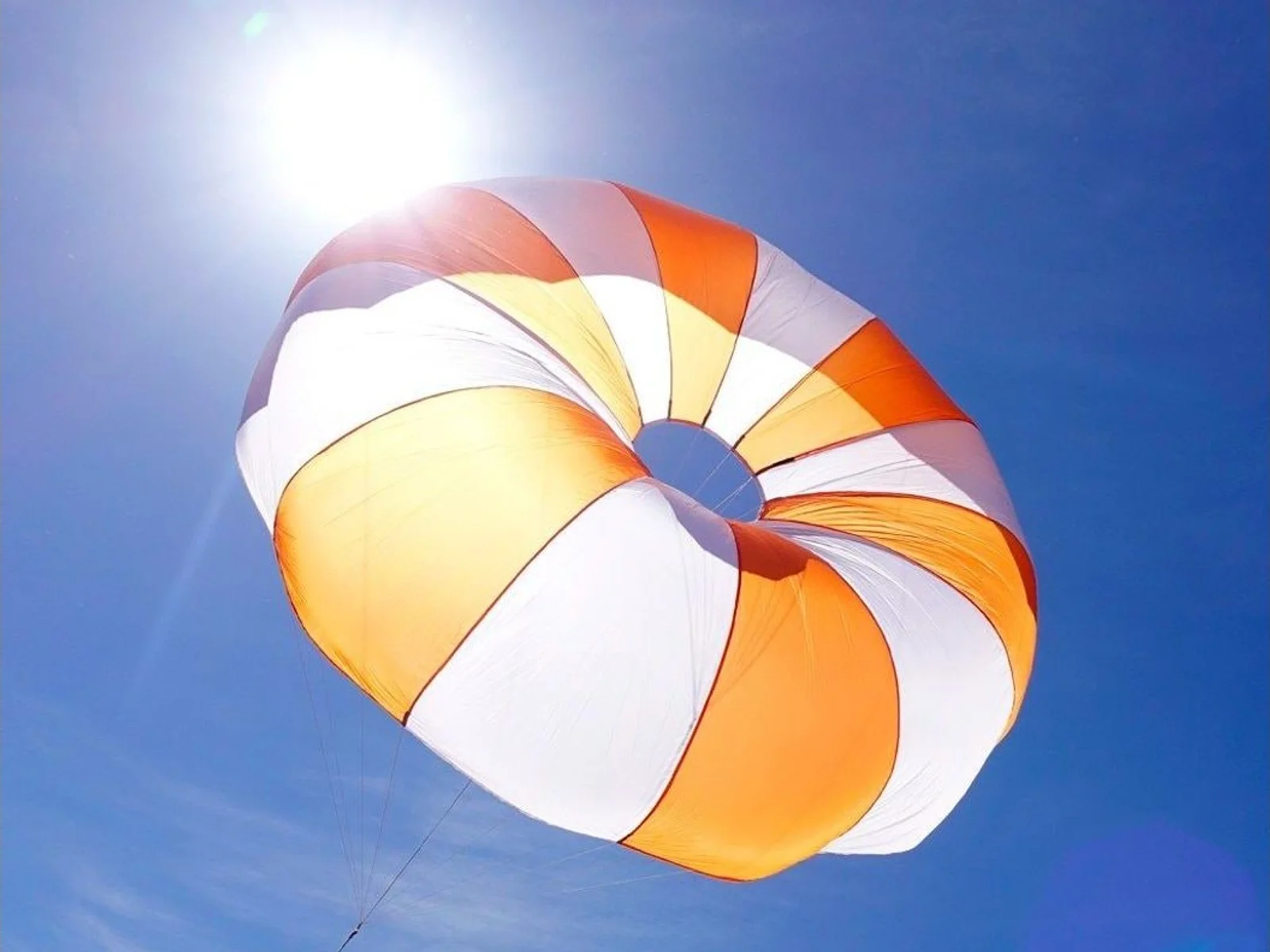
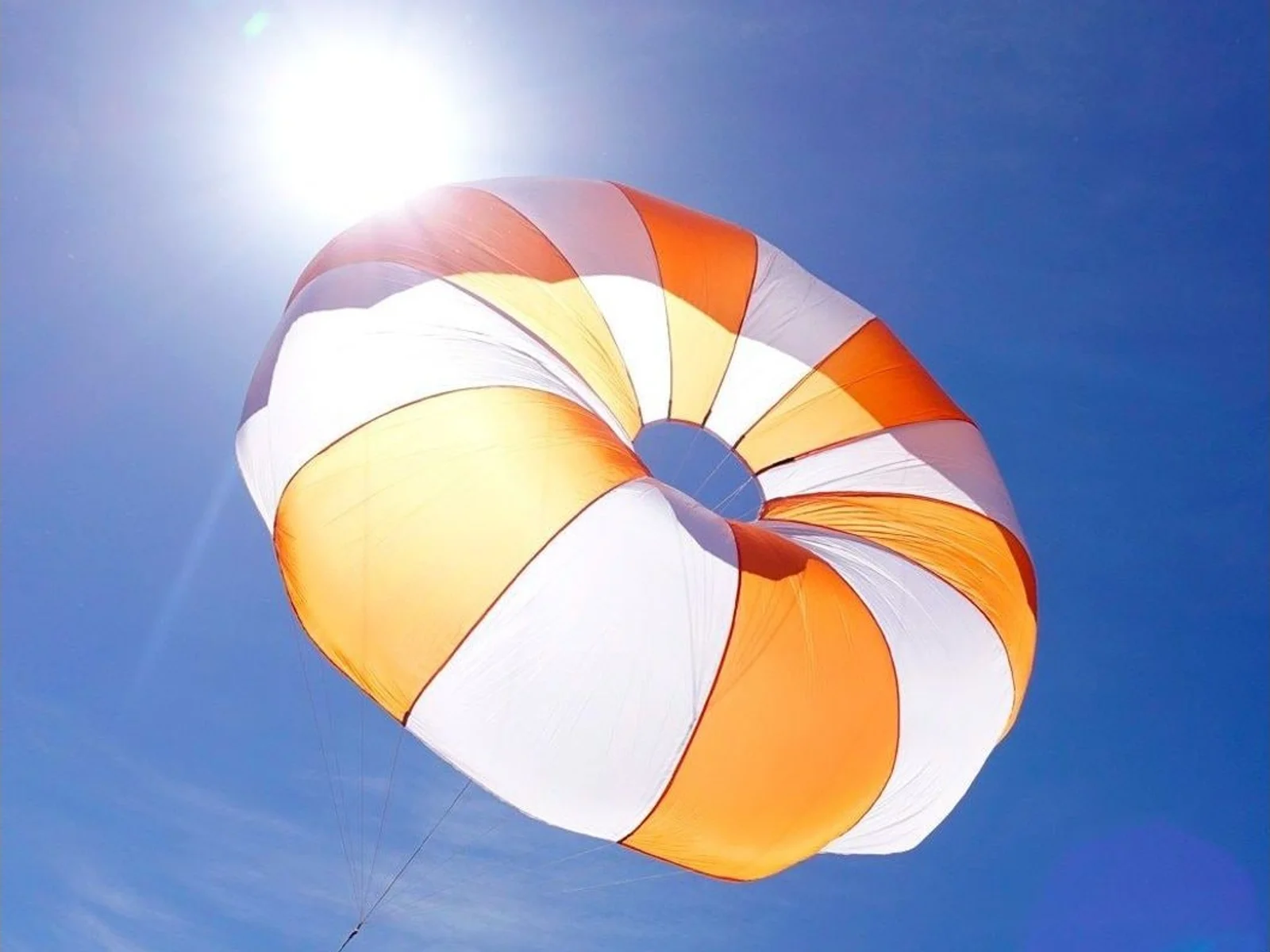
DRS-Astro is a parachute recovery product that uses aerodynamic drag to slow a descending aircraft or payload. It forms part of a recovery installation, with the canopy, deployment mechanism and attachment system matched to the vehicle mass and operating envelope.
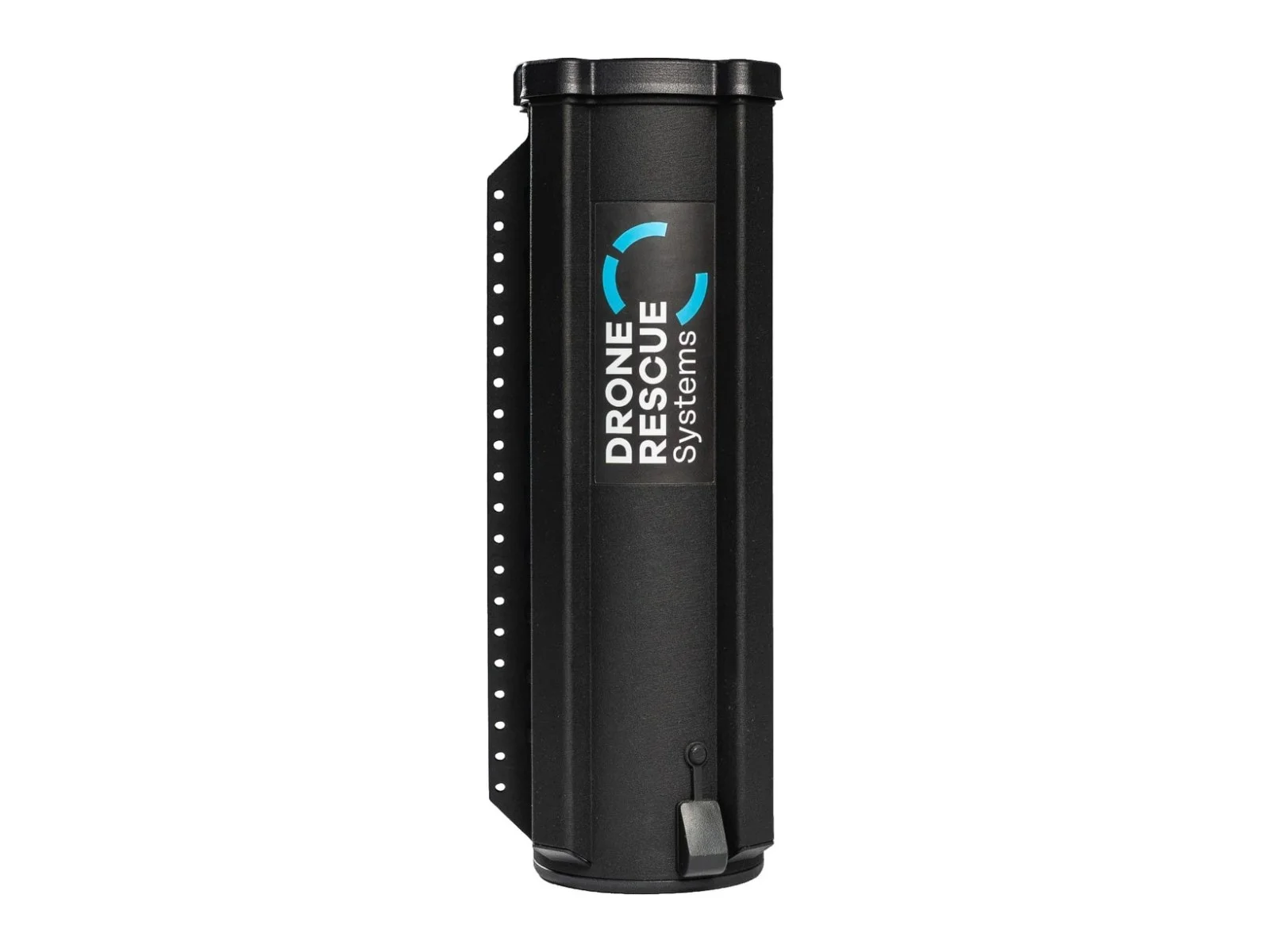
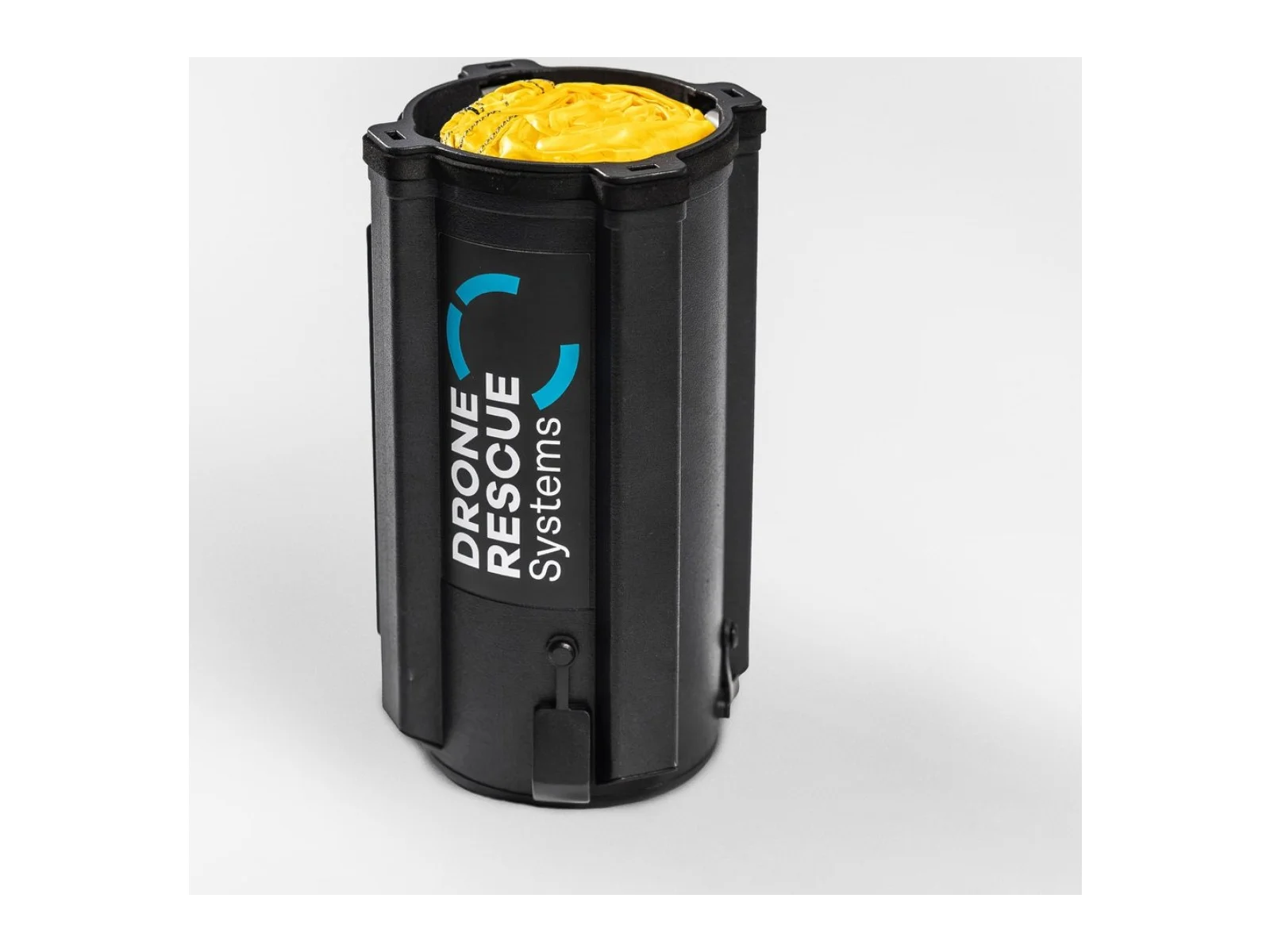
The DRS-Astro is a parachute recovery system for multicopter drones from Drone Rescue Systems, an aerodynamic-drag safety device that slows an aircraft after a failure in flight. The maker lists it with the Astro Max, a second variant covering a higher take-off mass, on one product page under its standard drone parachutes.
The two variants cover different aircraft masses. The Astro is specified for a weight of 3.2 kg and the Astro Max for 8.7 kg. This makes the family relevant to small professional multicopters used for inspection, mapping, survey and camera work, where a parachute reduces the consequences of a loss of control over people and property.
The performance figures describe what happens on descent. Descent velocity is 2.2 m/s at 3.2 kg and 3.8 m/s at 8.7 kg. Impact energy is 8 J at 3.2 kg and 63 J at 8.7 kg. Impact energy is the figure that risk assessments for operations over people and property usually work from, and it rises with aircraft mass, so the choice of variant should follow the actual maximum mass of the aircraft rather than a typical flight weight. Parachute deployment is specified as taking place within 20 to 30 m.
The system is compact. The system weight is 490 g, and the housing measures 140 mm in height and 100 mm in diameter, a size that fits on the top deck or the rear of many multicopter airframes without a large change to mass and balance. The added 490 g counts against the payload capacity of the aircraft.
For integration, the unit communicates over MAVLink, so an autopilot that speaks the protocol can trigger it as part of its failsafe logic. Geofencing and an RC trigger are listed as options. The geofencing option lets the system react to a boundary breach, while the RC trigger gives the remote pilot a manual release independent of the autopilot logic.
On standards, the maker states that the Astro is eligible for testing according to ASTM F3322, the specification for small unmanned aircraft system failure-mode and parachute-related requirements that operators and authorities reference when assessing recovery systems.
Typical applications are professional multicopters operating over populated or sensitive areas, where a flight termination by parachute is part of the safety case for the operation.
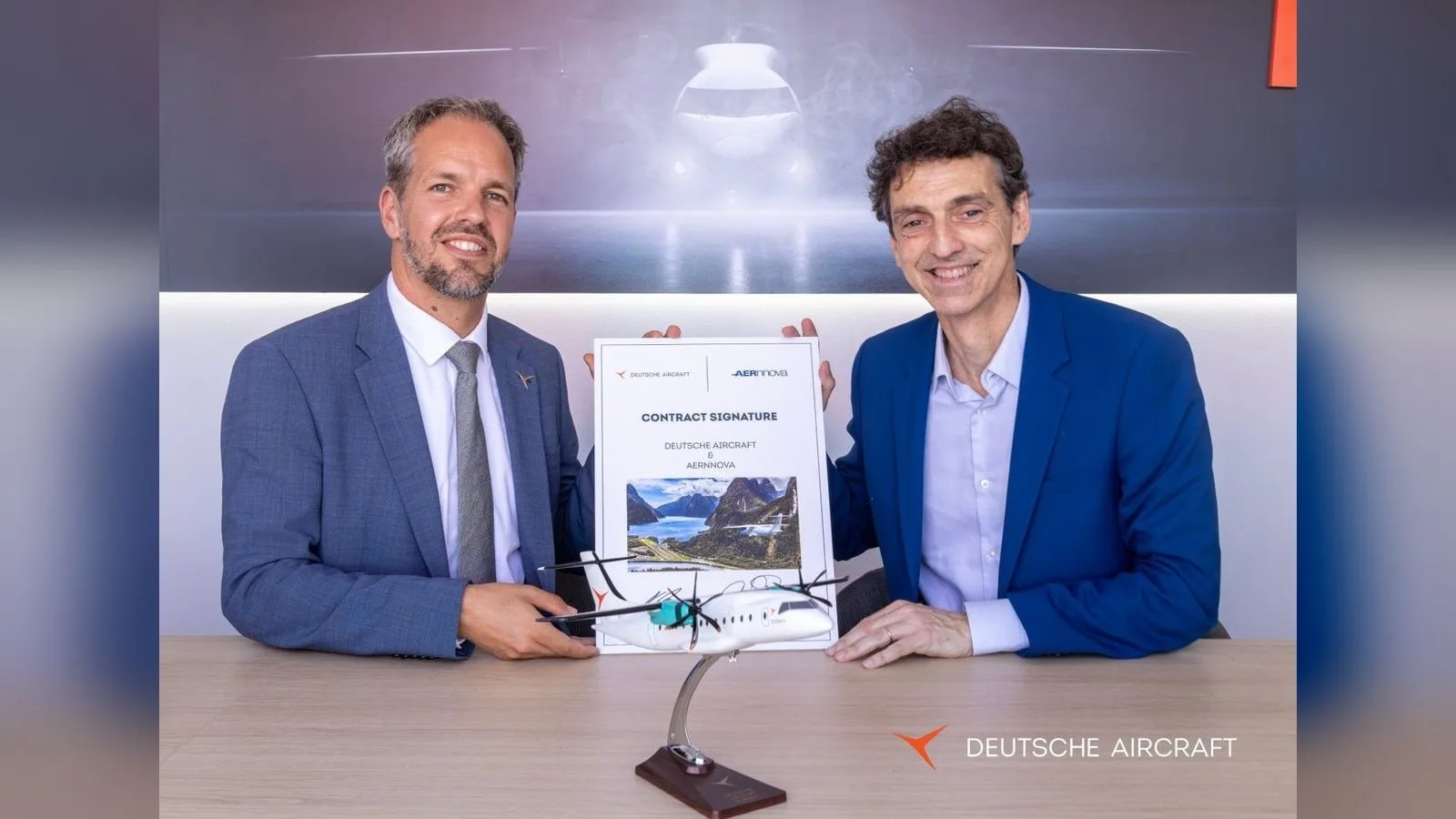
Aernnova signs a deal to take over GE Aviation's Hamble site in the UK, its first operating base in Britain. The deal brings about 700 employees, the A350 XWB wing fixed trailing-edge program and roughly $200 million in additional yearly…
Hitec Commercial Solutions releases the DPC-20, a USB-C programmer that configures and tests its digital servo actuators over PWM, TTL, RS-485, CAN and DroneCAN. It replaces three earlier programmers, the DPC-11, DPC-485 and DPC-CAN, so…
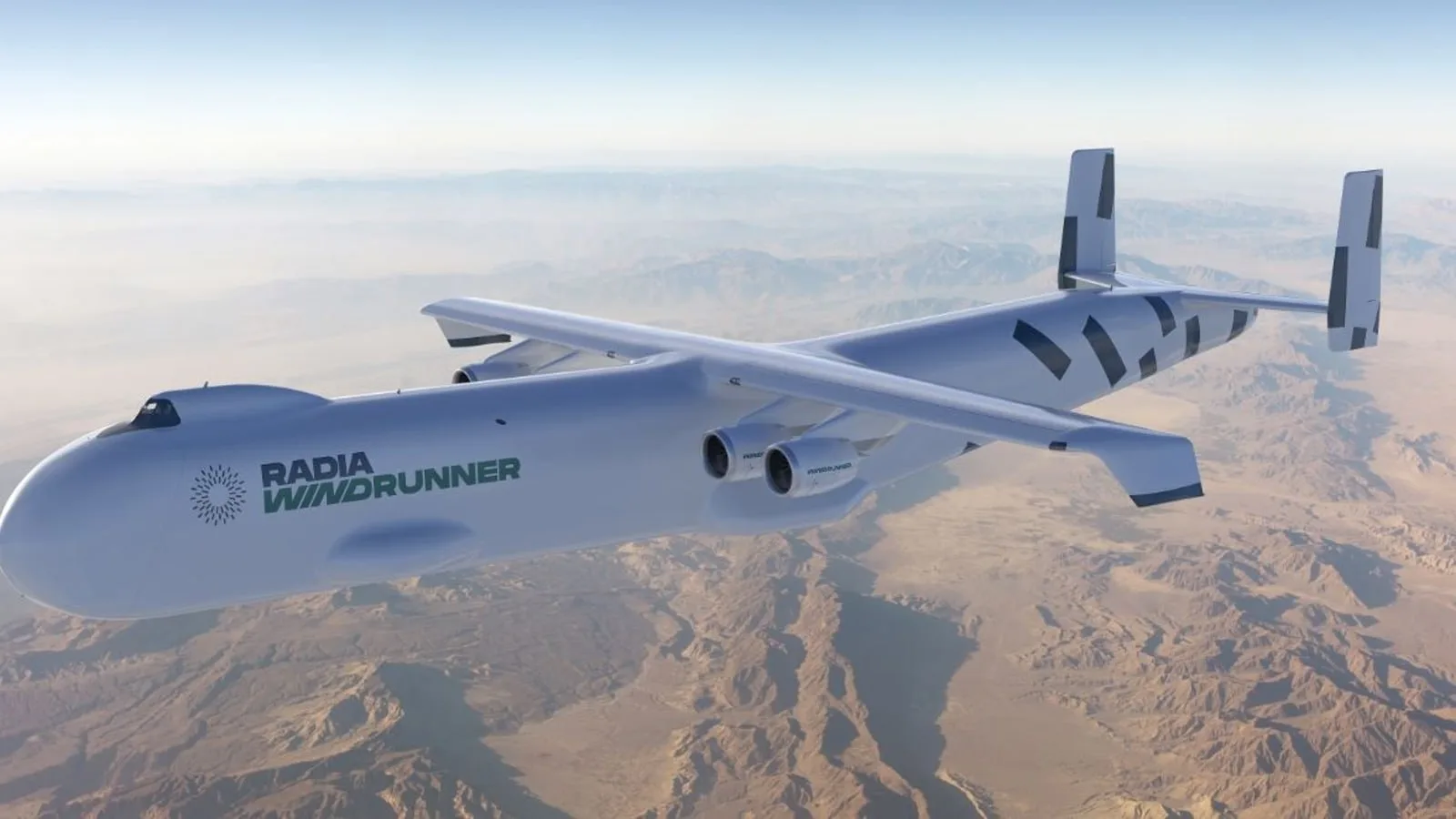
Aernnova partners with Radia on the wing and engine pylons of WindRunner, the cargo aircraft Radia is developing to carry wind turbine blades. Leonardo and AFuzion join the same ecosystem for fuselage engineering and for safety and…









 Featured
 Featured
 FeaturedParachutes
 FeaturedParachutes
 FeaturedParachutes