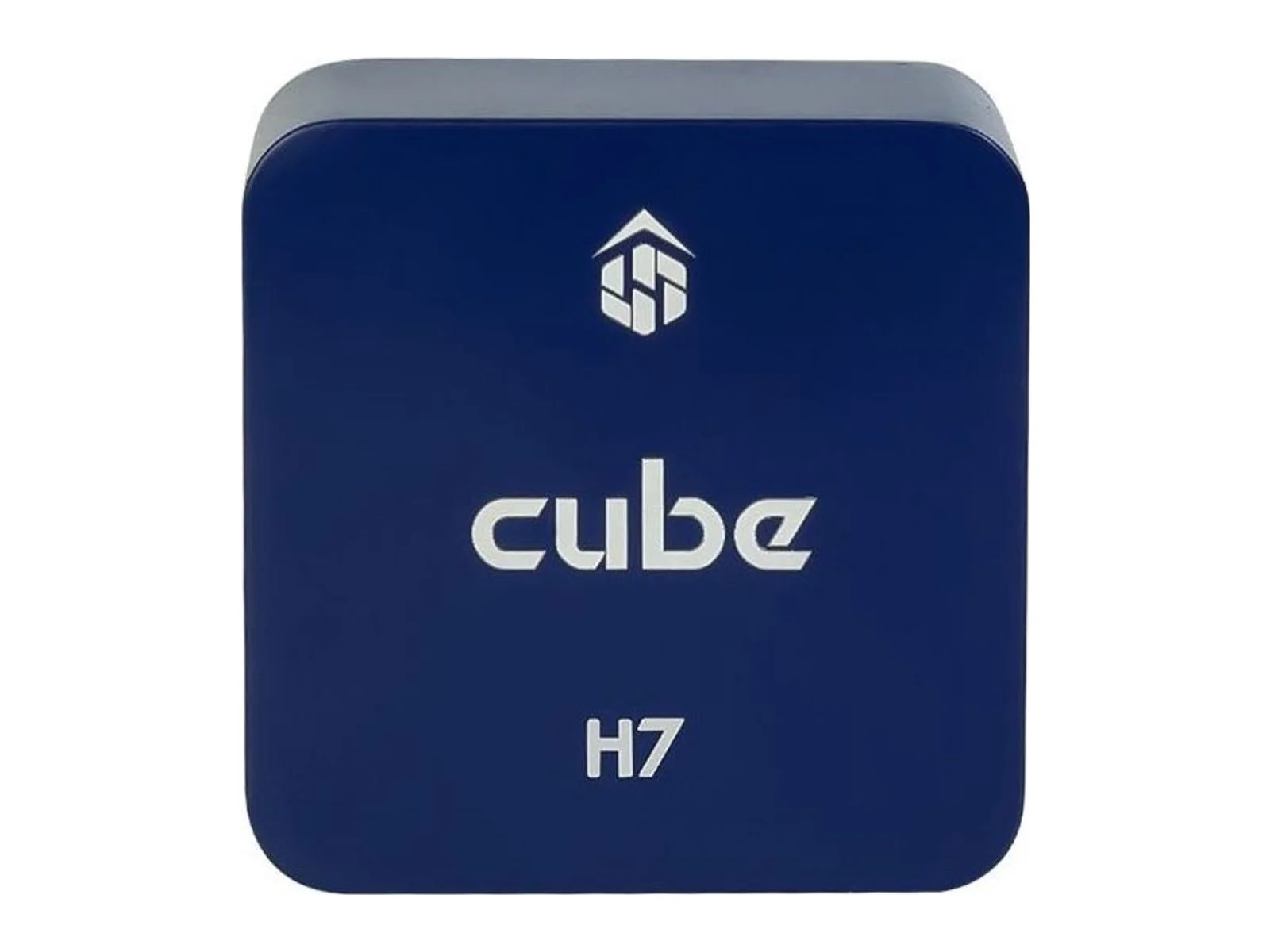
Cube Blue is a modular flight-management family offered in F4 and H7 implementations. Both versions combine inertial sensing with an MS5611 barometer, while the processor, memory and inertial-sensor configuration depend on the selected hardware variant.
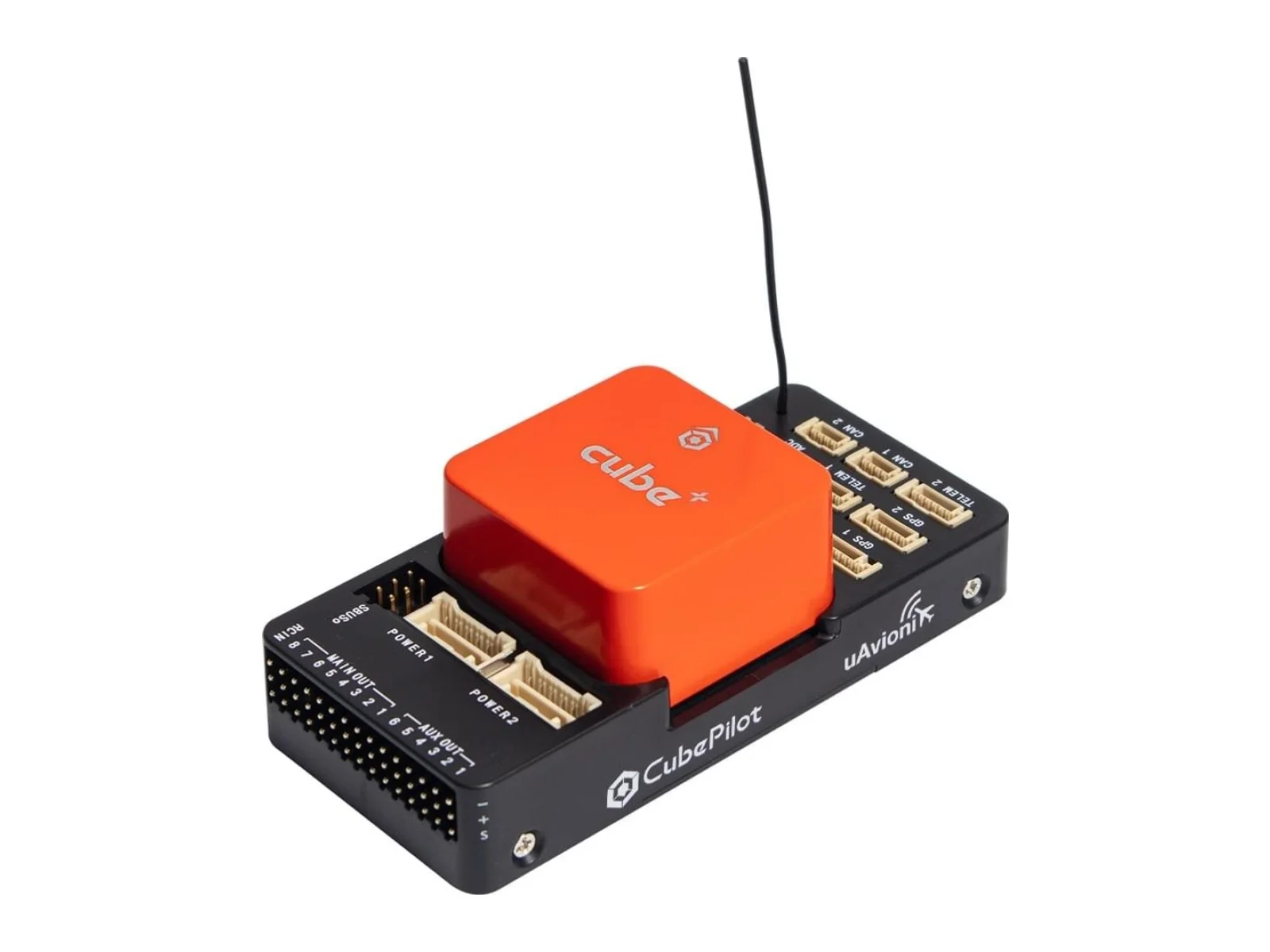
The CubePilot Cube Blue is a modular flight controller in the form of a flight management unit (FMU) that plugs into a separate carrier board through an 80-position Hirose DF17 connector. It is sold in two hardware versions, BlueF4 and BlueH7, and acts as the autopilot computer for multirotor, fixed-wing and VTOL unmanned aircraft. Because the processing module and the airframe wiring are separate parts, an integrator can design a carrier board once and replace the FMU later without rewiring the aircraft.
The two versions differ in processor, memory and inertial sensor. BlueF4 uses an STM32F427 microcontroller with 2 MB of flash and 256 KB of RAM, paired with an MPU9250 16G accelerometer and gyroscope. BlueH7 uses an STM32H753 with 2 MB of flash and 1 MB of RAM, paired with an ICM-20649 30G accelerometer and gyroscope. The H7 version has four times the working memory and a wider acceleration range, and it adds a CAN FD interface. CubePilot also documents that the H7 designs are the replacement path for older Cubes whose inertial sensors have reached end of life, and that they work with carrier boards following the CubePilot reference design.
Sensing is redundant. Every Cube carries three IMUs, two on a vibration-damped IMU board and one fixed to the FMU, together with two MS5611 barometers and two compasses, one on each of those boards. All sensors are connected over SPI, and a micro SD interface through SDIO provides on-board data logging.
The interface set is defined by the carrier board. The Cube provides 14 PWM servo outputs, of which eight are driven by the I/O processor and six by the FMU. The eight I/O outputs keep working from the radio-control input and on-board mixing when the FMU is not active, which gives a manual failsafe path. Receiver inputs cover CPPM, Spektrum/DSM and S.Bus, and there is one S.Bus servo output and an analog or PWM RSSI input. The unit also has five general-purpose serial ports, two of them with full flow control, two I2C ports that allow two GPS and compass units without address conflicts, two CAN buses, three analog inputs, an unbuffered SPI port for short cables, a buzzer driver, an RGB LED output and a safety switch with LED.
Power is a single 5 V supply with a compliant range of 4.0 to 5.5 V; the Cube does not include power management, so the power module sits on the carrier board. A second power input is available on the PRO carrier board, while the mini carrier board takes backup power from the servo rail. Power-monitoring signals reach the I/O chip so that power events are logged even during an in-flight reboot. The ideal operating temperature is -10 to 55 degrees C. The module is not waterproof and needs external protection. Mounting uses a 30 x 30 mm M1.6 hole pattern within a 35 x 35 mm footprint.
CubePilot offers several carrier boards for the Cube, including standard, Kore, ADS-B IN, mini and EDU450 versions, so one FMU can be matched to different airframe sizes and payload wiring. Typical uses are the flight control of survey, inspection and logistics aircraft, and OEM or development platforms that need a replaceable autopilot module.
Specifications
Specifications · Cube Blue flight-management module family
Three IMUs (two on the vibration-damped IMU board, one on the FMU), two MS5611 barometers, two compasses; inertial sensor MPU9250 (BlueF4) or ICM-20649 (BlueH7).[1][2][3][4][5][6][7][8]
What is the difference between Cube Blue F4 and H7?
BlueF4 uses an STM32F427 with 256 KB of RAM and an MPU9250 16G inertial sensor. BlueH7 uses an STM32H753 with 1 MB of RAM and an ICM-20649 30G inertial sensor, and it adds a CAN FD interface. Both have 2 MB of flash and an MS5611 barometer.
What interfaces does the Cube Blue flight controller offer?
The Cube interface has 14 PWM servo outputs, CPPM, Spektrum/DSM and S.Bus inputs, an S.Bus output, five serial ports, two I2C ports, two CAN buses, three analog inputs, an unbuffered SPI port, a buzzer driver, an RGB LED output and a safety switch.
What supply voltage and temperature range does the Cube Blue support?
CubePilot specifies a compliant supply of 4.0 to 5.5 V and an ideal operating temperature of -10 to 55 degrees C. The module is not waterproof, so an installation exposed to moisture needs external protection. Power management is on the carrier board.
Does the Cube Blue need a carrier board?
Yes. The Cube plugs into a carrier board through an 80-position DF17 connector that carries all autopilot connections. CubePilot lists standard, Kore, ADS-B IN, mini and EDU450 carrier boards, and the H7 version works with boards following its reference design.
How many sensors does the Cube Blue have?
It has three IMUs, two on the vibration-damped IMU board and one on the FMU, two MS5611 barometers and two compasses. The sensors are connected over SPI, and a micro SD interface through SDIO is used for data logging.
Reviews & Ratings
–/ 5
No reviews yet. Be the first to rate.
Rate this product
Almost done: send the form below to publish your rating.
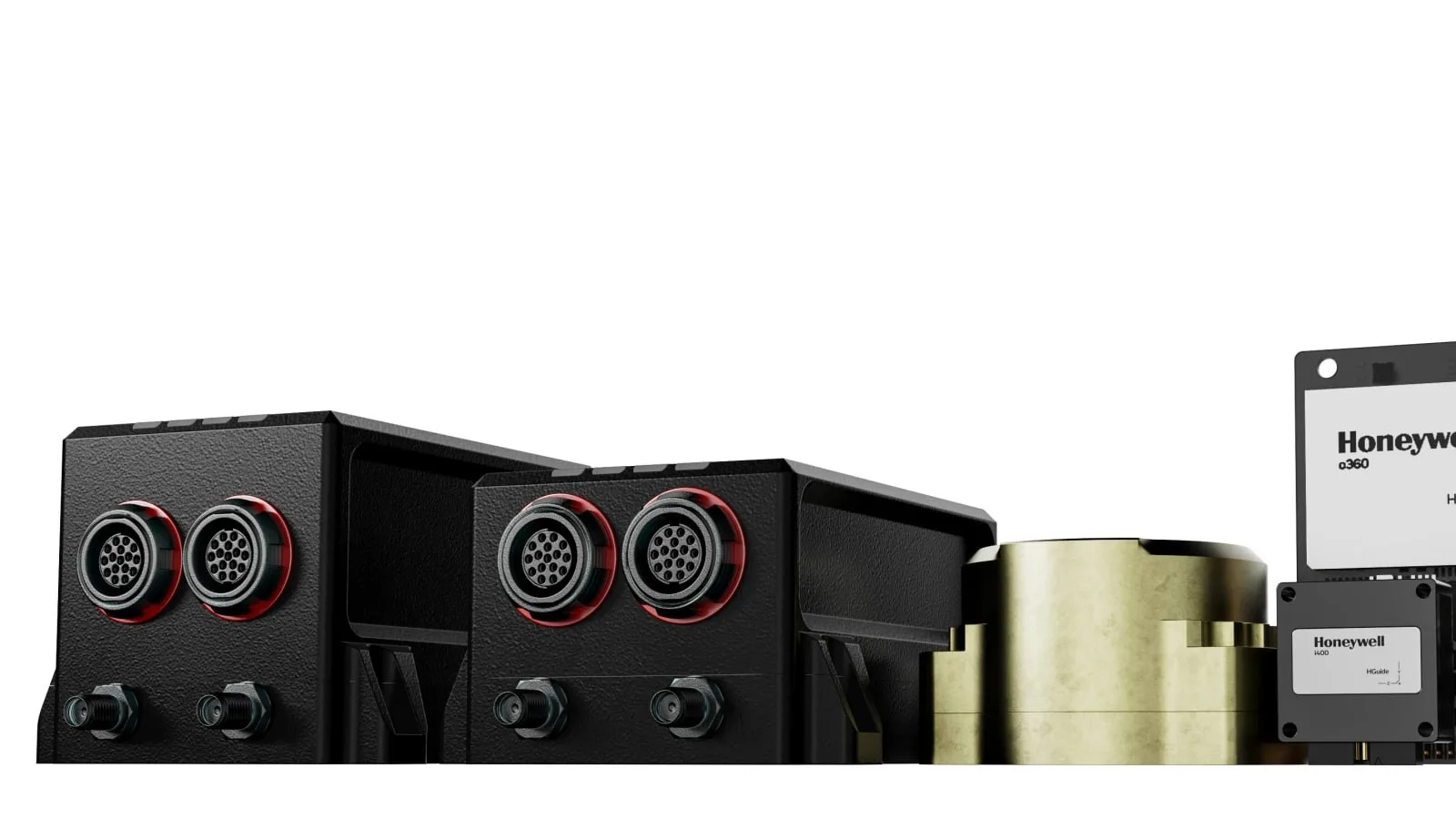
Honeywell Aerospace presents results from demonstrations of celestial-, vision- and magnetic-aided navigation that support inertial systems when GNSS signals are lost. Its star-tracker based system matches GNSS-INS performance under…
Honeywell Aerospace offers the HGuide o480, a 26-gram INS/GNSS navigator for attritable military platforms and industrial uses. The unit pairs an IMU and a GNSS receiver with AIM+ anti-jamming, and it is available globally without export…
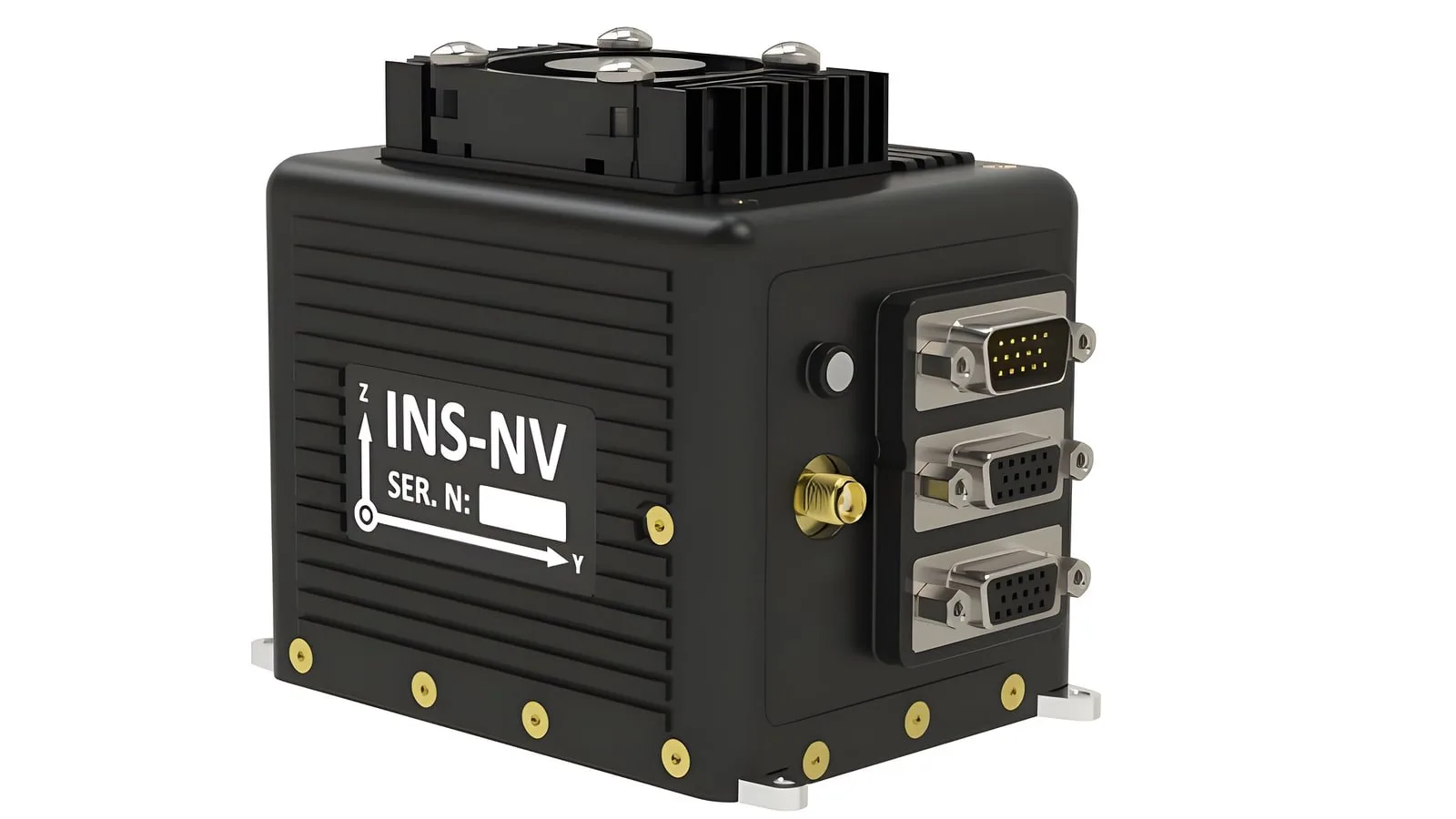
The INS-NV is a new programmable platform from Inertial Labs, which belongs to VIAVI, and it pairs an NVIDIA Jetson Orin NX module with an inertial navigation system and an AHRS. Developers of alternative PNT and visual navigation systems…











 FeaturedFlight controllers
 FeaturedFlight controllers
 FeaturedFlight controllers
 FeaturedFlight controllers
 FeaturedFlight controllers
 FeaturedFlight controllers